

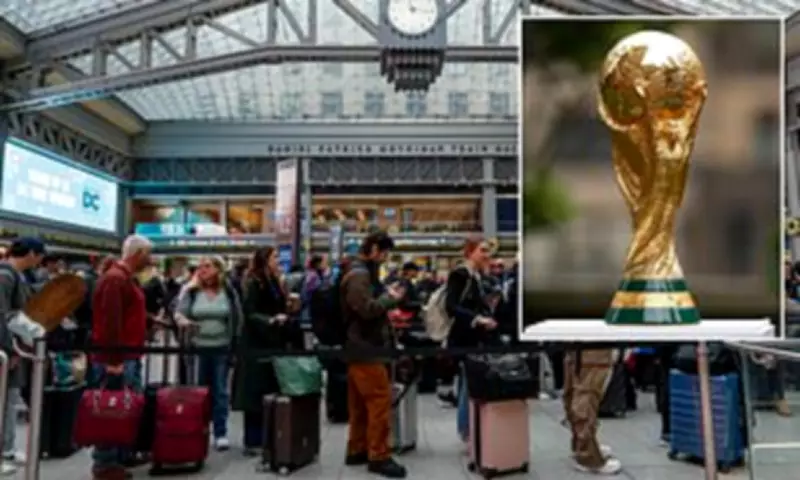
World Cup 2026 Triggers Major Penn Station Access Restrictions
New Yorkers face significant transportation disruptions this summer as parts of Penn Station, North America's busiest transportation hub, will be barred to regular commuters during the 2026 FIFA World Cup. According to a report by NorthJersey.com, the station will implement strict access controls for four hours before each of the eight matches scheduled at New Jersey's MetLife Stadium, including the final.
Exclusive Access for Ticket Holders
Only World Cup ticket-holders will be permitted to enter designated sections of Penn Station during the restricted periods. Spectators must present their tickets at station entrances on 33rd Street and 32nd Street along Seventh Avenue for verification. This measure aims to facilitate smooth transit for fans traveling from Manhattan to the Meadowlands venue.
However, the policy has sparked immediate backlash from daily commuters. "Just so wrong. We should never put the every day citizen aside for anything when it comes to publicly funded services," one social media user commented on X, echoing widespread frustration.

Commuters Face Severe Disruptions
Commuters using NJ Transit services will be particularly affected, as they will be unable to access New Jersey-bound trains from Penn Station during the four-hour pre-kickoff windows. Other travelers, including those on Amtrak and Long Island Rail Road services, will be redirected to alternative entrances to reach necessary tracks in other areas of the station.
With approximately 132,000 rail riders passing through Penn Station on weekdays to use NJ Transit, the impact is substantial. Half of the eight MetLife Stadium matches are scheduled on weekdays, exacerbating concerns. The first weekday match is set for 3pm ET on Tuesday, June 16, followed by others at 8pm on Monday, June 22, 4pm on Thursday, June 25, and an undetermined time on Tuesday, June 30.
Public Outcry Over Accessibility
Many New Yorkers and New Jersey commuters have expressed outrage, questioning how they will maintain their daily routines amid the disruptions. "How will that work for commuters?" another user questioned online. "Some of the matches are at night on work days. If a Tuesday match [starts] at 8pm, you leave early or at 8pm? Their own site still has transportation coming soon."
Critics have also highlighted socioeconomic disparities, with one commenter noting, "Public transit ... reserved exclusively for 95%+ White extremely wealthy (individual tickets cost $1,000s) sportsball (sic) fans while working poor people can't get to and from their jobs." A third user simply stated, "Yikes. That's going to be a mess," reflecting broader anxieties about logistical chaos.
The restrictions underscore the challenges of hosting major international events in densely populated urban areas, balancing fan convenience with the needs of local residents. As preparations continue, authorities face mounting pressure to address commuter concerns and ensure minimal disruption to public transportation services.






