London Underground drivers will begin a series of 24-hour strikes on Thursday November 26, with walkouts planned through to February 2027 over new working arrangements imposed by Transport for London (TfL).
The Rail, Maritime and Transport union (RMT) said the action is planned in response to changes including a voluntary four-day week. Under the plans, the union said drivers face increased time spent driving trains, longer duties, earlier starts and later finishes.
Strike Dates and Timings
The 24-hour strikes will begin at noon on November 26, December 17 and 19, January 4 and 6, and February 17, 23 and 25. Each walkout runs from 12pm on the stated day until 11.59am the following day.
On the first day of strike action, normal services are expected on most lines until 10am, with services reduced from 10am and disruption anticipated across all lines from 12pm. No service is expected on the Waterloo & City line, and the Circle and Piccadilly lines are expected to have no service all day. After 9pm, no Tube service is expected.
Expected Impact on Services
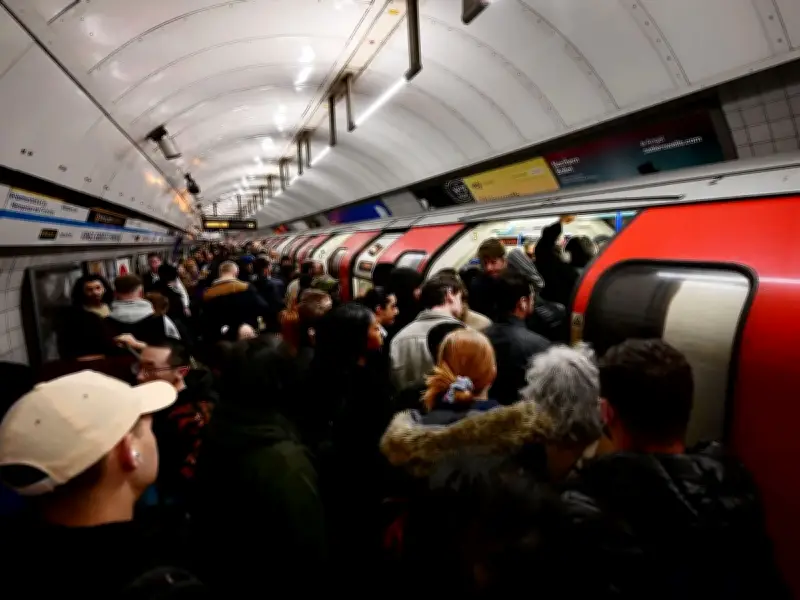
TfL said the Tube will run on most London Underground lines on both days affected by the walkouts, but disruption is expected across the network. Other TfL services, including the Elizabeth line, DLR, London Overground, buses and trams, are expected to run as normal, although they are likely to be busier than usual.
On the second day of strike action, services are expected to resume from around 7am. Until 11.59am, disruption is expected on all lines, with no service on the Circle, Piccadilly and Waterloo & City lines. From 12pm, disruption is expected to continue as services begin to recover, with normal services expected from around 6pm.
Union and TfL Positions
RMT met with London Underground on Tuesday at the conciliation service Acas, but there was no breakthrough. The union said: "Talks at Acas ended after management refused to budge on demands that the union had put to the company consistently since March 2025 when the 'offer' was first made."
RMT said there is "nothing voluntary" about the four-day week, warning that the proposals would force drivers to surrender hard-won protections regardless of whether they choose to work four or five days a week. The union said drivers face short-notice changes to shifts and attacks on existing transfer rights and annual leave arrangements.
Finn Brennan, Aslef's full-time organiser on London Underground, said: "We are surprised that the RMT has, once again, decided to take strike action to try to prevent Underground drivers moving to a four-day week on a voluntary basis. The voluntary four-day week gives Tube train drivers an extra 35 days off every year, with rosters based on a 34-hour week in return for some changes to working conditions and moving to electronic, rather than paper-based, systems for booking on for duty."
He added: "A strike designed to stop people having the choice of a shorter working week and more time off is a strange choice to make."
Ed Richardson, transport programme director at BusinessLDN, said the strikes "will not bring any festive cheer to Londoners and visitors that rely on the Tube to get around the city". He added that while many people will be able to work from home or use other modes of travel, it will hit the hospitality sector particularly hard during the vital Christmas trading season.
Nick Dent, director of customer operations at London Underground, said TfL is committed to working on proposals to address several of the RMT's concerns and urged the union to postpone the planned industrial action. He said: "They have refused to withdraw the action. We have amended our proposals to guarantee that drivers who wish to continue working a five-day working pattern can do so, and have worked hard, alongside the RMT and our other union Aslef, to resolve many of their other concerns with the proposals and provide our colleagues with a real, meaningful choice on their own working patterns."
Dent said drivers who choose a four-day week, and those who choose to work a five-day pattern with the same terms and conditions as the four-day pattern, will spend less time at work per year, while delivering a more efficient, reliable Tube service for customers. He added that TfL continues to believe the majority of the RMT's concerns have now been resolved and urged the union to put the proposal to its members.