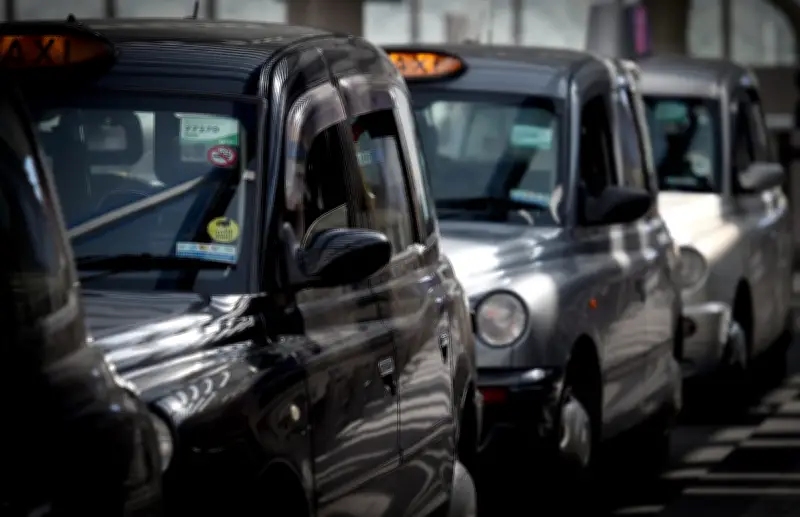
London Assembly proceedings were repeatedly interrupted on Wednesday by furious taxi drivers, as a session discussing the introduction of 'robotaxis' saw autonomous vehicle operators championing the safety of their driverless cars. The capital’s Private Hire Vehicle (PHV) sector, which supports over 120,000 drivers, perceives an imminent threat from companies poised to deploy autonomous vehicles on London’s streets within weeks.
Drivers' Anxieties Voiced at City Hall
These anxieties have been voiced repeatedly at City Hall, prompting the Mayor of London to concede earlier this month that the drivers’ future represents a 'huge question' that demands resolution. The Transport Committee, which has initiated an inquiry into the operational implications of driverless vehicles across the capital, had convened with sector representatives last Friday.
Emotions reached boiling point during a cross-party committee hearing on Wednesday, as a number of people believed to be from the affected sector unleashed a series of furious tirades against representatives from Wayve and Waymo. Both companies are actively testing autonomous vehicles in London.
Committee Chair Appeals for Order
After the fifth interruption of the day, committee chair Caroline Russell appealed to the public gallery: “We have heard from PVH drivers and we have questions we want to put to our invited guests. Every time there is disruption in the gallery we are taking out time we could be using to put the serious and worrying points we heard last week to them. Let us do our job – if you disrupt the meeting, we will just waste all the time when we have very serious questions to put to the guests.”
London Assembly Member Elly Baker, who sits on the Transport Committee, told the Local Democracy Reporting Service (LDRS): “The drivers were expressing concerns and worries about the rollout of robocabs. This relates to their loss of earnings and especially a feeling of authorities not listening to drivers – they feel cut out of this conversation about what is going to happen to hundreds of thousands of jobs. They feel it is happening around them, rather than with their engagement.”
Safety Concerns Raised
The committee was questioning guests over lingering safety concerns around the mass rollout of robotaxis in London’s congested, complex road network. Issues raised included cyclist safety – especially if the driverless vehicles drop customers off in busy cycle lanes.
Tom Bogdanowicz, Senior Policy Officer at the London Cycling Campaign, told Assembly Members: “We don’t want a vehicle entering the cycle lane where the cyclist isn’t aware. The vehicles must understand they can’t drive directly into a cycle lane – that needs to be thought through before we have these vehicles in full use.”
Autonomous Vehicle Operators Respond
However, Ben Loewenstein, Head of Policy and Government Affairs in the UK and Europe division of Waymo, said the data showed autonomous vehicles would make roads “safer for people to cycle and walk in”. “It is the combination of all our sensors that give us a 360-degree view of the situation,” he added. “The data that we have produced has been peer reviewed and independently verified, and shows that we are making roads safer.”
Operators also talked up what they referred to as the strict regulation process they are working their way through before allowing their vehicles to be truly driverless, as opposed to being supervised by a driver. “This is arguably the most stringent set of requirements that any operator has to go through,” Mr Loewenstein said. “The UK has taken a globally leading role in the development of this framework.”
Sarah Gates, Vice President of Global Affairs and Assurance at Wayve, added: “To deploy these vehicles in the UK, you must meet a standard of careful and competent driver. Our belief is that the vehicles go far beyond that. In over 88 per cent of accidents today, the contributing factor is tiredness, emotion, distraction, being under the influence. These vehicles will never suffer from these things. These vehicles will have to go through incredibly thorough testing. They currently have an operator at the vehicle – I want to reassure everyone that we are taking a phased approach to this. We have never had a serious incident in the UK and we have been operating here since 2018.”