Scottish Government Announces Rail Fare Freeze Ahead of Budget Vote
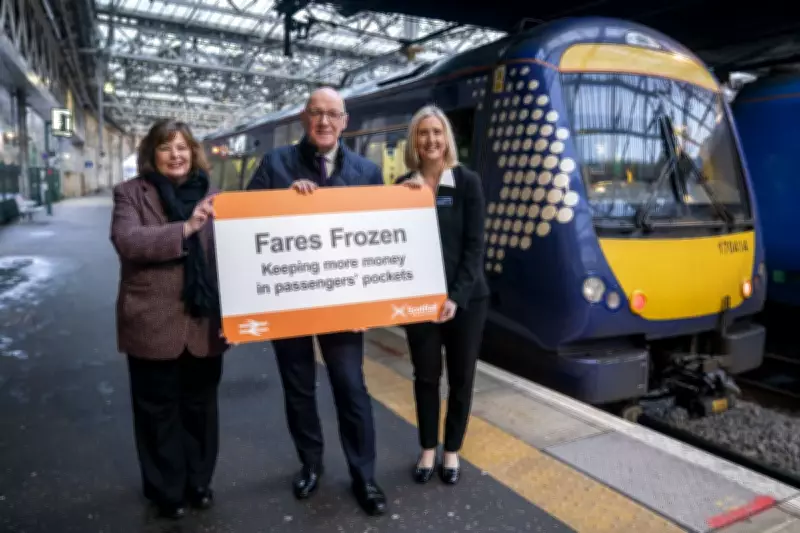
First Minister John Swinney has confirmed that rail fares in Scotland will be frozen for the upcoming year, a move announced just hours before the first parliamentary vote on the Government's Budget. The policy, unveiled during a visit to Edinburgh Waverley Station on Thursday morning, involves a £4.3 million investment that will adjust based on passenger demand throughout the 2026-27 financial period.
Addressing Cost of Living Pressures
In a statement to the Press Association, Swinney emphasised that the decision aims to alleviate financial burdens on households. "The Government recognises the challenges that people face in wrestling with the cost of living at the moment, so we're looking for every step we can take to try to help people," he said. "We've decided to freeze rail fares for next year, so there'll be no annual increase in rail fares, and what that will do is help commuters to afford their daily travel."
This freeze marks a departure from the usual practice of implementing fare hikes each April, which last year saw a 3.8% rise. Swinney highlighted that, combined with the abolition of peak rail fares introduced in September 2025, the policy represents significant savings for travellers. "It's a huge saving in the cost of travel for individuals and helps people at a time when household incomes are under such pressure," he added.

Political Context and Budget Negotiations
The announcement comes as the Scottish Government's Budget is set for its initial vote in Holyrood. Swinney declined to comment on whether the timing was influenced by the upcoming Holyrood election in May, stating only that he is "always looking at what we can do to reduce the cost of living."
Despite Scottish Labour's decision to abstain from the vote, which effectively ensures the Budget's passage without requiring additional support, Swinney expressed a willingness to collaborate across party lines. "We obviously have got to work with other parties, because the Government doesn't have a majority – we need to get other people to support us," he noted. He also questioned Labour's consistency, remarking, "Let's wait and see if Scottish Labour remain consistent with what they've said in the past. They're rather chopping-and-changing these days."
Green Party Demands and Future Discussions
The Scottish Greens, typically a Budget ally, have indicated they will abstain in the stage one vote, citing unmet demands. Co-leader Ross Greer called for extensions to free bus travel for those under 30 and automatic state-funded childcare from age three. "If ministers want to go further to help families save money and protect our environment, Green MSPs are ready to work with them," Greer said. "We've put forward plans to cut the cost of transport and childcare, for example. If the Scottish Government wants Green support for their Budget, we are willing to work with them to deliver the change Scotland needs."
Greer contrasted his party's approach with Labour's, noting, "Labour MSPs asked for nothing and got nothing on this Budget. Green MSPs have already secured changes which will feed more children, save families money and protect Scotland's natural environment. We aren't done yet though. We know it can be better. If the Scottish Government agrees, we are willing to work with them to reach an agreement before the final vote in a few weeks' time."
Broader Budget Implications
Swinney defended the overall Budget, describing it as "very good for Scotland" due to investments in the NHS to reduce waiting times, support for families facing cost-of-living challenges, and a substantial housing package. "The Budget merits the support of Parliament and I look forward to voting for it this afternoon," he asserted.
The rail fare freeze is positioned as part of a broader strategy to make rail travel "a much more credible option" for Scots, balancing customer affordability with network investment. As political negotiations continue, this policy underscores the Government's focus on transport affordability amid ongoing economic pressures.