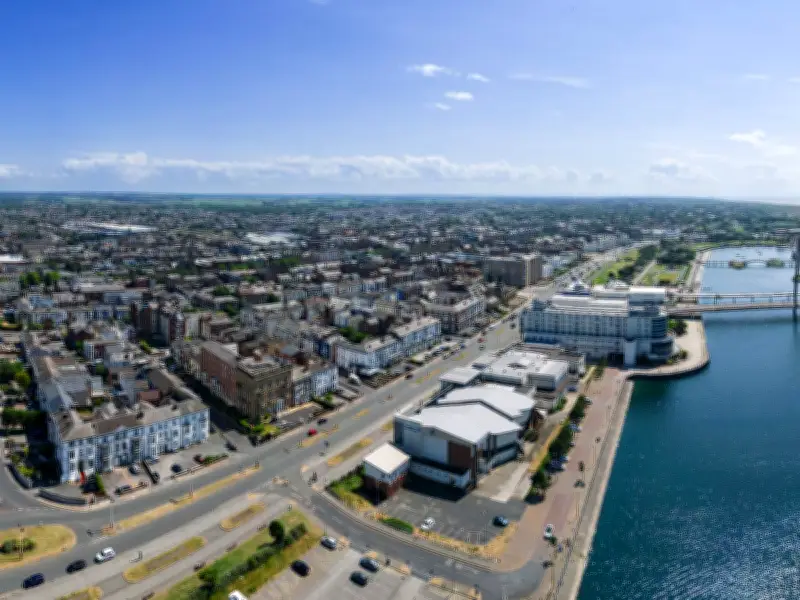
Plans for a new cycle lane, one-way systems, and pedestrian crossings on Southport Promenade have been approved by Sefton Council’s licensing committee, moving the project to its next phase. The proposals are part of Les Transformations de Southport, a two-phase scheme aimed at revitalising the town centre and improving connections to the waterfront.
Phase 2 Details
The second phase focuses on linking the town centre to the seafront with enhanced public spaces and road crossings. Key elements include a new public space at the Nevill Street and Promenade junction, a one-way system on part of Nevill Street, and a cycle path in the middle of the Promenade designed to prevent cars from cutting through Bath Street and create a continuous green corridor. Additional features include new pedestrian crossings, a narrower 3.5-metre carriageway on the Promenade to free up space for pedestrians, new taxi and disabled parking bays, a left-turn only system from Marine Parade onto the Promenade, and reorganisation of Promenade parking to provide 16 spaces. Rain gardens, ornamental planting, and improved signage are also planned.
Rationale Behind the Scheme
The council cites anticipated increases in pedestrian footfall following the restoration of the pier and the opening of the new Marine Lake Events Centre (MLEC), which is expected to attract visitors via car, coach, public transport, and on foot. The improved pedestrian crossings are intended to benefit older people, young people, and those with disabilities, while benches along the pavement will aid the elderly. The cycle lane is described as a measure to keep pavements free from cyclists and reduce conflicts between vehicles and pedestrians.

Controversy and Opposition
Southport MP Patrick Hurley has voiced concerns, describing the cycle lane plans as causing “consternation” in the town. While generally supporting the scheme, he wrote to the assistant director of highways, arguing that the expected footfall from visitors is unlikely to come from cyclists. He warned that the layout might be less intuitive for residents and visitors. A local consultation also drew negative feedback about the cycle lane, though the greenery and pedestrian crossings received positive comments.
Committee Meeting Discussions
At the licensing committee meeting, chair Cllr John Kelly questioned the MLEC’s capacity of over 1,000 people against only 142 car park spaces. Transport planning manager Andy Dunsmore responded that this had been assessed through the planning process and that public transport would be promoted. Lib Dem councillor Lynne Thompson predicted the scheme would return to the committee due to resident concerns, citing an email from an avid cyclist who felt the current design “is not going to cut the mustard.” Reform councillor Thomas Swaney criticised the consultation, claiming residents are more unhappy than surveys suggest and that pushing such plans disenfranchises voters. In contrast, Labour councillor Carla Thomas defended the cycle lane as inclusive, benefiting not only cyclists but also disabled people on scooters.
Next Steps
With committee approval, council officers will proceed to the final design phase and advertise Traffic Regulation Orders. If unresolved objections arise, the scheme will return to the committee; otherwise, construction will begin. The council aims to complete the works by late 2028, when MLEC is expected to open. Funding comes from the Town Fund and the Liverpool City Region’s Sustainable Transport Settlement.