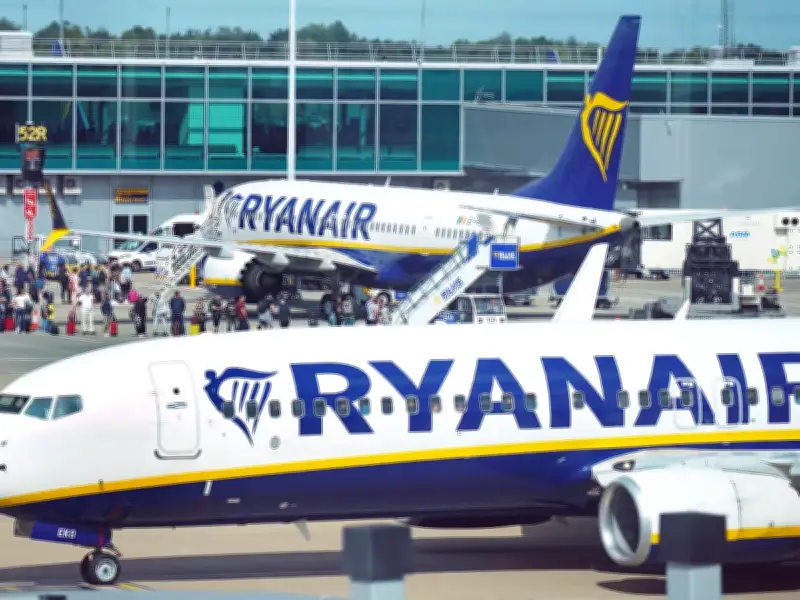
Ryanair is set to deploy artificial intelligence to lift productivity and may freeze the salaries of some staff as it seeks to cut costs against rising energy bills. Michael O'Leary, chief executive of the budget carrier, warned that energy costs for European airlines will be "significantly higher next year," as many fixed-price jet fuel contracts are due to expire.
Airlines have faced elevated jet fuel prices since the outbreak of the Iran war in February, and O'Leary said he expects costs to "remain elevated well into" next year. He had already flagged considerably higher air fares for next year, warning that Ryanair will need to rein in expenditure to offset €2bn in additional costs, as reported by City AM.
Cost-Cutting Measures and Fuel Hedging
O'Leary said: "To help address this, we're reviewing all costs across group airlines with a particular focus on airport churn negotiations [...] maturing labour agreements (which may require temporary pay freezes), lower crewing ratios and increased use of AI to drive further operational and back-office/support functions productivity."
Ryanair reported a 16 per cent fall in pre-tax profit to €2.4bn in the six months to the end of September. Jet fuel prices doubled over the period, while revenue climbed four per cent to €5.5bn. During the same period, the carrier recorded a six per cent rise in passenger numbers to 125.8 million, while fares dropped by four per cent.
Financial Position and Future Outlook
For the current financial year, Ryanair has hedged 80 per cent of its jet fuel requirements at a fixed price of €67 per barrel. This has "widened our cost advantage over other EU competitors and helped insulate current year earnings," the carrier stated. Ryanair also noted that its €2.6bn gross cash reserves and €700m of unused credit facility place it in a stronger position than its European rivals.
Earlier this year, O'Leary warned that a number of the airline's continental competitors could face collapse owing to mounting costs. "This financial strength widens the cost gap between Ryanair and our competitors, many of whom are heavily exposed to expensive (long-term) finance and aircraft lease costs," the Dublin-listed carrier said on Monday.
However, the group's shield against rising fuel costs is considerably weaker for the coming year, with just 25 per cent of its energy requirements hedged at around €95 per barrel. O'Leary declined to give investors any profit forecasts for the full year, citing volatile oil prices and last-minute booking patterns as reasons why it is "too early to provide meaningful [...] guidance".
Ryanair operates 620 aircraft across more than 200 airports. The group launched 126 new routes over the past six months and established a new base at Rimini in Italy. In September, O'Leary threatened to reduce the airline's UK flight capacity unless the government scraps its air passenger taxes, arguing that the new overnight visitor levy would create a "double tax" on tourists.