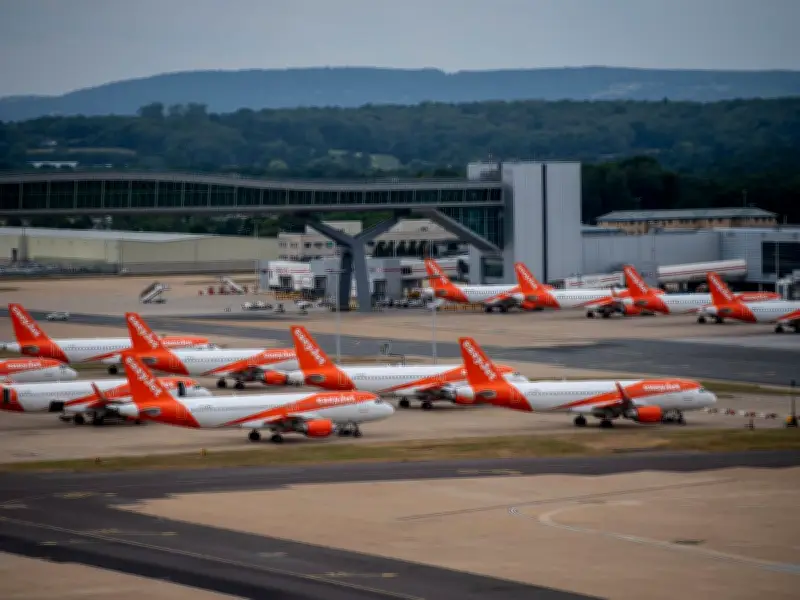
More than 200 easyJet flights and over 150 Ryanair flights were delayed on 7 July 2026 after a Met Office technical failure prevented the National Air Traffic Services (NATS) from receiving crucial weather information. The disruption affected nearly 30,000 Ryanair passengers, with delays of up to three hours.
Scope of disruption
Ryanair reported 155 flights delayed, impacting approximately 30,000 passengers. EasyJet faced even greater disruption, with 253 flights delayed — accounting for 13% of its total scheduled departures for the day. The delays caused widespread chaos across UK airspace, particularly affecting morning travel.
A NATS spokesperson stated: "A Met Office technical issue overnight meant that we were not receiving vital weather information into our NATS systems this morning. Accurate weather information is vital for air traffic controllers and pilots in managing flights safely." The spokesperson added that restrictions were put in place early but have since been removed, and NATS continues to work with the Met Office to fully resolve the problem.
Ryanair's criticism
Ryanair Chief Operations Officer Neal McMahon criticised NATS, saying: "Nearly three years after NATS catastrophic 2023 system meltdown, UK passengers are once again being delayed because NATS' systems have failed." He noted that the outage delayed 155 Ryanair flights and disrupted almost 30,000 passengers, including families on holiday and business travellers.
Comparison to 2023 outage
The incident echoes the August 2023 NATS failure, which caused over 700,000 passengers to experience cancellations and delays. That outage was triggered by a single flight from Los Angeles to Paris, when a duplicate flight plan code (DVL) for Deauville, France, and Devil's Lake, North Dakota, USA, confused the system. An engineer took over three hours to reach the site, and the system was not restored until 2:30pm after the manufacturer identified the fault.
An independent review led by Jeff Halliwell concluded: "The incident on 28 August 2023 represented a major failure on the part of the air traffic control system, which caused considerable distress to over 700,000 aviation passengers." The review recommended improvements to NATS operations and better passenger care during future incidents.
Ongoing response
The Met Office has been approached for comment. NATS confirmed it continues to work with the Met Office to fully resolve the technical issue, while airlines manage the residual delays.