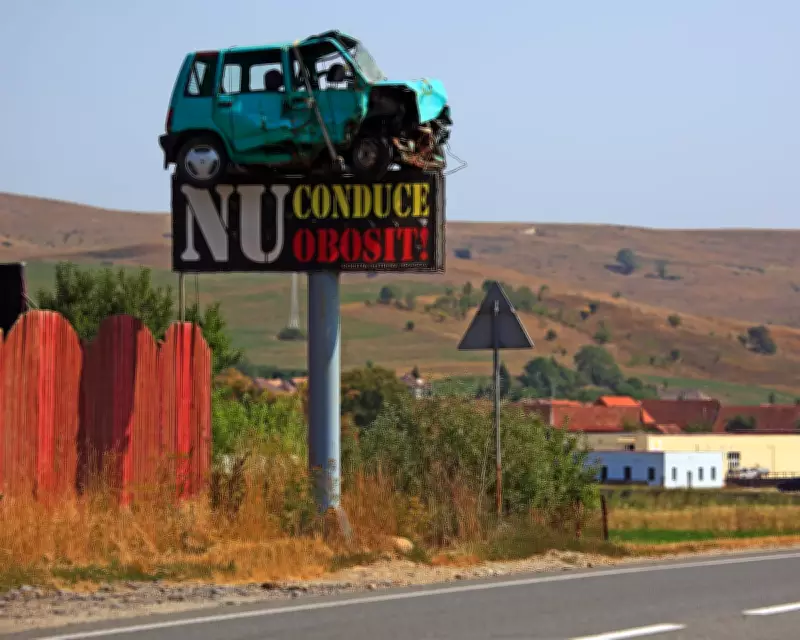
Romania's Rural Roads Claim Double the Lives of Urban Areas
In a stark revelation, the death rate on Romania's countryside roads is twice as high as in urban areas, underscoring a critical public safety crisis. Annually, approximately 1,500 people lose their lives in traffic incidents across the nation, with nearly half of these fatalities involving vulnerable road users such as pedestrians and cyclists. This grim statistic positions Romania as home to the deadliest roads within the European Union, with a fatality rate of 78 people per million recorded in 2024.
Personal Stories Highlight Systemic Failures
Lucian Mîndruță, a journalist and radio host based in Bucharest, recounts his harrowing experiences with multiple car crashes, including swerving to avoid a village dog, missing right-of-way signs, and skidding on ice. Fortunately, he survived without causing fatalities, but his story is not the norm in a country where poor infrastructure, weak law enforcement, and an aggressive driving culture prevail. "I was not careful enough, driving slowly enough, or really aware enough," Mîndruță admitted, reflecting on lessons learned the hard way over two decades since his last serious accident.
Government Initiatives and Slow Progress
Amid mounting public frustration, the Romanian government has initiated its first serious measures to enhance road safety. In the past year, legislation has been enacted to define aggressive behaviors like tailgating and intimidation, with increased penalties for dangerous driving. Additionally, a network of speed cameras and an automated system for detecting traffic violations are being rolled out. Alexandru Ciuncan, president of the Coalition for Road Safety (RSC), noted, "Things are moving, not with the speed that we want, but we're glad that something is happening now."

Preliminary data shows signs of improvement, with road deaths falling by 13% and serious injuries by 4% in 2025, following a slight decline in 2024 to an average of four fatalities per day. However, structural challenges persist, as highlighted by a letter of notice from the European Commission urging proper implementation of road safety directives. Campaigners warn that changing the pervasive "selfish" driving culture may take over a decade, despite efforts like the country's first road safety awareness week held in May.
Environmental and Vehicle-Related Risks
The safety issues are compounded by environmental factors, particularly in Bucharest, the EU's second-most polluted capital. Traffic contributes to 60% of the city's air pollution, exacerbated by an aging car fleet often running on diesel. Raul Cazan of the environmental nonprofit 2Celsius pointed out that imported "clunkers" lack modern safety features, such as electronic stability control and advanced airbags, importing both pollution and danger from Western Europe.
Furthermore, the rise of SUVs poses additional threats. In Romania, a major parts manufacturer for the German automobile industry, SUVs constitute about half of new car registrations and dominate used car listings. James Nix from Transport & Environment explained that larger vehicles, with higher bonnets and increased width, reduce safety for other road users by impairing vision and increasing injury severity in collisions.
Root Causes and Future Challenges
Analysis by the RSC identifies speeding as the leading cause of deaths in 2024, while "pedestrian indiscipline," such as jaywalking, is cited as a main factor in serious injuries. Rural areas suffer disproportionately due to a lack of safe crossings and pavements, with almost half of fatalities occurring on high-speed national roads that cut through communities. Mîndruță, an amateur cyclist who has lost friends to crashes, emphasized the importance of driving with care, stating that individualism on the road is detrimental to both health and soul, and causing a fatality would be a nightmare.
As Europe struggles to meet its target of halving road deaths by 2030, Romania's efforts represent a critical step, but sustained action and cultural shifts are essential to transform its deadly roads into safer pathways for all.