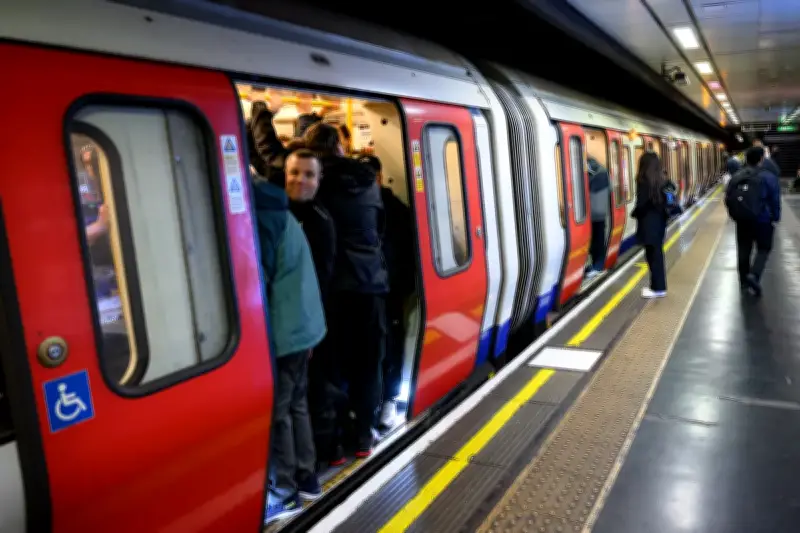
The first of a wave of Tube strikes by the RMT union will start hitting London in less than 24 hours. Train drivers are set to walk out at midday on Thursday in a bitter dispute over a voluntary four-day working week. But the impact of the industrial action will begin around 10am when services on London Underground will start to reduce.
The strike will officially run to midday the following day, Black Friday, but services will take longer to be fully back up and running. Seven more walkouts are planned by the RMT in the run-up to Christmas and into the New Year.
Talks fail to break deadlock
Last-ditch talks on Tuesday between the RMT and Transport for London failed to find a breakthrough in the row. Nick Dent, director of customer operations for London Underground, said: "It is disappointing that the RMT has called this strike action. We continue to believe that the majority of the concerns from the RMT have now been resolved and we urge the RMT to put this proposal to their members."
He added: "In the meantime, we are asking customers to check before they travel and allow extra time for their journeys during this strike action." The RMT said the reforms would "force drivers to surrender hard-won protections" and has dismissed them as a "fake four-day week".
Union and TfL at odds
General Secretary Eddie Dempsey stressed: "RMT has already suspended strike action three times for talks, yet no real improvements have been forthcoming. There is nothing voluntary about a scheme that forces drivers to give up existing protections whether they work four days or five and threatens those who refuse with displacement from their depots."
From midday on Thursday, most Tube services are still likely to be running but there will be disruption on all lines, says TfL. But no service is expected on the Circle or Piccadilly lines throughout the day or on the Waterloo & City line after midday.
Service impact and further strikes
On Friday, services are expected to start later than normal, from about 7am, with disruption across all lines until around midday. From then, there will be continued disruption through the afternoon and evening as services return to normal by around 6pm.
Transport chiefs say all other TfL services including the Elizabeth line, DLR, London Overground, buses and trams are expected to continue operating but may be busier than usual. The RMT has announced 24 hour walkouts on: Thursday, November 26, 2026; Thursday, December 17, 2026; Saturday, December 19, 2026; Monday, January 4, 2027; Wednesday, January 6, 2027; Wednesday, February 17, 2027; Tuesday, February 23, 2027; and Thursday, February 25, 2027.
The union claims the voluntary four-day week proposals, with no pay cut for Tube drivers, are an attack on working conditions and threaten job cuts. But the RMT's stance has been hugely undermined by the rival ASLEF train drivers' union which is fully backing the changes. It says the shake-up will give drivers the best working conditions on the whole of the rail network, with 35 fewer days at work every year.
One of the objections from the RMT is that some drivers faced having to move depot due to rostering difficulties for four-day and five-day weeks at the same location. Drivers, many of who earn more than £70,000-a-year, were initially given the option of a four-day week, working 34 hours, with new terms and condition. Alternatively, they could stay on the current 38.5 hours over five days, and old terms and conditions.
Seeking to resolve the dispute, TfL proposed a third option of drivers working 36 hours over five days, with the new terms and conditions, and staying at their depot. But this was rejected by the RMT.