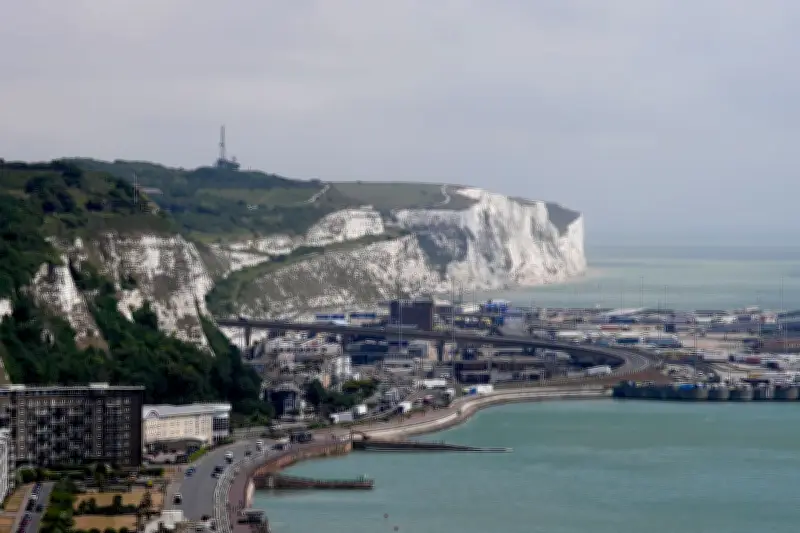
The Port of Dover has done 'absolutely everything' to prepare for the summer getaway amid fears of more delays caused by new EU border checks, its boss said. Doug Bannister, chief executive of the Kent port, told the Press Association it is 'very disappointing' a new Entry Exit System (EES) processing facility – built as part of a £40 million investment – is not being used for cars because EU technology has not been activated.
What is the Entry Exit System (EES)?
EES, rolled out fully in April, involves people from third-party countries such as the UK having their fingerprints registered and photograph taken to enter the Schengen Area, which consists of 29 European countries, mainly in the EU. For most UK travellers, the process happens at foreign airports, but it is also carried out at the Port of Dover, Eurotunnel’s Folkestone terminal and London St Pancras railway station, which all have juxtaposed border controls.
Previous Delays and Critical Incident
The Port of Dover declared a 'critical incident' during the May half-term period after waiting times reached four-and-a-half hours on a day with about 8,500 outbound tourist vehicles. Mr Bannister recently told MPs the port will 'face repeated episodes of severe congestion' this summer unless the EU permits more flexibility in EES, which has not happened.
Summer Holiday Traffic Predictions
Most schools in England and Wales break up for the summer holidays at the end of this week or early next week, while the academic year has already ended in Scotland and Northern Ireland. The Port of Dover expects to have about 7,500 outbound cars on Friday, rising to nearly 10,000 on Saturday. The end of next week will be even busier, with about 10,500 outbound cars on both July 24 and 25.
£40 Million Facility Unused
It was previously hoped that many of these would complete their EES registrations at the new Western Docks facility, which is equipped with 84 kiosks to record biometric details. But the French authorities have not switched the kiosks on, and no date has been set for when that will happen. Mr Bannister said: 'We delivered our Western Docks facility after investing £40 million of our capital. We were under constant pressure to have it be operational, pursuant to the timeline that was EES, and it’s been specifically designed to handle our peak volumes safely and efficiently, and we can’t use it. It is very disappointing.'
Measures Taken and Government Response
Holidaymakers are being urged to use only main roads when driving to the port, and arrive no more than two hours before their booked sailing. Since May, the port has installed new border positions in its ferry terminal, and the French authorities have agreed to its suggested resource requirements. Mr Bannister said: 'We’ve done absolutely everything that we can… in preparing for the summer. But there are still a lot of unknowns and uncertainties around how the EES process will affect travel.' Transport Secretary Heidi Alexander recently met French counterpart Philippe Tabarot to call for a pragmatic approach to EES checks. Mr Bannister said she has 'leaned in personally on trying to get the messages clear'.
New Government Funding
Some £20 million of new Government funding was announced by the Department for Transport on Monday to boost infrastructure in Kent to reduce delays. This is on top of a previous £10.5 million investment shared by the three English sites with juxtaposed border controls.
Industry Concerns
Alastair Gunn, trade policy lead at the Road Haulage Association (RHA), said it anticipates checks will 'inevitably' have to be temporarily suspended to keep traffic flowing during busy periods. 'It’s clear the infrastructure and resource needed for EES to work at all ports is not fully in place,' Mr Gunn said. 'We are concerned about tailbacks and disruption for holidaymakers on roads to Dover during this summer’s school holidays. This affects our coach members taking British tourists to Europe and risks serious delays to the just-in-time supply chains our hauliers operate. We echo the calls for flexibility. That’s why we’ve long called for pre-registration and online documentation, so travellers can register in advance and speed up crossings.'