
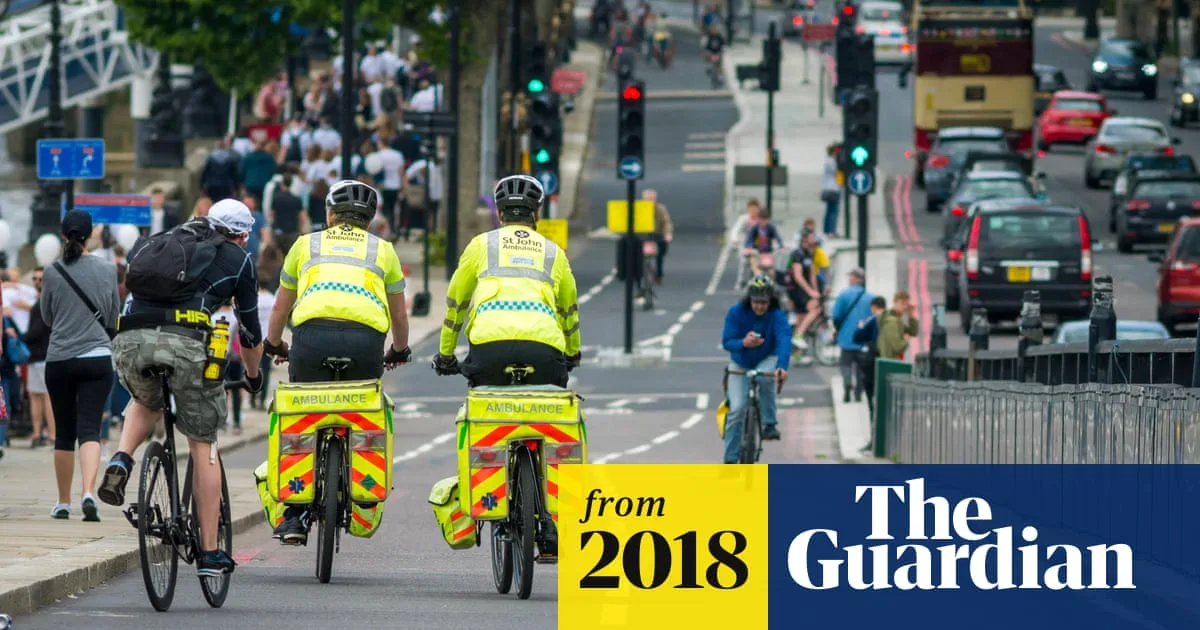
Cycling organisations have condemned members of the House of Lords, including Professor Robert Winston, for propagating what they describe as the 'myth' that segregated cycle lanes cause congestion and worsen pollution. The groups say there is no evidence to support these claims, which they argue are based on 'anecdote experienced through a taxi window'.
The criticism follows a Lords debate on vehicle emissions in January, during which several peers called on ministers to examine whether short stretches of protected cycle lanes in London had slowed traffic and increased emissions. When contacted by the Guardian, none of the peers provided evidence for their assertions. Lord Winston, a prominent scientist and Labour peer, stated that the fact bike lanes slow traffic was 'not deniable', but declined to provide further evidence, instead citing the 'law-breaking, aggression and dishonesty' of cyclists.
Former Tory MP Lord Patrick Cormack said his evidence was that his cab journey from King's Cross to the House of Lords now took longer, adding that all the peers he spoke to believed bike lanes were to blame. The Earl of Caithness argued that separated bike lanes hampered emergency service vehicles, 'at time resulting in loss of life', again without providing evidence.
London currently has about 12 miles of protected cycle lanes, with more planned. Other cities, including Manchester, are developing similar networks. The claims that bike lanes cause congestion and pollution originated from the black cab industry, but roadside pollution monitors have found no increase in pollution levels where lanes have been built. Andrew Grieve of King's College London's Air Quality Network described the issue as 'a bit of a case of an anecdote being halfway round the internet before the data analysis has got its shoes on'.
Transport for London (TfL) data shows that while some journeys on routes with separated bike lanes have slowed, the same is true of many roads without cycle infrastructure. A major TfL report on congestion published in December identified roadworks and growth in private hire vehicles and delivery vans as likely factors, recommending solutions including prioritising walking and cycling. Paul Tuohy of Cycling UK said peers should provide expert advice, not 'air their personal frustrations based on anecdote experienced through a taxi window'.




