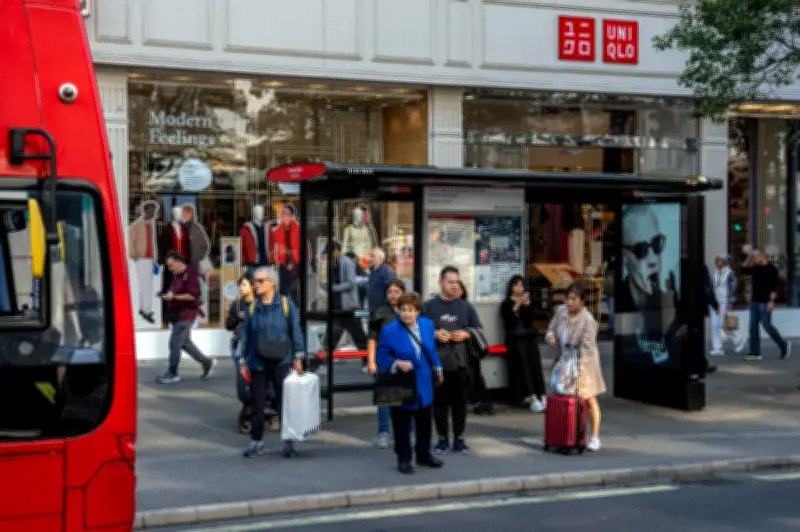
Almost a kilometre of Oxford Street will be closed to general traffic from Monday, October 26, marking the start of the long-awaited pedestrianisation of the famous shopping street.
The stretch between Orchard Street, near Selfridges, and Great Portland Street, just east of Oxford Circus, will become traffic-free. Buses, taxis, private hire vehicles, bicycles, scooters and pedicabs will all be diverted away from the section as the first phase of the transformation gets under way.
A plan years in the making
Plans to reduce traffic on Oxford Street are nothing new. Successive London administrations have considered ways of reducing traffic and improving the public realm, while London Mayor Sadiq Khan first proposed pedestrianising it as part of his 2016 mayoral programme.
Detailed plans were consulted on in 2017 but ultimately abandoned after Westminster City Council withdrew its support. The idea was revived in September 2024, when Lord Khan announced plans for a much wider transformation of Oxford Street.
Central to the new approach was the creation of a Mayoral Development Area and the Oxford Street Development Corporation, giving City Hall a much greater role in overseeing the regeneration of the street. A public consultation followed in early 2025, with 66% of respondents supporting the principle of making Oxford Street traffic-free.
Westminster City Council has previously raised concerns about displaced traffic and a potential increase in noise and pollution on surrounding streets. Despite this, the mayor formally approved the traffic and highway changes needed for the first section of pedestrianisation on February 26 this year.
When and where the closure happens
The first section will become traffic-free on Monday, October 26 2026. Work is already under way, with further road and bus changes beginning over the weekend of October 24 and 25. Buses will stop running along the affected stretch from the evening of Sunday, October 25.
The October closure marks the beginning of a phased transformation rather than the finished version of the new Oxford Street. Initially, changes to the street itself will be relatively limited, particularly during the busy Christmas shopping period.
Temporary measures will allow the Oxford Street Development Corporation and its partners to gather feedback and observe how pedestrians, businesses, residents and accessibility groups use the traffic-free space. More substantial temporary public-realm improvements, including additional seating, planting and new public spaces, are then expected during 2027.
The first phase covers almost one kilometre of Oxford Street between Orchard Street, close to Selfridges and Marble Arch, at the western end, and Great Portland Street, just east of Oxford Circus, at the eastern end. Oxford Street east of Great Portland Street towards Tottenham Court Road will not form part of this initial traffic-free section.
Vehicle access and bus routes
Although the street is being described as traffic-free, it will not be completely inaccessible to vehicles. Emergency vehicles will have access at all times, while arrangements will also be made for essential services. Businesses will continue to be serviced, with vehicle access permitted during designated overnight hours. Mobility scooters will also continue to be permitted access.
However, ordinary cars, buses, taxis, private hire vehicles, bicycles, scooters and pedicabs will not be allowed to travel along the pedestrianised section. Buses will stop running between Orchard Street and Great Portland Street from the evening of Sunday, October 25.
Services that currently use Oxford Street will instead be diverted onto surrounding roads or otherwise altered. TfL says some routes will serve new stops on streets including Wigmore Street, Henrietta Place and Cavendish Place. Alternative bus stops will generally be around 200 metres from the traffic-free section.
Passengers travelling through the West End are being advised to check their route before travelling once the changes begin. Tube and rail services will continue to operate as normal.
Despite Oxford Street becoming pedestrianised, cyclists will not be permitted to ride along the traffic-free stretch. Bicycles, e-bikes and scooters will be diverted onto surrounding streets along with other traffic. The restriction is intended to create a predominantly pedestrian space rather than simply just a car-free road.
What happens next
October's closure is only the first stage of a much bigger redevelopment. The initial traffic-free period will allow authorities to test how the street works without through traffic and collect feedback from residents, visitors, businesses, workers and accessibility groups.
Further seating, planting, public spaces and other temporary improvements will follow during 2027. Those measures will then inform the eventual permanent redesign of Oxford Street.
For now, though, October 26 marks a huge milestone in a debate stretching back to the early 1960s, when authorities first began exploring how pedestrians and vehicles could be separated on one of Britain's busiest shopping streets.