

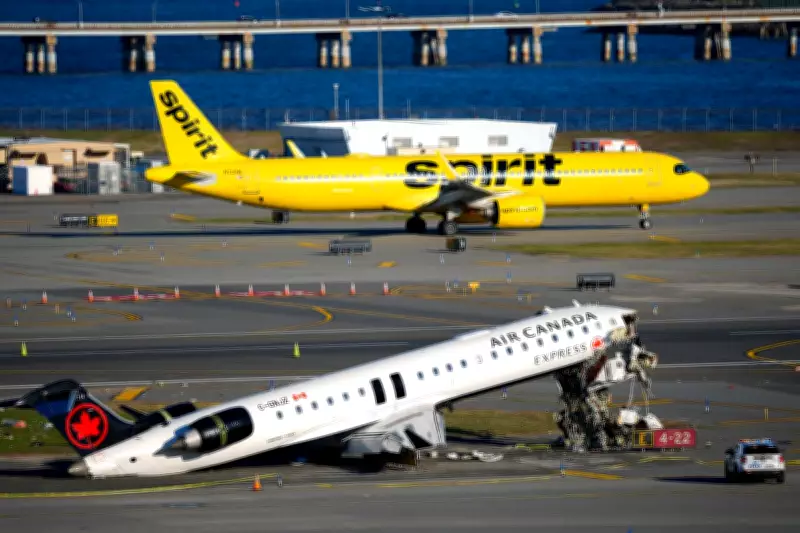
Federal investigators are intensively reviewing the cockpit voice recorder and the activities within the control tower as part of their probe into a devastating collision between an Air Canada jet and a fire truck at New York's LaGuardia Airport. The National Transportation Safety Board (NTSB) is set to disclose further initial findings at a press conference scheduled for Tuesday, shedding light on the tragic incident that occurred late Sunday night.
Details of the Crash and Immediate Aftermath
The aircraft, carrying more than 70 individuals, struck the fire truck during its landing approach, resulting in the fatalities of both pilots and injuries to several passengers. Remarkably, most occupants managed to evacuate the severely damaged plane, with one flight attendant surviving after being ejected onto the tarmac while still secured in her seat. This event marks the first fatal crash at LaGuardia in over three decades, heightening concerns over airport safety protocols.
Key Questions Under Investigation
Investigators are focusing on critical unresolved issues, including why the airport fire truck was traversing the runway during the plane's landing phase and why it failed to halt despite urgent, last-moment alerts from the control tower. Additionally, the role of air traffic controllers is under examination, with particular attention to whether distractions arose as they handled a late-night emergency involving another aircraft concurrently.

Broader Context and Operational Disruptions
The collision has exacerbated existing frustrations with air travel in the United States, compounded by factors such as prolonged security lines due to government shutdowns, adverse winter weather conditions, and escalating costs. While flight operations at LaGuardia, the third busiest airport in the New York region, resumed on Monday, the specific runway where the crash occurred remains closed. This closure is expected to persist for several days during the ongoing investigation, leading to significant delays and disruptions for many flights.
Recovery and Analysis Efforts
NTSB Chair Jennifer Homendy confirmed that the wreckage from the crash is still present on the closed runway, necessitating a thorough sifting through debris. Authorities have successfully retrieved the plane's cockpit and flight data recorders by cutting an opening in the aircraft's roof, subsequently transporting them to the NTSB laboratory in Washington for detailed analysis. This step is crucial for piecing together the sequence of events leading to the collision.
Human Impact and Response
The Jazz Aviation flight, operating on behalf of Air Canada and originating from Montreal, had 72 passengers and four crew members on board. Approximately 40 people, including two individuals from the fire truck, were transported to hospitals with injuries ranging from serious to minor. By Monday morning, the majority had been discharged, with some escaping without requiring medical treatment. The deceased pilots, both based in Canada, have been identified, as confirmed by Kathryn Garcia, executive director of the Port Authority of New York and New Jersey, which manages the airport.
This investigation underscores the complexities of aviation safety and the imperative for rigorous oversight in high-traffic airport environments.






