

Middle East Flight Crisis: 11 Key Answers for Travellers Amid Iran Conflict Chaos
Simon Calder, Travel Correspondent, provides crucial insights into the ongoing travel disruption caused by the Iran conflict, which has led to widespread flight cancellations and airspace closures in the Gulf region. On 28 February, the US and Israel launched surprise air strikes on Iran, prompting Tehran to retaliate by attacking key infrastructure in Gulf nations, including airports and hotels. This has resulted in the closure of much regional airspace, disrupting millions of travellers' plans. The Foreign Office has placed the UAE, Qatar, Bahrain, and Kuwait on its no-go list, raising numerous concerns for passengers.
Here are 11 updated questions and answers covering the main issues affecting travellers, from short-term needs to long-term implications.
My flight home has been cancelled due to the conflict. Can I expect swift rebooking?
Q: I booked a UK-Sri Lanka ticket, and my return flight from Colombo was cancelled due to Gulf airspace closure. The airline insisted the earliest reroute was three weeks away, but earlier flights with other airlines were available. Under UK261, shouldn't I be entitled to rerouting at the earliest opportunity? – Leon Y

A: UK261, which governs air passengers' rights from a British perspective, is a near-replica of the flawed EU261 statute. Both have a significant loophole for many airlines: while carriers cancelling flights from British or European airports must find alternative transport as soon as possible, this obligation does not apply to non-UK/EU carriers flying from outside Europe. You are among millions of passengers discovering airlines are in no hurry to fly them home. The cancelling carrier only has to offer a replacement flight at its convenience or refund the homeward portion, which is often less than the cost of a swift return. For example, if you are willing to risk changing planes at Dubai International Airport, Emirates offers daily seats for under £400. I continue to lobby for improved air passenger rights, but post-Brexit, the government declined to make rules fit for purpose, only changing compensation figures from euros to sterling.
Is transit through "no-go" airports advisable?
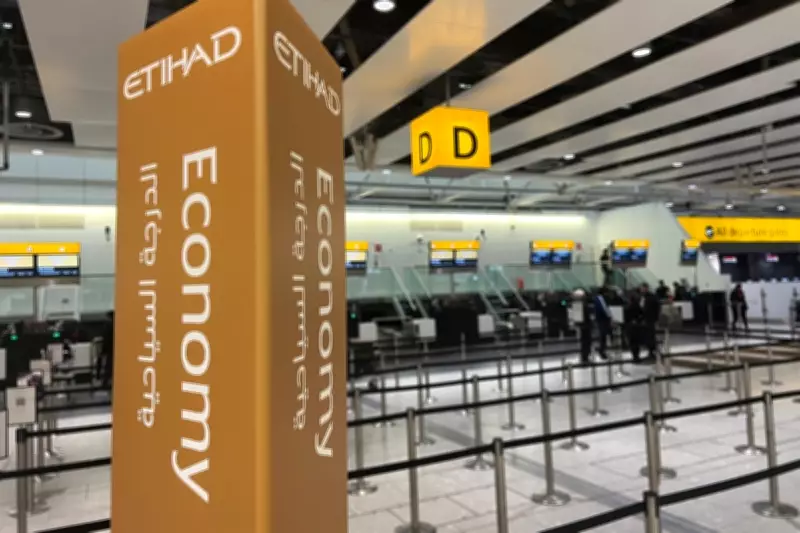
Q: We are heading to Sydney via Abu Dhabi on Etihad Airways. The Foreign Office advises against travel to the UAE, suggesting it may invalidate travel insurance. Does this apply only to time in transit, or could cover be denied further into the holiday? – Cathy R
A: The Foreign Office advises against all but essential travel to the UAE due to intermittent attacks from Iran. While the FCDO has no direct influence on travel insurance, standard policies typically state that if you travel contrary to FCDO advice, cover is only provided if the claim is not linked to the reason for the advice. For instance, if injured in an event related to the Iran conflict at the airport, medical expenses would not be covered, though UAE authorities would likely care for you free of charge. However, if you lose something or trip over, normal policy terms apply. This partial withdrawal of insurance only applies while you are on the ground in the UAE; full cover resumes once the plane takes off for Sydney. On Monday, I connected at Abu Dhabi airport, aware of the implications, and found airlines, the airport, and UAE authorities confident in safe transit, with pilots operating flights in and out safely.
Isn't 'airside transit' at an airport exempt from Foreign Office warnings?
Q: Isn't being in transit exempt since you don't pass the border? Surely you're technically not entering the UAE—just pausing at the terminal? – Simon S
A: No. The Foreign Office advice mentions Iran's attacks on airports, so there is no exemption for spending time in duty-free shops between flights. Whether or not you pass through immigration is irrelevant. For clarity, the FCDO does allow airside transit exemptions in some locations on the no-go list, such as Guayaquil in Ecuador or Tijuana in Mexico, but for the UAE, officials deem the risks too high.

Will I get a refund for a super-expensive replacement flight home?
Q: My daughter flew back from Phnom Penh to London via Seoul to avoid uncertainty and transiting via the UAE. The new flight cost £1,500, but she can only get a £250 refund from the airline. Is there any way to plug the financial gap? – Name supplied
A: Your daughter is one of thousands dealt a lousy hand in this crisis. Air passengers' rights rules are asymmetric: generous for flights starting at British airports but not applying to flights starting outside Europe on non-UK/EU airlines. If Emirates, Etihad, or Qatar Airways cancels a homebound trip from an Asian airport, they only need to offer a replacement flight at their convenience or a refund of the unused part. Refunds are often disappointingly low due to deductions for UK air passenger duty and airport charges. Possible remedies include claiming from travel insurance, though many policies exclude losses from war or hostilities. The Financial Ombudsman Service might rule in favour if buying a new ticket was the only way to avoid no-go territory. Airlines could also decide to reimburse passengers; keep receipts for any claims.
Should I book onto alternative flights to Australia?
Q: My flight from Manchester via Doha to Perth was cancelled by Qatar Airways. I've found alternatives via Dubai. How can I check if a flight will go ahead before paying over £4,000? – Andy S
A: Qatar Airways has cancelled millions of bookings. For a journey from Manchester to Perth, UK261 rules apply: travellers are entitled to be flown to their destination as close as possible to the original schedule on any available airline. Qatar Airways should arrange this; if not, you can buy the lowest-cost option and claim reimbursement, maintaining the same class. For Dubai options, note the Foreign Office warning against travel to the UAE, which affects insurance for claims related to Iran attacks. Flights are likely to go ahead, but disruptions occur; for example, one Emirates flight from Manchester to Dubai recently returned due to an Iranian attack. Anecdotal evidence suggests there may be plenty of room on flights, as some planes are far from full occupancy.
What will be the impact on the tourism industry in developing countries?
Q: We stayed at a small hotel in Mirissa, Sri Lanka, where the owner reported $20,000 in cancellations due to Middle East turmoil. How many businesses won't survive this? – Paul E
A: This highlights one of the saddest aspects of the tourism collapse between Asia and Europe due to the Iran conflict. Traders dependent on Western tourists are discovering the importance of Gulf airlines. Iran's retaliation, targeting economic infrastructure in the UAE and Qatar, intermittently closes skies and strands travellers. This impact is reminiscent of the Gulf wars. When tourism rebounds, airlines may open new routes to meet demand, as people still want to visit destinations like Sri Lanka. The premium for non-stop flying has increased. While I sympathise with the Sri Lankan property owner, the vast Indian outbound market could help compensate, potentially discovering Sri Lanka as a cheaper, easier alternative to the UAE.
My package holiday is due to pass through Qatar—what should I do?
Q: I booked a British Airways package holiday to Goa, including flights on Qatar Airways and BA. BA has cancelled flights to the Middle East until May. What should I do? – Layla D
A: I was over-optimistic about flight resumptions. However, you are in a strong position with a package holiday: British Airways must figure out how to get you to Goa and back safely, possibly via Mumbai with a connection or train ride. If they cannot provide the holiday, you are entitled to a full refund. Alternatively, they may incentivise you to take a different holiday, such as to the Caribbean, at a discount.
Could I face a fuel surcharge for my forthcoming holiday?
Q: I've fully paid for a river cruise. Can the company force me to pay more due to the fuel crisis? – Paul M
A: Oil prices are soaring due to reduced supply from production cuts and potential blockades of the Strait of Hormuz. Many travel companies hedge fuel costs, but there is no obligation to do so. Under the Package Travel Regulations, firms can ask for more money if fuel costs rise, but they must notify travellers clearly, show calculations, and cannot apply surcharges within three weeks of departure. You can withhold payment until evidence is provided. If the surcharge is 8% or more, you have the right to cancel for a full refund; many surcharges are set at 8% to avoid this.
Could the Chinese airlines provide an alternative to the Gulf carriers?
Q: Why hasn't flying via Chinese cities on Chinese airlines, overflying Russia, been considered as an alternative from Australia to the UK? – David W
A: Flying on Chinese airlines between Australia and the UK offers benefits like shorter flight times and less fuel consumption via the great circle route over China, Kazakhstan, and Russia. This avoids the Middle East and can be low-cost. However, concerns include political regimes, revenue from overflights potentially supporting Russia's war effort, lower brand recognition compared to airlines like Singapore Airlines, and safety perceptions, though Chinese carriers meet international standards. The current problems with Gulf airlines may lead more passengers to discover Chinese options, adding competition and choice.
What rights do I have for future flights through the Gulf?
Q: If booked through a travel agent as a package, and flights are operating but FCDO advice remains, what rights do I have? – Darren B
A: Most travel agents are Abta members, bound by its rulings. Abta states that if the FCDO advises against travel to an area, members should offer clients due to travel imminently the correct options, such as an alternative holiday or a full refund if no suitable alternative exists. This includes flights via Gulf airports on the no-go list. The obvious solution is to find a route avoiding the danger zone.
How long will it take for the Gulf airlines to get back to normal?
Q: What is the likely sequence for Gulf airlines to resume full operations? – Huw A
A: Emirates, Etihad, and Qatar Airways are serious airlines that prioritise safety and would not operate flights at risk. Motivations to resume normal operations include customer service, commercial aspects, and restoring their image as safe destinations. Losses run into billions, but they are backed by their governments, so failure is unlikely. Emirates aims to rebuild quickly, though setbacks occur with intermittent airport closures. Etihad is progressing more slowly due to higher connecting traffic. Qatar Airways has run some repatriation flights but has minimal operations from Doha, with parts of its fleet stored in Spain, suggesting a large-scale resumption in months. Once safe, all three will likely announce massive seat sales to restore confidence and fill aircraft, similar to British Airways after the 1991 Gulf War.





