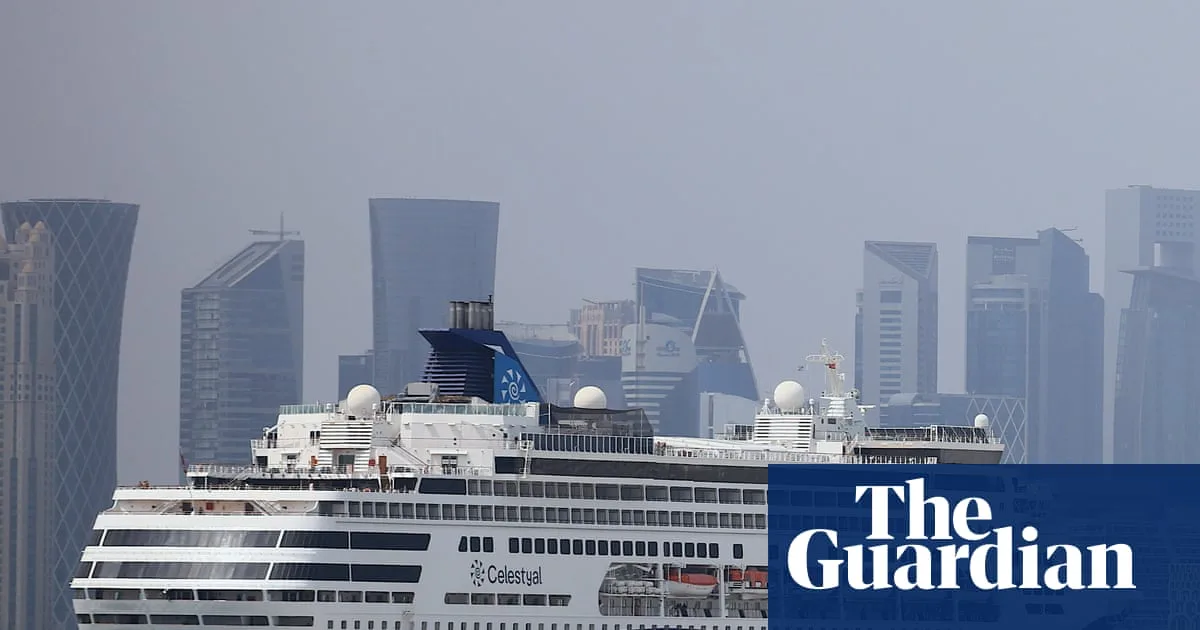
More than 100,000 British nationals are stranded in the Gulf region after airspace closures due to Iranian missile and drone strikes, the UK government has confirmed. Downing Street said officials are exploring all evacuation options, including commercial, charter and military flights, as well as bus routes across land borders into Saudi Arabia and Turkey.
Keir Starmer’s spokesperson described the situation as a crisis, stating: “The increasingly reckless strikes from the Iranian regime targeting Gulf allies directly put British lives at risk. The safety of those British nationals remains this government’s top priority.” The Foreign Office has set up 24/7 consular support and deployed extra staff to assist the estimated 200,000 Britons in the region, half of whom have registered with the authorities.
Commercial flights remain the quickest route for repatriation, but only a few passenger planes were due to depart from Abu Dhabi and Dubai on Monday evening. Thousands of transit passengers remain stuck after flights were grounded. Military-run evacuations are considered even more risky due to ongoing airstrikes.
The UK government has contingency plans to bus evacuees to Saudi Arabia or Turkey if UAE airspace stays closed. The UAE is currently covering hotel and meal costs for stranded individuals, but it is unclear how long this will continue. The Foreign Office has advised against travel to Iran, Israel and Palestine, and against all but essential travel to Bahrain, Kuwait, Qatar and the UAE.
Sir Simon Fraser, former head of the Foreign Office, warned that evacuating all British nationals from the Gulf without commercial carriers would be “extraordinarily hard and complex.” The UK has experience in mass repatriation from past crises, including the Covid-19 pandemic and the collapse of travel firms Monarch and Thomas Cook.