Melbourne's Metro Tunnel: A First-Hand Journey Through Victoria's $14bn Rail Project
Earlier this month, the Victorian government activated the long-awaited Metro Tunnel, integrating this $14 billion infrastructure endeavour into Melbourne's public transport network. Dubbed the "big switch" by authorities, on 1 February the Cranbourne, Pakenham, and Sunbury lines shifted out of the city loop to run exclusively through the Metro Tunnel, while the Frankston line returned to the loop.
The promises are substantial: faster and more frequent services enabled by high-capacity signalling, five brand-new stations, and rail access to previously underserved city areas. The Victorian government aims to replicate the success of Sydney's metro, which launched in 2024. However, the initial reality has proven somewhat messier.
Initial Challenges and Commuter Confusion
During just the second afternoon peak under the new timetable, an overhead power fault at Armadale stranded commuters on two trains for hours in the heat, necessitating evacuation via ladder and a walk along the tracks to the nearest station. Although this fault occurred outside the tunnel, it caused widespread delays across the lines.

Platform confusion has also arisen, with Cranbourne-Pakenham passengers disembarking at Caulfield to transfer to the Frankston line and the loop, leading to overcrowding. Some blame lies with mapping apps, which took days to accurately display connections between the tunnel and loop stations. The Allan government has assured the public that the real-world experience will become smoother.
Transport Infrastructure Minister Gabrielle Williams stated: "We know this is a big adjustment – the biggest change to our transport network in more than 40 years – and we've got extra staff on the ground to help people get where they need to go."
A Day Riding the New Line: Station-by-Station Insights
Guardian Australia spent a day riding the line to evaluate whether the Metro Tunnel fulfills its commitments. The journey began at Caulfield station at 9:45 am, where a city-bound Frankston train arrived to a crowded platform 4, indicating significant transfer activity from the Metro Tunnel line. Despite signage urging passengers to stay on the tunnel and transfer in the city, the message appeared unclear to many.
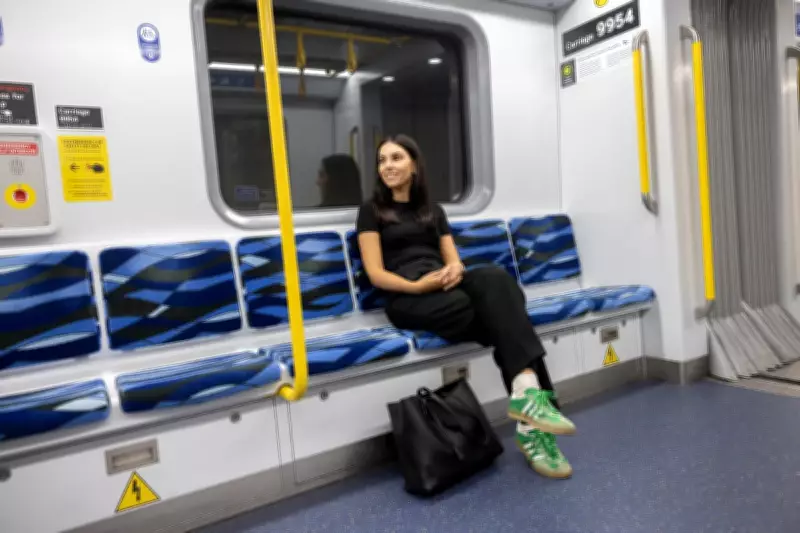
In contrast, platform 2, serving Watergardens via the tunnel, was quiet, with about a dozen passengers boarding one of the seven carriages. The government reports increasing numbers and enhanced onboard announcements to encourage loop usage.
Exploring the New Stations: Anzac to Arden
The first new station, Anzac, located on St Kilda Road opposite the Shrine of Remembrance, features green columns and timber canopies reflecting the nearby Royal Botanic Gardens. The journey from Caulfield to Anzac was smooth and fast, taking just nine minutes with one stop at Malvern, significantly improving access for southside residents.
Town Hall station, one of the most complex due to construction beneath the existing City Loop, feels unfinished with blank concrete walls and unopened shops, including in the redeveloped but empty Campbell Arcade. The Federation Square exit remains closed until late 2026, currently used for construction equipment.
State Library station, at 36 metres underground, boasts a 42-metre-long escalator, now Melbourne's longest. The station's artwork, Forever by Daniel Boyd, based on historic images of Wurundjeri Woi Wurrung women, is particularly striking. Nearby attractions like the State Library's Rebel Heart exhibition enhance the area's cultural appeal.
Parkville station, situated 25 metres below the medical and research precinct, connects 73,000 workers and 55,000 students to the train network for the first time, feeling more established with open shops and steady commuter traffic.
Arden station features brick arches referencing North Melbourne's industrial heritage and a "whispering wall" acoustic feature. However, it faces a pigeon problem addressed with lasers and cleaning staff. The surrounding area, initially planned as a medical precinct, is now slated for 20,000 new homes.

Final Stop: Footscray and Overall Impressions
The journey concluded at Footscray station, where the Metro Tunnel facilitates easier bar-hopping between venues like Mr West, which offers a special "Met Pale Ale" brewed to mark the tunnel's opening. The return trip to Caulfield took just 26 minutes, half the previous duration, with trains arriving within four minutes even off-peak and seats always available.
Despite early hiccups, the Metro Tunnel shows promise in delivering faster, more frequent services and enhanced connectivity, potentially transforming Melbourne's public transport landscape as more commuters adapt to the new system.