

Mathematical Model Explains Why Slower Cars Catch Up at Traffic Lights
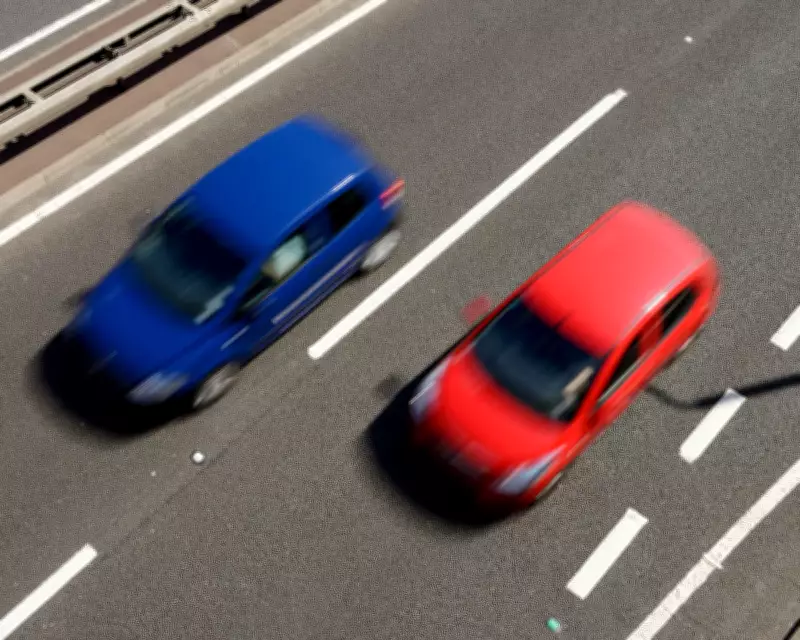
A researcher has applied mathematical principles to unravel a familiar driving scenario: when a faster car overtakes a slower one, only for the slower vehicle to reappear alongside at the next red light. Dr Conor Boland from Dublin City University has termed this phenomenon "The Voorhees law of traffic," drawing inspiration from the horror film character Jason Voorhees, known for his relentless pursuit.
How Traffic Lights Influence Car Spacing
In a study published in the journal Royal Society Open Science, Boland examines how two cars traveling at different speeds interact with traffic lights. The analysis considers factors such as the light's colour, duration, the time advantage of the faster car, and the overall traffic light cycle. Assuming traffic lights operate on a fixed timer rather than sensors and cars are on a single-lane road, the research identifies four possible outcomes for the spacing between vehicles: it can increase, remain unchanged, partially decrease, or be completely eliminated.
On average, when probabilities are accounted for, gains and losses in spacing balance out, meaning the lead of one car over the other typically stays the same after passing a light. This suggests that the perception of an inevitable catch-up is largely an illusion, driven by human tendency to remember recurrent encounters more vividly, especially after attempts at separation.

Impact of Multiple Traffic Lights
However, the dynamics shift in urban environments with successive independent traffic lights. Here, the statistical likelihood of the slower car catching up at least once becomes nearly certain. This is because the probability of no catch-up diminishes as more lights are encountered, multiplying the chances across each intersection.
Boland emphasizes that these findings have significant implications for road safety, indicating that speeding to overtake others may not provide a lasting advantage. Professor Kit Yates from the University of Bath, who was not involved in the study, praised the research for addressing a common driving curiosity. He noted that while the model makes assumptions, such as constant speeds between lights, it remains a useful tool for explaining why slower cars often reappear alongside faster ones.
In summary, this mathematical exploration sheds light on a widespread driving experience, reinforcing that patience on the roads might be more beneficial than aggressive overtaking.






