
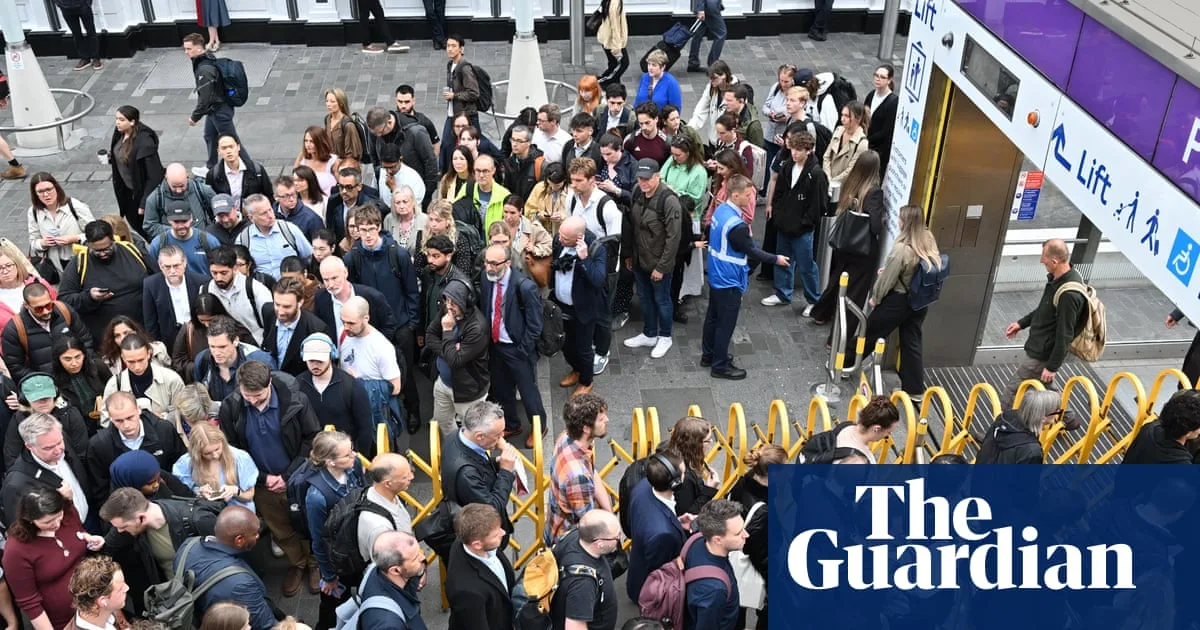
A 24-hour strike by London Underground drivers has begun, causing significant disruption to tube services and road traffic. Approximately half of the capital's tube drivers are participating in the action, which stems from a dispute over the introduction of a four-day working week. A second strike is scheduled for Thursday.
Despite last-minute negotiations at Acas between the RMT union and Transport for London (TfL), the strike went ahead on Tuesday. TfL urged passengers to check before travelling, warning that only about half of tube services would operate. Severe delays were reported on the Bakerloo, District, Hammersmith and City, Victoria, Piccadilly, and Northern lines.
Drivers from the Aslef union, who represent a slight majority of tube drivers, have welcomed the four-day week proposals and are not on strike, limiting the impact of the RMT's action. Other rail services, including the Elizabeth line, London Overground, and Docklands Light Railway, ran as normal, while buses were very busy due to extra traffic.
An RMT spokesperson blamed TfL's 'refusal to engage meaningfully' with concerns over working patterns, including fatigue, reduced flexibility, and shift lengths. A TfL spokesperson expressed disappointment, stating that the four-day week proposals were voluntary and designed to improve work-life balance. TfL's chief operating officer, Claire Mann, reiterated that drivers could remain on a five-day pattern if they chose.
Business groups, such as BusinessLDN, warned that the strike threat had already caused cancellations and altered plans, urging both sides to reach a sustainable agreement to end uncertainty for London's economy.




