
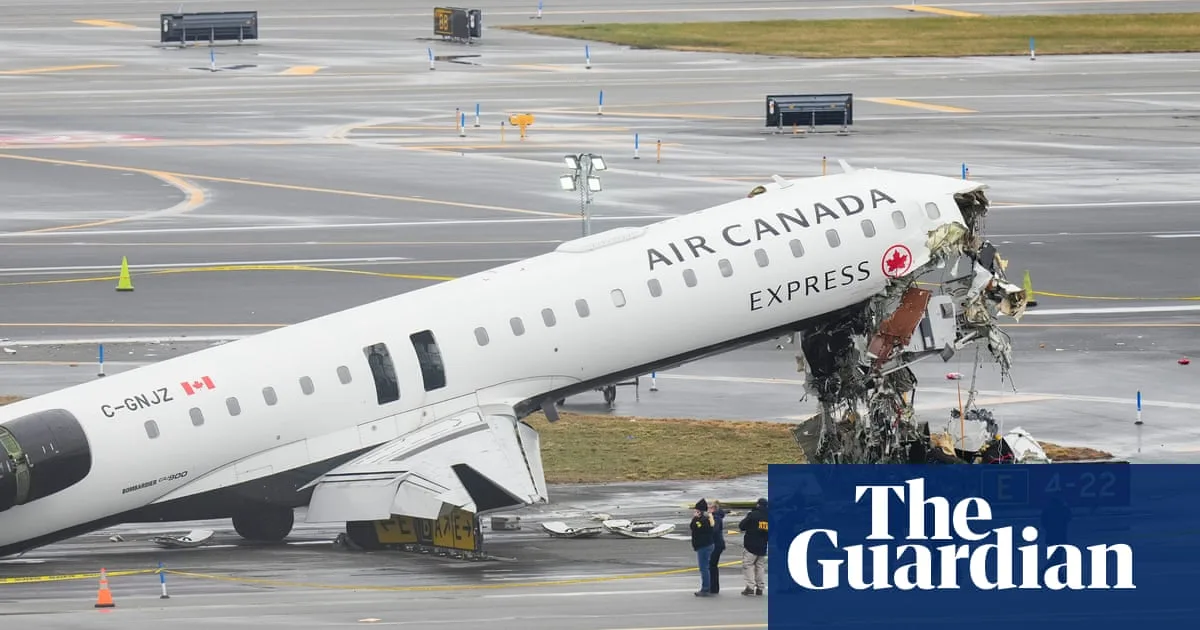
Pilot safety concerns about New York’s LaGuardia airport were filed to aviation officials months before Sunday’s collision between an airplane and a fire truck left two pilots dead and 41 other people hospitalised, according to reports from Nasa’s Aviation Safety Reporting System.
In one report from the summer, a pilot wrote: “Please do something,” after air traffic controllers failed to provide appropriate guidance about multiple nearby aircraft. “The pace of operations is building in LGA,” they said. “The controllers are pushing the line.” The pilot also referenced the January 2025 mid-air collision over the Potomac River in Washington DC, stating: “On thunderstorm days, LGA is starting to feel like [Ronald Reagan National airport] did before the accident there.”
The warning, first reported by CNN, detailed how the control tower initiated a takeoff clearance for an aircraft when their plane was “only 300 feet high on final” approach on a different runway. The departing plane hesitated, and the pilot noted that thick smoke from Canadian wildfires and a possible helicopter convinced him it was “safer to continue the approach and land about 10 seconds after the departing aircraft crossed our path”. He added that the air traffic control guidance “does not seem to give guidance on exactly how close aircraft in this situation can get”.
In another report since January 2025, a pilot said their aircraft had been cleared to cross a runway but “we noticed an aircraft we thought was landing at runway 31C seemingly headed for us”. They argued that air traffic control “should have sent the aircraft around”. Nasa’s system has received dozens of anonymous pilot complaints about safety at LaGuardia, the smallest of New York’s three airports.
The reports come as investigators examine the collision of a landing Air Canada Express flight 646 from Montreal with an airport fire truck that had been cleared to cross the runway. The crash killed pilots MacKenzie Gunther and Antoine Forest and injured dozens. After clearing the fire truck, which was responding to a plane with difficulties, the controller tried to stop it, later saying on a recording that he “messed up” after “dealing with an emergency earlier”.
The incident has raised concerns about stress on US airport operations, with shortages of air traffic controllers exacerbated by federal personnel cuts under Donald Trump’s administration. Airports also face ageing equipment and a shortage of security screeners due to a partial government shutdown since mid-February, which has led to long security lines and over 450 TSA officer resignations. Aviation expert Brian Fielkow commented: “We did not need another aviation tragedy to see this coming. We are watching a system under strain.”




