

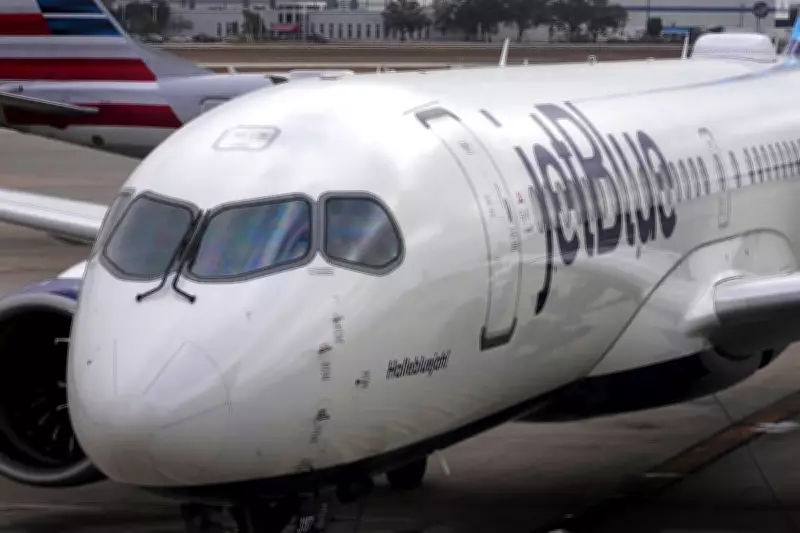
U.S. carrier JetBlue has implemented a significant increase in its checked bag fees, with charges rising by as much as $9. This move comes as the ongoing war in the Middle East, particularly involving Iran, continues to disrupt global oil supplies and drive up fuel prices for airlines worldwide.
New Fee Structure Takes Effect
The new baggage fees officially took effect on Monday, 30 March 2026. For most domestic economy passengers, the cost for the first checked bag has been raised from $35 to $39. During peak travel periods, such as April spring breaks, major holidays, and the summer season, passengers will now face a steeper charge of $49, up from the previous $40.
Additionally, JetBlue has increased the fee for checking a second bag. Off-peak periods now see a rise from $50 to $59, while peak demand times incur a charge of $69, compared to the earlier $60.

Rationale Behind the Increase
In an emailed statement to The Associated Press on Tuesday, JetBlue, which operates its flagship terminal at New York's John F. Kennedy International Airport, explained that charging more for optional services "used by select customers" is a strategy to maintain competitive airfares. The airline acknowledged that fee increases are not ideal but stated they are implemented only when necessary after careful consideration.
The primary driver behind this adjustment is the soaring cost of jet fuel, which has surged nearly 85% since the Iran war began on 28 February 2026. This conflict has severely curtailed ship traffic through the Strait of Hormuz, a critical passageway for approximately one-fifth of the world's oil supply. Furthermore, airspace closures in parts of the Middle East have compounded the issue, forcing some airlines to take longer routes that consume more fuel.
Impact on the Airline Industry
Jet fuel represents one of the largest expenses for airlines, typically accounting for about a quarter of operating costs. According to Argus Media, the average price for a gallon of jet fuel reached $4.62 on Monday, a sharp increase from $2.50 just before the conflict erupted. The U.S. Jet Fuel Index, which tracks average prices across major hubs including Chicago, Houston, Los Angeles, and New York, reflects this dramatic rise.
In response to these escalating costs, numerous non-U.S. carriers have already introduced fuel surcharges or raised ticket prices. Industry analysts anticipate that U.S. airlines, including JetBlue, will continue to pass some of these additional fuel expenses onto travelers through various add-ons, such as checked baggage fees and seat upgrades.
Exceptions and Customer Considerations
Despite the fee hikes, JetBlue has outlined certain exemptions. Customers who hold one of the airline's co-branded credit cards or loyalty program members who achieve specific tiers will still be eligible to check their first bag for free. Additionally, most passengers flying transatlantic routes will continue to receive their first checked bag at no extra charge.
The broader economic impact of the Iran war extends beyond JetBlue, with Iran's efforts to restrict the Strait of Hormuz to ships from nations it deems unfriendly causing crude oil prices to fluctuate wildly. Earlier this month, CEOs of major U.S. airlines, including Delta Airlines, American Airlines, and United Airlines, reported that higher jet fuel prices had already added approximately $400 million to their operating costs, underscoring the widespread challenges facing the aviation sector.






