

Italian Airports Brace for Jet Fuel Restrictions Amid Hormuz Blockade
Four major Italian airports could soon face significant jet fuel restrictions if disruptions linked to the ongoing blockade of the Strait of Hormuz continue. An aviation notice issued on Saturday, 4 April, explicitly warned that 'due to limited fuel availability' from supplier Air BP Italia, refuelling services for airlines under contract may be severely restricted.
Affected Airports and Priority Access
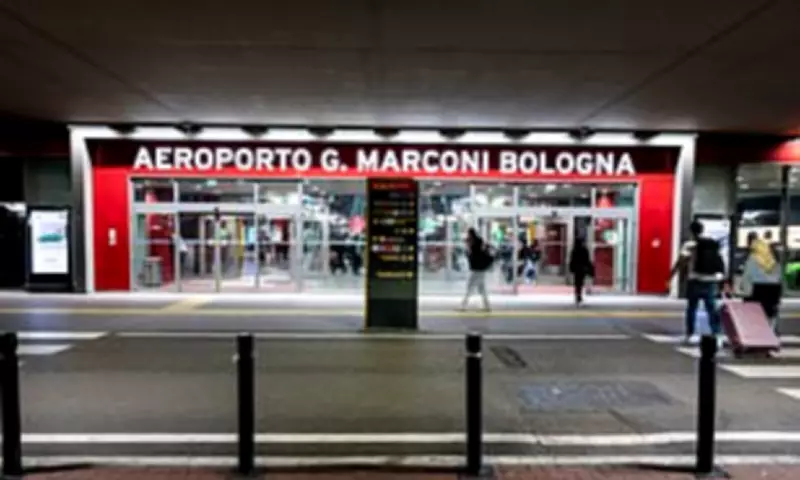
The airports impacted include Bologna Guglielmo Marconi Airport, Milan Linate Airport, Treviso Airport, and Venice Marco Polo Airport. According to reports from ANSA, priority access to the limited fuel supplies will be granted to emergency services, including ambulance and state flights, as well as long-haul flights exceeding three hours in duration. Other commercial flights could face operational restrictions until at least 9 April, with the potential for extensions if the crisis persists.
Geopolitical Roots of the Crisis
The Strait of Hormuz, one of the world's most critical maritime chokepoints for oil transportation, has been effectively shut off since the outbreak of conflict between the US, Israel, and Iran in late February. Its closure has sent global oil and gas prices soaring, destabilising economies worldwide and creating acute supply chain vulnerabilities.

Danilo Recine, vice president of the ANPAC, told SkyTG24 that while immediate mass cancellations in Italy are unlikely, 'the problem will become a reality' if no resolution is found to the blockage affecting oil shipments in the Gulf. The situation underscores the fragile interdependence of global energy markets.
Broader European and Global Implications
Shortages could rapidly spread beyond Italy if the blockade continues. Major airports in the UK, including Heathrow, have already reported fuel-related disruptions, while key aviation hubs in France and Portugal may also be at risk. In mid-March, Vietnam warned of possible flight cancellations from April, becoming the first country to sound the alarm after China and Thailand halted fuel exports to protect domestic supplies.
Jet fuel prices in Europe have surged to record highs, now nearly double pre-conflict levels, rising far faster than crude oil due to heavy reliance on Middle Eastern exports. Traders warn of 'acute tightness' in the market next month as supplies dry up. The International Air Transport Association told The Times the crisis has exposed 'deep vulnerabilities in jet fuel security' globally.
Industry Warnings and Summer Travel Uncertainty
Airlines are monitoring the situation with growing concern, particularly long-haul operators. Ryanair chief executive Michael O'Leary has warned travellers face a summer of uncertainty and potential chaos if the Middle East conflict continues to disrupt global oil routes.
Speaking to Sky News, O'Leary stated that while Ryanair is 'reasonably well-hedged' on 80 per cent of its jet fuel, passengers could face disruption from 'early May'. He revealed paying $150 a barrel for around 20 per cent of his fuel, insisting the more immediate concern is whether there will be enough physical jet fuel to keep planes flying.
O'Leary warned there is a 'reasonable risk' that 10 to 25 per cent of supplies could be endangered in May and June, potentially spelling summer travel chaos for millions. He expressed hope for a swift resolution but emphasised the travel industry remains under the heel of the Middle East conflict.
Political Response and Energy Security
Italian Prime Minister Giorgia Meloni visited several Gulf states over the weekend in a bid to secure continued access to critical energy supplies amid the ongoing conflict. She vowed to act to 'guarantee Italy has access to the energy supply it needs', as reported by Politico, highlighting the high-stakes diplomatic efforts underway to mitigate the crisis.
The situation remains fluid, with the aviation sector, governments, and energy markets closely watching for any resolution to the Hormuz blockade that could alleviate the mounting pressure on global jet fuel supplies.






