Heathrow Airport's Hidden Crowding Issue: Left vs Right Walking Habits Lead to Terminal Collisions
Heathrow Airport has uncovered a surprising source of its crowding problems that cannot be fixed by simply adding more infrastructure. According to Chief Executive Thomas Woldbye, the core issue involves British and foreign travellers adhering to different walking sides, resulting in frequent collisions within the terminals.
Walking Direction Discrepancies Create Terminal Chaos
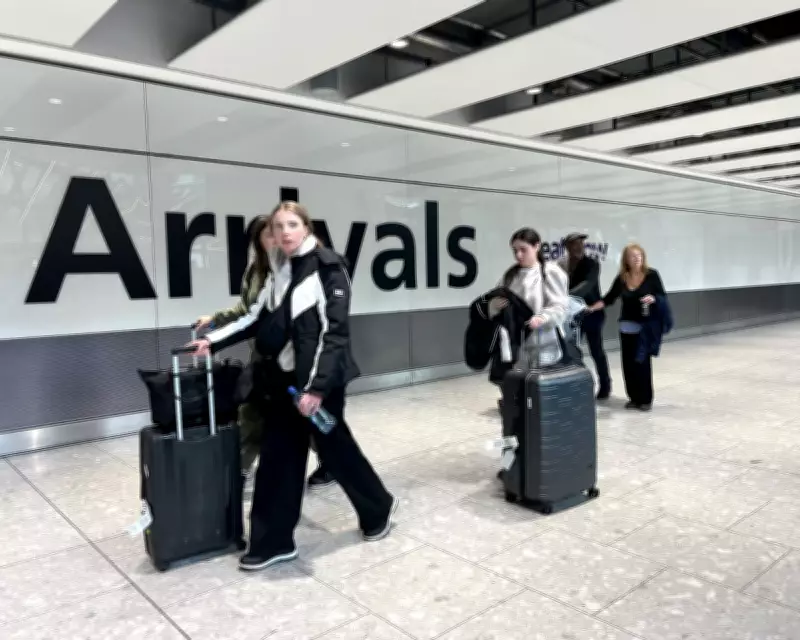
Speaking at an industry event hosted by the Aviation Club UK, Woldbye explained that while Heathrow services more passengers in a smaller area compared to other European hubs, part of the airport's trouble stems from differing continental senses of direction. The Danish executive noted that British passengers naturally keep to the left, while Europeans typically walk on the right, and this occurs in both directions throughout the airport.
"The problem is that all the British people keep to the left and normally Europeans keep to the right. And they do that in both directions," Woldbye stated. "So we can be crashing into each other, and I see that from personal experience."

He specifically mentioned that Terminal 5, the main hub for British Airways, appears crowded because people are often "in the wrong place" due to these conflicting walking patterns. While Woldbye joked about the situation with staff, he emphasized it represents a genuine issue that requires addressing through clearer directional guidance.
Expansion Plans and Market Share Concerns
Heathrow's plans for a third runway could introduce approximately 40 million additional passengers with varying directional preferences into the mix, alongside 240,000 extra flights annually. The airport intends to build more satellite terminals if expansion proceeds, though Woldbye warned that even with government-backed growth, rival international hubs would likely outpace Heathrow's development.
"London will lose market share every single year for the next 10 years. I think that should be a serious concern," the CEO cautioned, highlighting competitive pressures in the global aviation landscape.
Sustainable Aviation Fuel Initiatives
Simultaneously, Heathrow is working to address environmental concerns regarding the third runway's compatibility with the UK's 2050 net zero goals. The airport has established an £80 million fund, financed through landing charges, to subsidize airlines that choose to use more Sustainable Aviation Fuel (SAF) beyond national requirements.
While the UK mandates an average of at least 3.6% SAF in aviation fuel by 2026, Heathrow aims to reach a self-imposed target of 5.6%, helping carriers cover the additional costs of cleaner, more expensive fuel. SAF, primarily produced from recycled cooking oil, emits equivalent CO2 during flight as conventional jet fuel but offers a lower net carbon footprint due to its production lifecycle.
Matt Gorman, Heathrow's Director of Sustainability, explained: "We have looked to use our scale and influence to attract SAF and we've shown you can get SAF flowing. The next challenge is stimulating domestic production – from a carbon, but also an energy security and growth perspective."
Industry Progress and Economic Opportunities
Duncan McCourt, Chief Executive of industry group Sustainable Aviation, acknowledged that government pledges to construct five UK fuel plants by 2025 had been "optimistic," with none currently under construction. However, he noted significant progress and highlighted substantial economic potential.
"There is a real economic growth opportunity, for tens of thousands of jobs in the UK by 2050," McCourt emphasized, pointing to long-term benefits beyond environmental considerations.
Provisional figures released this week indicate that the 2025 supply met the UK's first annual fuel mandate of 2% SAF, with strong uptake in the final months alleviating earlier concerns about missing targets. This development suggests growing momentum for sustainable aviation solutions despite ongoing challenges.