Gulf Aviation Crisis Exposes Critical Flaws in Air Passenger Rights Rules
The sudden shutdown of airspace across Qatar and much of the Middle East has plunged global aviation into chaos, leaving millions of passengers stranded and revealing stark inadequacies in existing air passenger rights regulations. This unprecedented disruption has laid bare a system that is fundamentally unfit for purpose, particularly for travellers on return journeys with non-European airlines.
Melbourne Grand Prix Highlights Travel Paralysis
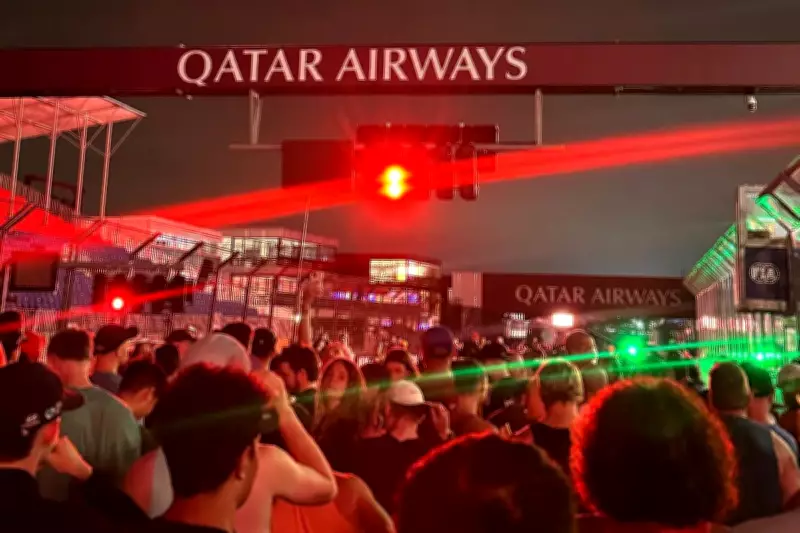
Albert Park in Melbourne typically enjoys tranquility throughout the year, except for one electrifying weekend when the Formula One Grand Prix transforms the southernmost major city into a roaring spectacle. This year's Formula One Qatar Airways Australian Grand Prix 2026 presents an unusual scenario: teams and fans cannot reach the motorsport festival via flights operated by the event's main sponsor.
Qatar Airways aircraft remain grounded at airports worldwide, including an A380 parked alongside three Emirates SuperJumbos in Sydney and a Boeing 787 in Canberra. As the Gulf crisis unfolds, these planes stand paralysed—along with the travel plans, hopes, and dreams of countless passengers who expected to fly on them.

Passenger Rights: A Patchwork of Protection
Since regional airspace closures commenced over the weekend, travel experts have been inundated with requests for guidance. For thousands of passengers booked daily from UK airports to Doha with connections to Asia, Australasia, or Africa, the advice remains straightforward: airlines are obligated to provide alternative travel arrangements as close to original timings as possible.
The sudden removal of substantial global aviation capacity has inevitably caused fares to skyrocket while available seats have become scarce. The non-stop London Heathrow to Perth service has been fully booked, with Formula One teams like McLaren and Red Bull switching to Qantas flights. However, this represents the cancelling airline's responsibility, not the passenger's burden.
Numerous travellers have reported that Qatar Airways has declined to rebook them on alternative carriers for journeys beyond Doha. While the airline has been contacted for clarification, passengers retain the right to book with other carriers and submit expenses to the Qatari airline. Visitors to the UK awaiting return flights via the Gulf are being accommodated in hotels with meals provided by airlines.
The Return Journey Dilemma
For British passengers who had already travelled to the eastern and southern hemispheres hoping to return this week, the situation proves markedly different. Non-European airlines maintain no obligation to provide customer care for flights originating outside the EU and UK.
This week has seen countless British travellers in Australia spending their final holiday days desperately rearranging travel plans. One Leicestershire farming couple invested nearly £10,000 in tickets from Sydney via San Francisco to London. Passengers are accumulating alarming hotel bills, with little indication that airlines intend to provide reimbursement—except for those in Abu Dhabi and Dubai where the UAE government is covering costs.
Travellers are advised to maintain meticulous receipts in hopes that airlines might eventually cover out-of-pocket expenses. Standard travel insurance policies offer limited assistance, revealing a significant gap between where air passenger rights conclude and travel insurance coverage begins.
Legislative Imbalances Demand Reform
When holidaymakers become inadvertently entangled in severe disruption of this magnitude, responsibility for costs should clearly fall to airlines. This principle forms the foundation of European air passenger rights regulations, which recently celebrated their 21st anniversary. However, the "261" legislation contains fundamental flaws, particularly its inherent lopsidedness.
These entitlements apply to all flights departing from the UK and EU, but for return journeys from outside Europe, care requirements (and sometimes compensation) apply exclusively to British and European carriers. Many passengers struggle to comprehend this discrepancy: identical planes, tickets, and distances yield different protections depending solely on travel direction.

The time has come to eliminate this regulatory loophole. This isn't to suggest protection should extend to complex itineraries involving multiple carriers, where responsibility naturally falls to the traveller. However, British passengers booking straightforward return tickets from the UK on Qatar Airways or any foreign airline deserve consistent protection in both directions.
As Melbourne prepares for its weekend roar, travellers worldwide are raising their voices for meaningful reform in air passenger rights legislation.