Drivers can avoid fines of up to £2,500 and the risk of losing their driving licence by using a free DVLA online service that sends vehicle tax reminders by text or email. The reminder encourages action before the tax renewal deadline passes, rather than leaving owners caught unaware.
How the reminder service works
Vehicle tax must be renewed by the last day of the month in which the current tax period ends. For those who pay manually every six or 12 months, the DVLA usually sends a V11 reminder letter by post around three weeks before the tax expires.
In an online post, the DVLA said: "Do you know when your vehicle tax is due? With a Driver and Vehicles account, you can choose to receive vehicle tax reminders by text or email. Make life a little easier. It only takes around five minutes".
Vehicle tax, commonly referred to as road tax, contributes towards supporting the government's wider national and local objectives, including Department for Transport infrastructure (major roads, smart motorways, bridges), public transport networks, and council-administered local road upkeep.
Penalties for driving without tax
If an untaxed vehicle is spotted parked on or travelling along a public road—by ANPR cameras, police patrols, or DVLA enforcement vans—it is treated as a criminal offence. The DVLA first sends an Out-of-Court Settlement (OCS) letter, allowing the issue to be resolved without court proceedings.
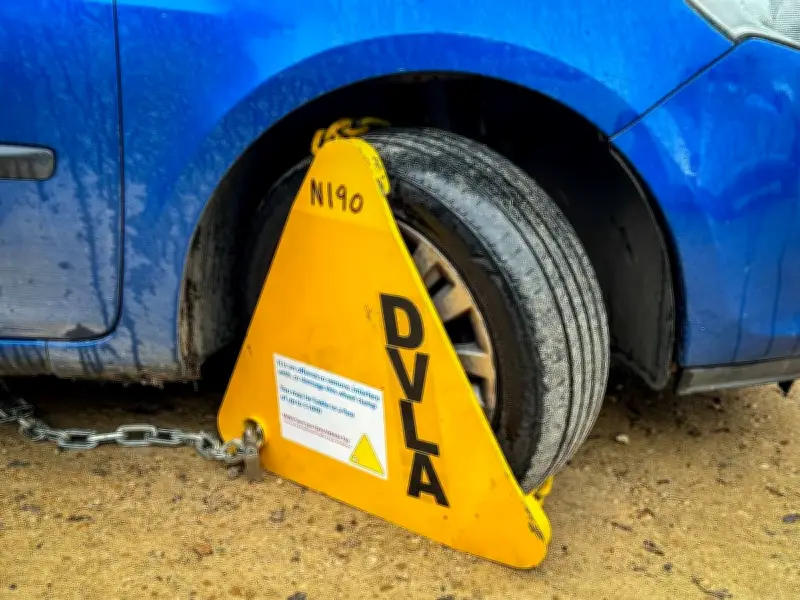
If ignored, the matter proceeds to a magistrates' court, where penalties can reach £2,500 or five times the taxable amount, whichever is higher. DVLA wheelclamping contractors, local authorities, and police forces can clamp and seize untaxed vehicles left on public highways, resulting in charges of up to £280.
Operating a vehicle without tax is a non-endorsable offence, so no penalty points are added to the licence. However, driving without valid taxation can nullify motor insurance, which independently attracts a £300 fixed penalty and six penalty points, or potentially an unlimited fine through the courts.
Exemptions and SORN
Nearly every motorist in the UK is legally obliged to tax any vehicle they operate or maintain on public highways. Certain vehicles qualify for exemption from payment, including vehicles over 40 years old, vehicles used by disabled motorists, and electric cars under certain historical provisions.
Even exempt vehicles must still be registered formally to be given tax at zero cost. When a vehicle is stored away from public property, such as in a private garage or on a driveway, a Statutory Off-Road Notification (SORN) must be filed, after which vehicle tax payments are not required.