The first publicly controlled bus service in the Liverpool City Region has launched today, marking the end of a four-decade wait for public ownership. Services out of St Helens are the first to operate under a new franchised model, meaning buses are now run by the Liverpool City Region Combined Authority rather than by private operators.
The landmark moment has been a central goal for the city region’s mayor since he took office nearly a decade ago. He described today as one of the biggest days since the devolution deal that brought major new powers and an elected mayor to the region.
Immediate improvements for passengers
The Combined Authority says the change brings immediate benefits to bus services in St Helens, including expanded weekend and evening timetables, more frequent services and a new express route to Liverpool John Lennon Airport. Buses on key routes will run more often, with two-hourly services now running every hour, plus extra evening, Sunday and early-morning buses, including early-morning express links to Southport.

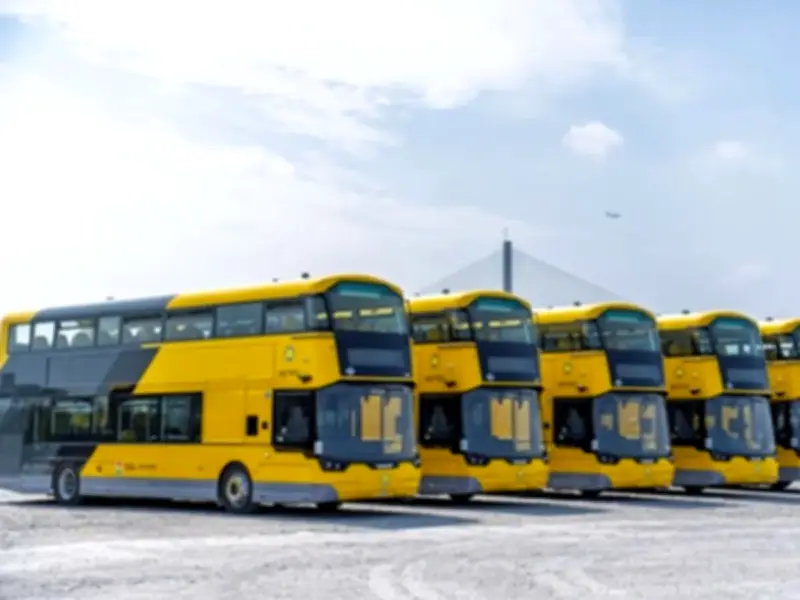
After St Helens, improved publicly-owned services will launch in Wirral later this autumn, followed by Knowsley, Liverpool and Sefton in 2027. Passengers will travel on state-of-the-art, low-emission buses in the city region’s yellow and grey Metro livery.
Mayor hails ‘historic day’
For the first time, the new X3 express service will give passengers a direct link from St Helens town centre to Liverpool John Lennon Airport. Speaking ahead of boarding the first publicly-owned bus journey since services outside London were privatised in the 1980s, Mayor Steve Rotheram said: “It is a long-term aspiration for us to take back control of our full public transport network. We had the opportunity with the Bus Services Act 2017 and through that piece of legislation we could make the moves needed to take the buses back into our control through franchising - and that is what we have done.”
He added: “It has been a very long and winding road. If you had asked me the number one thing I wanted to achieve when I was coming into this job nearly 10 years ago, I would have said this. It wasn't just sub-optimal what we were putting up with in this city region back then, it was second class and we are certainly not second class citizens here.”
‘A complete change’
“Straight away in St Helens people will see more frequent services, more routes and better buses. We are putting more resources into previously intermittent services. It is a complete change,” the mayor said. “Before it was the private operators who were ultimately the arbiters and decision-makers when it came to things like what routes to run. Now it is up to us.”
Adding a note of caution, he said: “We are not saying that all the problems every passenger has will be resolved or that every route everyone has asked for will be granted on day one - but we can work towards a much more joined-up public transport system now. People can and will hold us to account on this and that is important when we are creating a transport system for everyone. It has taken four decades to get to this point. Now we have £2 bus fares on the best and most accessible bus fleet in the country and those buses are coming into public control.”