
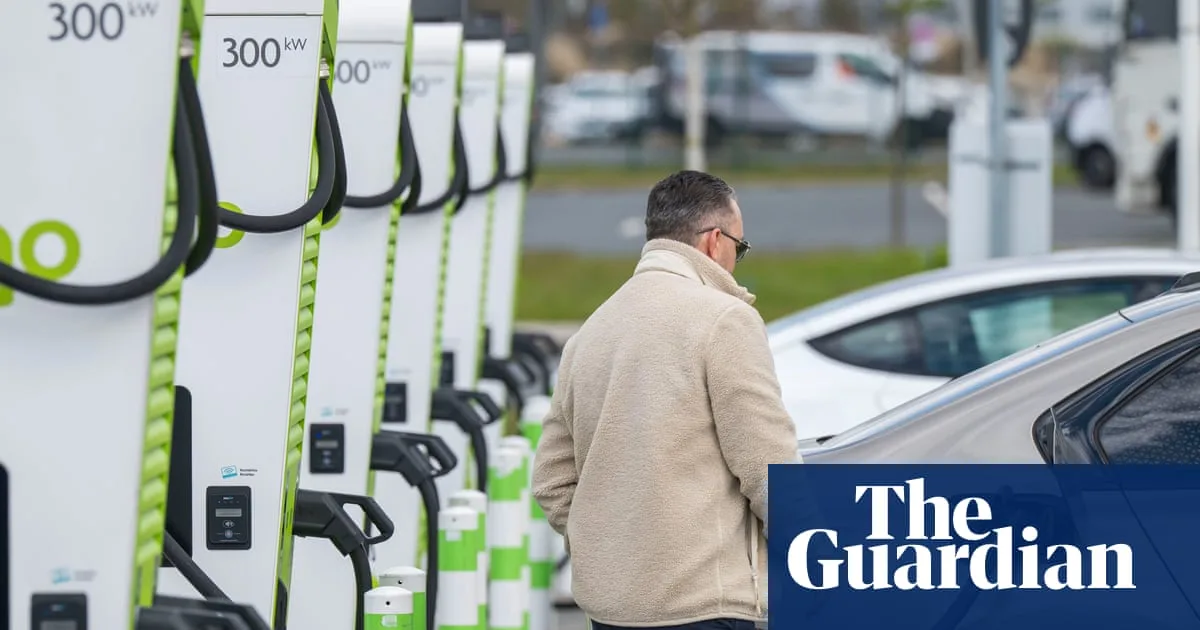
Sales of electric cars in continental Europe soared by 51% in March, with 224,000 new electric vehicles registered, driven by rising petrol and diesel costs linked to the Iran war.
Data from New AutoMotive and E-Mobility Europe shows that half a million new EVs were registered across the first three months of the year, a 33.5% increase on the same period last year.
Norway continues to lead the switch, with 98% of all new cars sold in March being electric. Denmark followed at 76% and Finland at almost 50%. The Nordic countries have benefited from higher wages, generous subsidies and extensive charging infrastructure.
In France, government incentives of up to €5,700 for low-income households and a social leasing scheme have boosted EV uptake by 50% year on year. Germany recorded a 42% increase in March, and every second electric car sold in Europe is now made in Germany, according to the German automotive trade body.
Chris Heron, secretary general of E-Mobility Europe, said: 'March’s surge in electric car sales is one of Europe’s biggest recent gains in energy security, in a month when oil dependence has become a real vulnerability.' He calculated that the switch has reduced annual forecourt demand by the equivalent of 2 million barrels of oil.
Italy, one of the slowest EU countries to adopt EVs, posted a 65% year-on-year increase in March, though its market share remains low at 8.6%. The figures come as the US-Israel war on Iran accelerates the move away from combustion engines, despite criticism from Donald Trump.




