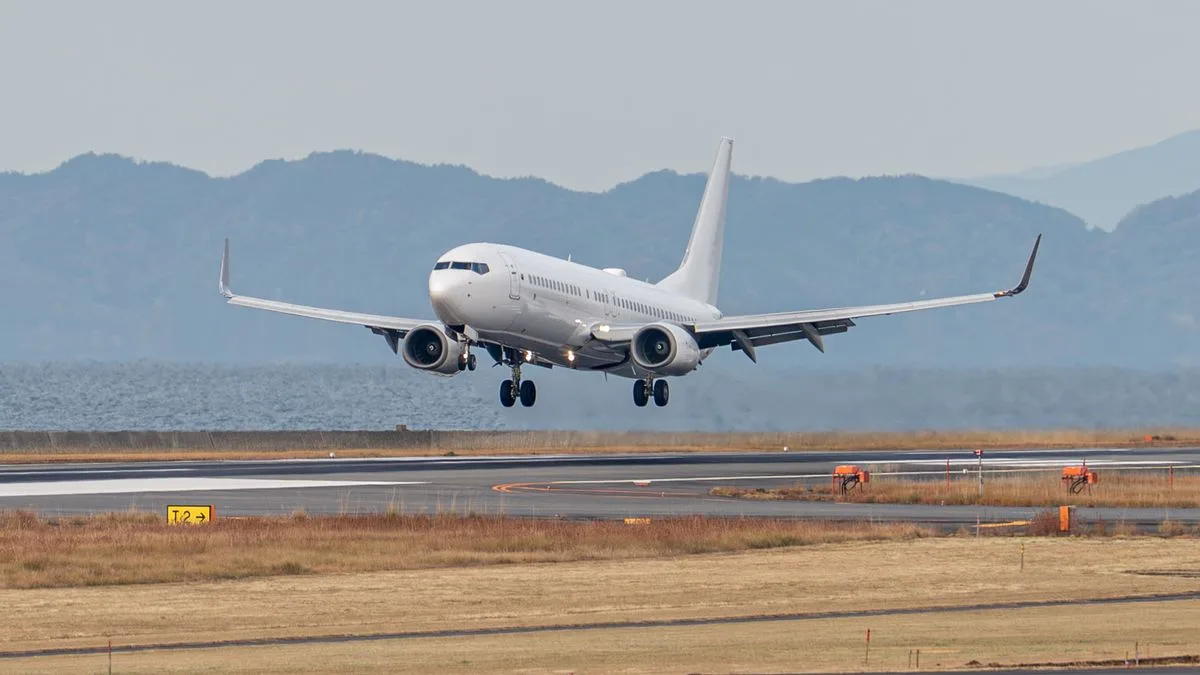
Europe's Most Dangerous Airports in Holiday Hotspots Require Expert Pilots
Europe's Most Dangerous Holiday Airports Need Expert Pilots

Europe's Most Dangerous Airports in Holiday Hotspots Require Expert Pilots

Jetting off on a European holiday should be an exciting and seamless experience, but for travellers heading to certain popular destinations, the journey involves landing at some of the world's most challenging and dangerous airports. Across the continent, four key holiday hotspots have airports that demand exceptional skill from pilots, who must undergo rigorous specialist training to ensure safe arrivals.

While thousands of flights take off and land safely at these locations daily, the inherent risks cannot be overlooked. These dangers stem from a combination of factors, including tricky runway configurations, unpredictable weather patterns, and demanding terrain. As a result, aviation authorities mandate that pilots complete advanced training through ground instruction, simulator sessions, and in-air practice before attempting these complex manoeuvres.

Aviation Safety Categories in Europe

The European Union Aviation Safety Agency (EASA) maintains stringent safety standards across all airports in Europe. The majority of airports fall into Category A, which requires only standard pilot training. However, Category B airports feature "slightly out of the ordinary" characteristics, while Category C airports necessitate full specialist training due to their extreme challenges. The following destinations are prime examples of Category C airports, where pilot expertise is paramount.

Wide Pickt banner — collaborative shopping lists app for Telegram, phone mockup with grocery list

Innsbruck Airport, Austria

Nestled deep within a picturesque valley in the Austrian Alps, Innsbruck Airport presents a formidable challenge for aviators. The stunning mountain scenery that attracts tourists also creates significant obstacles for landing aircraft. Reports indicate that only captains are permitted to land planes at this airport, due to the precise manoeuvring required.

The approach involves navigating low-level winds and often requires a tight turn during descent. Furthermore, the surrounding mountains severely limit options for a missed approach, leaving little margin for error. Pilots must demonstrate exceptional skill to safely guide aircraft into this confined alpine valley.

Gibraltar International Airport, Gibraltar

Gibraltar boasts one of the most unusual airport setups in Europe, where a main public road intersects directly with the runway. Traffic is halted approximately fifteen times daily to allow planes to land and take off, creating a unique logistical challenge.

For pilots, the primary difficulties arise from abnormal wind effects and turbulence generated by the iconic Rock of Gibraltar. These conditions frequently lead to diversions and go-arounds, with some flights ultimately abandoning landing attempts altogether. The combination of urban infrastructure and natural topography makes this a particularly demanding airport for even seasoned pilots.

Cristiano Ronaldo Airport, Madeira

Madeira's airport features a runway that appears precarious, constructed as a bridge extending over the ocean. Despite its daunting appearance, this design has actually enhanced safety at the facility. Pilots require special training to obtain permission to land on the island, navigating mountainous terrain and exposed coastlines before aligning perfectly with the narrow runway, often in the face of strong crosswinds.

Tragically, a fatal accident in 1977 claimed 131 lives when a plane overshot the runway, leading to the construction of the current runway extension bridge. This historical event underscores the critical importance of pilot proficiency at this challenging location.

Courchevel Airport, France

Located in the French Alps, Courchevel Airport is frequently ranked among the world's most dangerous airports. It holds the distinction of having the shortest runway globally and the highest tarmacked runway in Europe, situated at 6,588 feet above sea level with a runway measuring just 1,762 feet in length.

Only small aircraft and helicopters are permitted to land here, adding to the exclusivity and difficulty. The runway lacks lighting systems, and the area is often subjected to extreme weather conditions, particularly during autumn and winter months. These factors combine to create an exceptionally hazardous environment for aviation.

Pickt after-article banner — collaborative shopping lists app with family illustration

In conclusion, while these European holiday destinations offer unforgettable experiences, their airports present significant challenges that demand the highest levels of pilot training and expertise. Travellers can take comfort in knowing that stringent safety protocols and specialist training ensure their journeys remain as secure as possible, even in the most demanding conditions.




