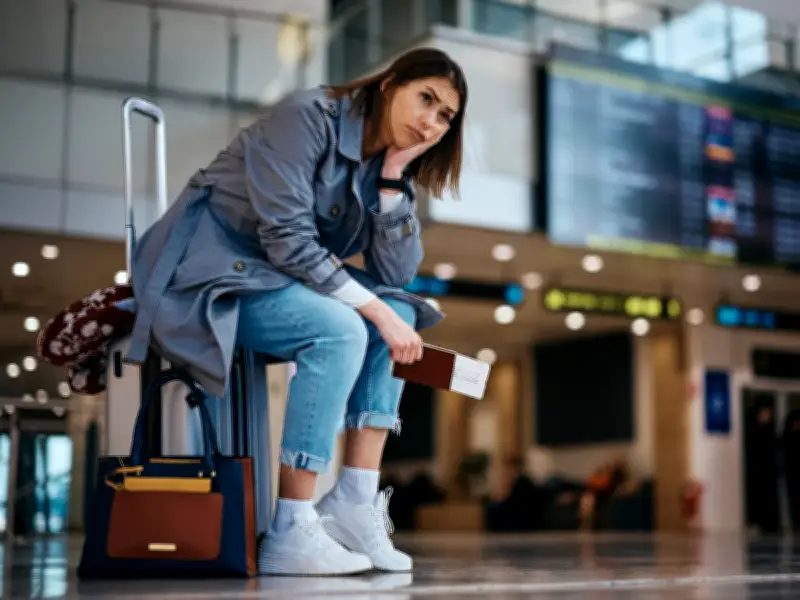
Hundreds of thousands of British travellers risk becoming stranded in queues lasting up to five hours at European airports this summer due to contentious new border controls. The Entry/Exit System (EES), fully operational since April, requires UK travellers to submit fingerprints and have their photograph captured upon entering the Schengen zone, replacing traditional passport stamps with digital records accessible across 29 countries.
Airlines warn of 'critical point'
In a strongly-worded open letter to European Commission President Ursula von der Leyen, trade bodies Airlines for Europe, ACI Europe, and the International Air Transport Association said: "Today we have reached a critical point." They called for the authority to suspend fingerprint checks in July and August whenever queues exceed what border posts can manage. Ryanair went further, with chief operating officer Neal McMahon accusing Brussels of treating holidaymakers as "guinea pigs for a half-baked passport control system" and demanding EES be delayed until September.
Before the system became fully operational, border officials could disable EES during peak times to prevent queues. That safeguard was withdrawn at the end of March, leaving airports with no means of easing congestion.
Financial impact on families
The delays are causing significant financial losses. One family from the North West arrived three hours before their flight home from Milan but were turned away from processing due to no gate assignment. They missed the flight and spent around £1,000 on replacement seats to Gatwick. Under current rules, airlines are not required to rebook passengers free of charge, and insurers indicate standard policies are unlikely to cover costs because queuing is considered a normal part of travel.
Tips to protect your trip
Passengers are advised to allow extra time. Geneva airport recommends arriving up to four hours before a flight for first-time EES registration, while quieter airports like Faro, Lisbon, and Munich suggest two-and-a-half to three hours. For busy hubs like Paris Charles de Gaulle, Amsterdam Schiphol, and Frankfurt, three hours is the minimum during morning peaks.
Register in advance via the EU's "Travel to Europe" app, which allows submission of passport details and a facial image up to 72 hours before departure, though not all airports support it. After the first trip, fingerprints and photos are stored for three years, so subsequent crossings involve only a facial check, reducing delays for repeat travellers.
Check insurance and alerts
Insurance experts say cover for missed flights due to border queues is patchy, so travellers should check their policies for missed departure or delay cover. Airlines including easyJet, Jet2, and Ryanair encourage passengers to download their apps and enable notifications for alerts about lengthy queues at departure airports.
Despite the disruption, aviation chiefs say most passengers pass through with little difficulty, and surveys show most travellers support stricter digital borders once they understand the reasoning. The industry's grievance is not with EES itself but the lack of flexibility to relieve strain during peak periods.