

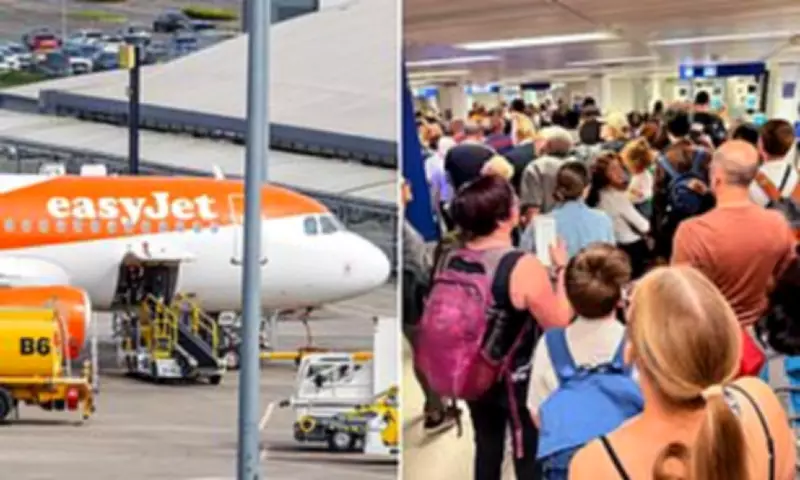
EasyJet Executive Warns of Impending Aviation Fuel Crisis
A senior easyJet official has publicly acknowledged that severe fuel supply problems could materialise for the aviation industry within the next three to four weeks. This stark warning comes as the price of oil and its derivatives, most critically jet fuel, has surged dramatically following the outbreak of war in the Middle East. Holidaymakers globally are now being alerted that thousands of flights in the coming period face the axe due to these mounting pressures.
Global Market Vulnerabilities Exposed
Javier Gándara, the country director for easyJet in southern Europe, provided a sobering assessment to the Majorca Daily Bulletin. He stated it remains 'difficult' to predict the precise severity of the impending issue after the three-to-four-week window. 'Everything [will be] affected because, ultimately, we are talking about a global market,' Gándara emphasised. 'No one will be immune to potential supply problems.'
He further cautioned that the conflict's impact on fuel prices would almost certainly be negative, compounding broader cost-of-living pressures. 'All consumers will experience a significant impact on their income due to the increase in mortgage and rental prices, food, gasoline, and so on,' he noted, adding that predicting the net effect of these combined factors is challenging.

Industry Leaders Echo Dire Predictions
This warning follows last month's advice from easyJet's CEO, Kenton Jarvis, who urged travellers to book flights 'as early as possible' to sidestep anticipated price surges if oil costs remain elevated. Travel experts have concurred with this grim outlook, fearing that even short-haul flights to popular Mediterranean destinations could see fare increases within weeks, regardless of a potential swift end to the hostilities.
Dustin Benton, Managing Director of Forefront Advisers, a firm that counsels airlines on policy, highlighted the persistent nature of the supply chain disruption. 'You can't just snap your fingers and switch everything back on,' he warned, indicating that multiple factors will continue to jeopardise the global supply of this crucial fuel.
Existential Threat to Airlines Outlined
Aviation specialist Sally Gethin provided a detailed analysis to the Daily Mail, explaining that the scale of disruption for passengers hinges on the duration of key maritime strait closures. 'Even if it opens you'd still need time for the jet fuel supplies to start up again,' she stated. 'So the best case scenario would be fares going up and some routes being cancelled.'
Gethin outlined a far more severe worst-case scenario: 'The worst case scenario is if this carries on for six to eight weeks and the shortages start really biting. This could pose an existential crisis to airlines - even if they slap on fuel surcharges they still won't recoup the cost.' She projected the potential cancellation of 'tens of thousands, potentially hundreds of thousands, of flights being cancelled globally,' which could also impact holiday companies, though ATOL protection would shield many consumers.
She predicted smaller airports with limited fuel storage would be hardest hit, and newly launched airline routes would be most vulnerable to cancellation. Gethin suggested the crisis could precipitate a return to 1990s-era aviation, with higher fares and fewer low-cost carriers, though she stressed the rapidly evolving situation remains hard to forecast with certainty.
Widespread Airline Cancellations Already Underway
The industry is already reacting to these pressures. Over the weekend, Irish carrier Aer Lingus announced it is cutting over 500 flights in the coming weeks, citing 'mandatory maintenance' on aircraft. Internal documents reviewed by the Irish Independent reveal the airline will axe several transatlantic services to cities including Seattle, San Francisco, Minneapolis-St Paul, and Toronto. Numerous flights to UK hubs like London Heathrow, Manchester, Newcastle, Birmingham, and Edinburgh are also being cancelled, with passengers rebooked.

In continental Europe, Lufthansa confirmed last week that its regional subsidiary, Lufthansa CityLine, will suspend operations starting Saturday due to soaring kerosene prices and ongoing labour disputes. Similarly, Dutch airline KLM has cancelled 160 flights across the next month directly because of rising fuel costs.
This wave of cuts extends across the globe, with seven other major airlines having announced flight reductions:
- British Airways
- Virgin Atlantic
- United Airlines
- Scandinavian Airlines
- Cathay Pacific
- Air New Zealand
- Norse Atlantic Airways
In response to the escalating situation, an easyJet spokesperson told the Mail: 'We continue to engage with fuel suppliers, airports and governments to monitor the situation.' As the industry braces for a turbulent period, passengers worldwide are advised to prepare for significant travel disruption and escalating costs in the weeks ahead.





