

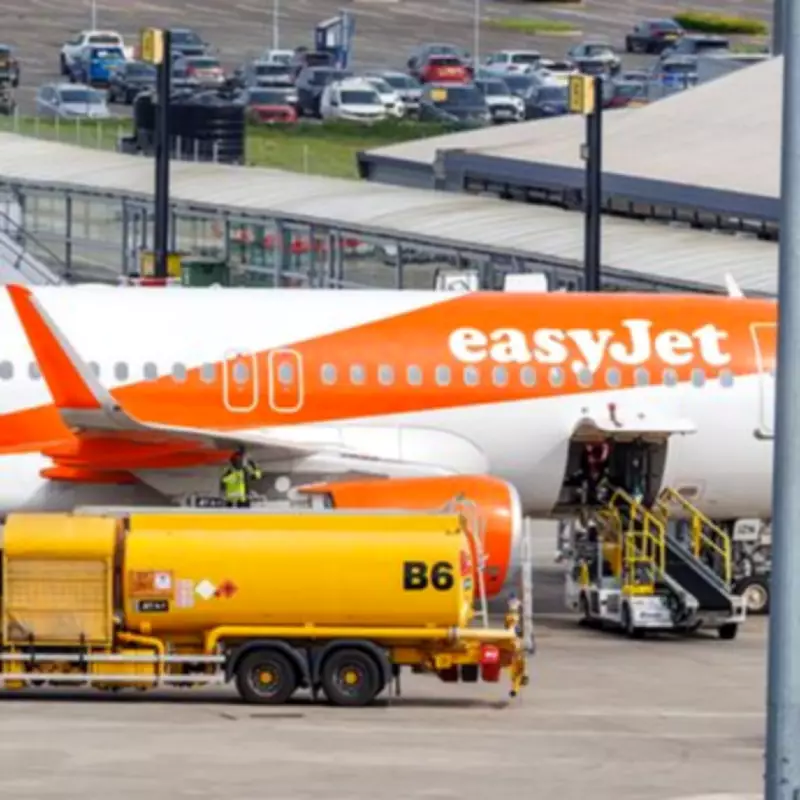
EasyJet Confronts Passenger Anxiety Over Impending Jet Fuel Crisis
EasyJet has officially addressed mounting passenger concerns regarding potential holiday disruptions stemming from a looming jet fuel shortage. The airline's response comes amid escalating fears that European air travel could face significant operational challenges in the coming weeks.
International Energy Agency Issues Dire Warning
The executive director of the International Energy Agency, Fatih Birol, delivered a stark warning last week, indicating that Europe currently possesses approximately six weeks of jet fuel reserves. This precarious situation has been directly attributed to restrictions imposed by the ongoing Middle East conflict.
Birol characterized the developing scenario as "the largest energy crisis we have ever faced," with specific disruptions in the Strait of Hormuz, driven by Iranian actions, posing a severe threat to aviation fuel supplies. The IEA director explicitly stated that if the Strait of Hormuz remains closed, flight cancellations across Europe could become inevitable, noting that "some of the flights from city A to city B might be cancelled as a result of a lack of jet fuel."

Political Scrutiny and Government Response
Liberal Democrat MP for Eastleigh, Liz Jarvis, has formally questioned the Secretary of State for Transport regarding the risk of jet fuel shortages. Her parliamentary inquiry sought clarification on recent assessments of jet fuel availability and pricing trends, discussions with airline industry stakeholders, and potential impacts on passenger airfares.
In a detailed response, Transport Secretary Keir Mather confirmed that the government is actively monitoring the impact of the Middle East conflict on fuel supplies, including aviation fuel. Mather emphasized coordination with the Department for Energy Security and Net Zero, alongside collaboration with fuel suppliers, airlines, and airports to comprehensively understand jet fuel levels and pricing dynamics.
The Transport Secretary stated: "There is no immediate cause for concern relating to fuel stocks, and speculation will not help airlines or passengers. Many airlines lock in fuel prices in advance, to help protect tickets from spikes in price. We encourage all airlines to do what they can to ensure tickets remain fairly and appropriately priced for passengers."
Passenger Concerns and Airline Reassurances
Numerous EasyJet customers have taken to social media platforms to express their anxieties about upcoming travel plans. One concerned passenger, planning a holiday to Tunisia in mid-May, directly questioned whether they risked being stranded abroad due to potential fuel shortages.
EasyJet's customer service team responded promptly, stating: "Hello Emily, thanks for reaching out to us. We appreciate the concern, our holidays are going ahead as planned, if for whatever reason there are any changes that may affect your holiday then our dedicated team will reach out prior to departure."
Another passenger, scheduled to travel to Berlin with young children in May, voiced concerns about last-minute cancellations and disappointing their family. The airline provided similar reassurance, confirming they would communicate directly if any booking changes became necessary.
Airline Leadership Provides Operational Assurance
Kenton Jarvis, EasyJet's chief executive officer, has publicly affirmed that all airports served by the airline are currently "operating as normal." He provided crucial context regarding fuel supply visibility within the aviation industry, explaining that operators typically maintain only three to four weeks of forward visibility regarding jet fuel supplies, a standard practice that predates the current crisis.
Jarvis elaborated: "We have visibility to the middle of May, and we have no concerns. What we're seeing is airports and fuel suppliers working well to bring jet fuel to the airports."
Industry-Wide Concerns and Contingency Planning
The potential fuel crisis has prompted responses from multiple airline executives across the industry. Ryanair's chief executive, Michael O'Leary, has previously indicated that disruption could potentially begin as early as May, depending on the continuation of conflict in the Middle East.

O'Leary told Sky News: "Fuel suppliers are constantly looking at the market. We don't expect any disruption until early May, but if the war continues, we do run the risk of supply disruptions in Europe in May and June, and we hope the war will finish sooner than that and the risk to supply will be eliminated."
The aviation industry now faces a critical period of uncertainty, with airlines balancing operational realities against passenger expectations, while government authorities monitor the evolving fuel supply situation with heightened vigilance.





