
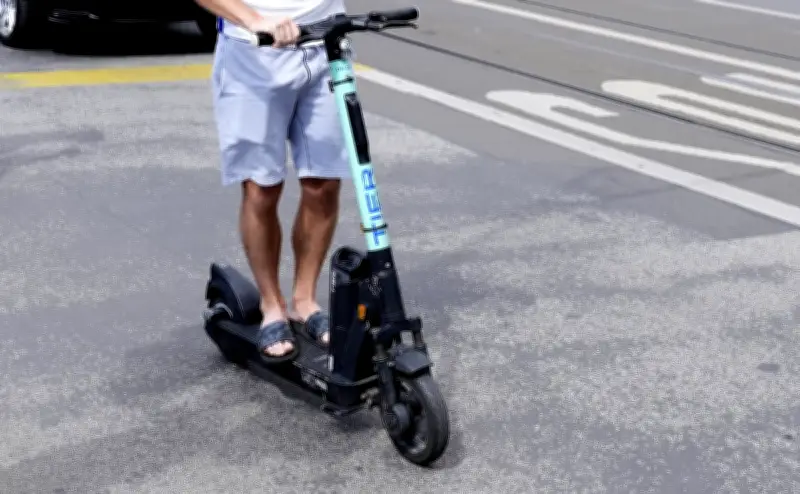
E-scooter riders face a higher risk of injuries to the brain and internal organs than cyclists or motorcyclists, according to a new analysis.
Key Findings
More than one in 10 e-scooter riders were children, who were also more likely to be injured. Helmet use among users was also rare, and women were more likely to suffer severe injuries, researchers said.
The study, led by surgeon David Bodansky, analyzed data for 15,247 patients on the National Major Trauma Registry, including 580 e-scooter riders, over 7,000 motorcyclists, and 7,740 cyclists. Each had moderate to severe injuries after incidents in 18 cities in England and Wales from 2020 to 2022.
Risk Comparison
Compared with motorcyclists, e-scooter riders faced a 3.5 times higher risk of traumatic brain injury, a 1.5 times higher risk of internal organ injury, and a 3.2 times higher risk of arterial or venous injuries. The risks were 1.7, 1.4, and 1.7 times higher respectively when compared with cyclists.
Helmet use was documented in 5.9% of e-scooter riders, compared with around three-quarters of motorcyclists and 45% of cyclists. However, fracture risk for e-scooter riders was 20% lower than motorcyclists and 10% lower than cyclists.
Collision Data
The team also analyzed more than 23,000 self-reported e-scooter collisions and near misses. This showed that men had a 36% lower risk of crashing than women, and women were 2.1 times more likely to be severely injured.
Looking at both sets of data revealed previously under-explored trends and socioeconomic factors, such as incidents being more common in deprived regions.
Policy Implications
Researchers said the findings, published in the journal Scientific Reports, emphasize the need for policies that address the sociodemographic determinants of e-scooter safety to prevent avoidable harm.
E-scooters are available to rent as part of Government trial schemes in cities such as Liverpool, Bristol, Birmingham, and several London boroughs. However, it is illegal to use privately owned e-scooters in public.
The latest Department for Transport figures show there were 1,312 collisions involving e-scooters in 2024, up from 1,292 in 2023. There were 1,390 casualties and six people killed.
Researchers noted that electric scooters have evolved rapidly from novelty devices to a common form of urban mobility, and embedding rigorous public health evidence into forthcoming UK legislation will be critical to ensure benefits while minimizing harm.
A Department for Transport spokesperson said: “These are concerning findings, and our thoughts are with anyone who has been injured on our roads. Road safety is our top priority, which is why our e-scooter trials are testing their use in a controlled environment now, before updating the law to ensure they can be used safely more widely.”




