
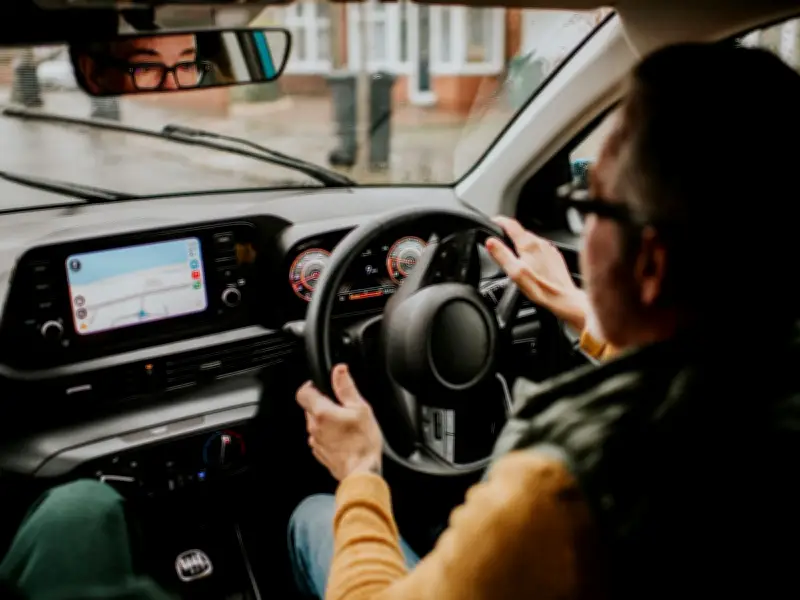
Drivers who need glasses or contact lenses to drive must have the '01' code on their licence. If they drive without them, they could face a £1,000 fine and three penalty points.
What does the '01' code mean?
The '01' code on a driving licence indicates that the holder must wear eyesight correction, such as glasses or contact lenses, when driving. However, many drivers who need vision correction do not have this code, even if they require help to see clearly behind the wheel.
According to figures, about one in five motorists should wear glasses to drive. Many people experience deteriorating eyesight as they age, often after passing their driving test.
When to inform the DVLA
Drivers must notify the DVLA if they have any eye condition that affects both eyes, or affects the remaining eye if they only have one eye. This does not include being short-sighted, long-sighted, or colour blind. Surgery to correct short-sightedness does not need to be reported if the driver can meet the eyesight standards.
The DVLA advises: "You must wear glasses or contact lenses every time you drive if you need them to meet the 'standards of vision for driving'."
Eye conditions that require notification
Certain eye conditions must be reported to the DVLA. These include:
- blepharospasm
- diabetic retinopathy (with laser treatment)
- diplopia (double vision)
- glaucoma
- nyctalopia (night blindness)
- retinitis pigmentosa
Drivers must also inform the DVLA if their condition affects both eyes, if it affects one eye but they only have vision in that eye, if they have retinitis pigmentosa affecting one or both eyes, if a GP or eye specialist has advised against driving, or if they do not meet the visual standards for driving.
Vision standards for driving
To drive a car or van, drivers must be able to read a number plate from 20 meters away (about the length of five parked cars), with glasses or contact lenses if used for driving. They must also have a visual acuity of at least decimal 0.5 (6/12) on the Snellen scale, measured with both eyes together or in the only seeing eye, and have an adequate field of vision.
How to inform the DVLA
Drivers with a reportable eye condition should notify the DVLA online. If they have a condition in one eye and another condition affecting the other eye, they must complete and send form V1 to the DVLA. The address is on the form, and the form can also be used if the online service is not accessible.




