

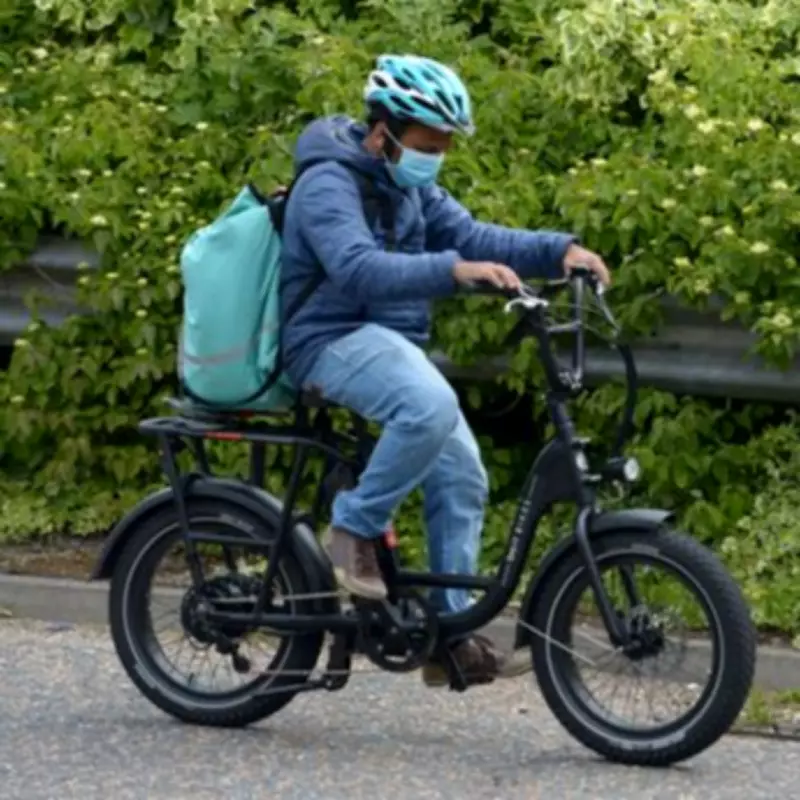
The Department for Transport has issued a fresh statement regarding potential legislative changes that could mandate number plates for e-bikes and e-scooters. This development comes amid escalating concerns over the rising number of accidents involving riders and pedestrians, coupled with difficulties in tracing individuals responsible for incidents.
Parliamentary Inquiry and Government Response
In a recent Parliamentary written question, Liberal Democrat MP Jess Brown-Fuller directly asked Secretary of State for Transport Heidi Alexander whether the government would consider introducing number plates for e-bikes and e-scooters. The response was provided by Parliamentary Under-Secretary of State for Local Transport Lilian Greenwood, who indicated that any new laws would necessitate extensive consultation before implementation.
Greenwood elaborated on the challenges, stating: "Introducing a number plate system on e-bikes would be complex and expensive to design and administer. It would also require fitting registration plates that were sufficiently visible and robust and could not easily be transferred from one cycle to another. A previous detailed review of this idea concluded that the cost and complexity of introducing such a system would far outweigh the benefits."

Current Legal Status and Future Considerations
Regarding private e-scooters, Greenwood clarified that they are currently illegal to use on public roads, cycle lanes, and pavements. The government has committed to pursuing legislative reform for micromobility vehicles, such as e-scooters, when parliamentary time allows. Any future regulations, which could include a potential requirement for number plates, will be subject to public consultation to ensure all interested parties have an opportunity to shape the new regime.
Metropolitan Police and Facial Recognition Technology
This discussion coincides with the Metropolitan Police's increased use of facial recognition technology to address the misuse of illegal e-bikes, which have been linked to dangerous riding and crimes such as phone-snatching. Metropolitan Police Commissioner Sir Mark Rowley hailed the technology as one of the most significant innovations in fighting crime in decades, noting it has already assisted in apprehending thousands of criminals.
Sir Mark explained that police cameras are capable of scanning the faces of illegal e-bike riders swiftly, enabling officers to conduct specialised operations to stop them. He emphasised: "This issue comes up in every borough. It comes up whether you talk about it in inner city boroughs, or Westminster, and then in outer London, in places like Bromley and Kingston, it keeps coming up. That's why we're making a big point about this."
Controversy and Investment in Facial Recognition
Despite its effectiveness, facial recognition technology has faced criticism. Earlier this year, the Equality and Human Rights Commission described the Met Police's policy on live facial recognition as "unlawful," arguing that the rules and safeguards are insufficient and could have a "chilling effect" on individuals' rights, particularly when used at protests.
Police currently employ three types of facial recognition: retrospective, used in criminal investigations; live, using real-time video footage; and operator-initiated, via a mobile app for identity checks. The Home Office allocated £12.6 million to facial recognition last year, with £2.8 million dedicated to national live facial recognition initiatives, including mobile vans and fixed location pilots.
Enforcement and Regulatory Framework
Sir Mark highlighted that the Met has been seizing e-bikes at an increasing rate, noting that "tremendously powerful" facial recognition technology has led to the arrest of nearly 1,000 criminals over the past year, including those involved in serious offences and sex crimes. He added: "It has many uses and it will pick up people that speed, so it will pick up people on e-bikes and in all sorts of situations. It's one of the biggest innovations in fighting crime we've seen in decades."

Rules surrounding e-bikes and e-scooters are stringent: e-bike motors must cut out at 15.5mph, and e-scooters are banned in London unless they are hire scooters. However, police have discovered that some e-bikes are illegally modified to exceed speed limits or operate without pedaling, with conversion kits available online for as little as £300.
E-bikes travelling above 15.5mph are classified as motorbikes, requiring registration, taxation, and insurance. Those found in violation are seized by police, with hazardous and recyclable parts removed before the bike is crushed. This enforcement underscores the ongoing efforts to address safety and crime concerns associated with these vehicles.





