

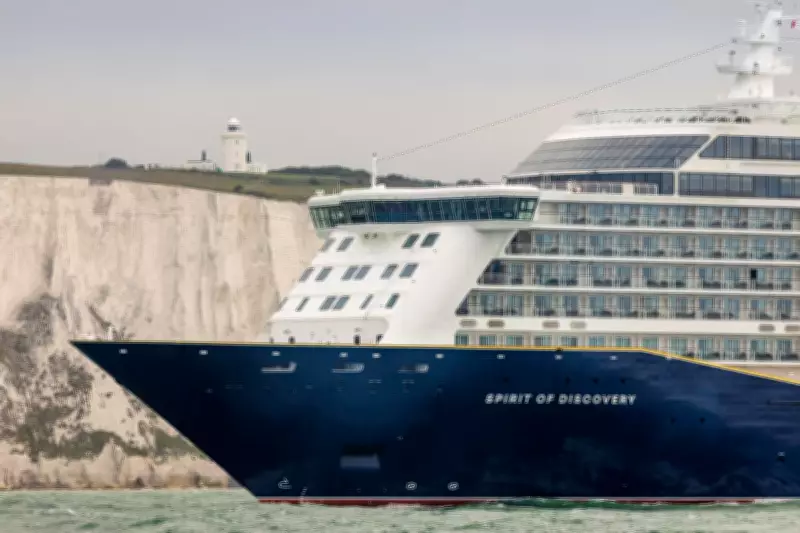
Cruise Passenger's Death After Storm Injury Linked to Suboptimal Medical Treatment
A British cruise passenger who died after sustaining a severe spinal injury during a violent storm on board a Saga Cruises vessel received suboptimal treatment, according to a detailed investigation report. The incident occurred on the Spirit of Discovery ship, which encountered force 11 winds in the Bay of Biscay on November 4, 2023, leading to over 100 passenger injuries.
Details of the Tragic Incident
Among those seriously injured was 85-year-old Trevor Gilks, who passed away four days after the incident. He was one of eight individuals requiring hospitalisation upon the ship's arrival in Portsmouth. A report by the Marine Accident Investigation Branch (MAIB) revealed that Mr Gilks' injury occurred when a high-backed armchair he was occupying toppled backwards as the ship experienced violent rolling.
The main impact of the fall was on his neck, investigators found. Mr Gilks was helped by the crew back into the chair and then to his cabin. He was later moved in a wheelchair to the ship’s medical centre, where X-rays were taken of his neck and emailed to a shore-based radiologist for review.

Medical Response Failures
No further X-rays were taken despite the radiologist replying that they were unable to determine whether the cervical spine – in the neck region – was damaged, as no side-on view was provided. Investigators also noted that Mr Gilks was put on a bed in the medical centre, rather than a spinal board, which is standard protocol for suspected spinal injuries.
After his condition deteriorated on November 6, a doctor expressed concern he would become paralysed and needed to be evacuated from the ship. However, given the risks of a helicopter transfer in high seas, the captain decided it would be better for him to remain on board until the vessel arrived in Portsmouth later that day.
Mr Gilks was transferred by ambulance to hospital but died on November 8. His cause of death was recorded as complete cervical spine injury.
Investigation Findings and Recommendations
The MAIB stated: Delay in identifying that Mr Gilks had suffered a severe spinal injury led to him receiving suboptimal treatment that may have affected the severity of his injury. The report also found that the captain’s decision to cross the Bay of Biscay in very high waves was not effectively challenged by the crew and operational teams ashore despite weather information providers advising against the crossing.
Spirit of Discovery lost propulsion because its violent movements caused its propellers to over-speed, leading to them being automatically shutdown. The MAIB made a series of recommendations, including proposing that cruise ships are required to be fitted with electronic devices measuring their stability.
Industry Response and Lessons Learned
Chief inspector of marine accidents, Rob Loder, said: While cruising remains safe and accidents rare, Spirit of Discovery’s violent motion in heavy weather caused injury to over 100 passengers and, very sadly, one passenger lost their life as a result of injuries sustained. A complex sequence of events led to this accident and we have identified a number of clear lessons around vessel safety, crew decision-making and medical response.
A spokesperson for Saga Cruises said: Our thoughts remain with the family and friends of Mr Gilks and all the guests and crew affected by this incident, and we are sorry for the distress they suffered. While we accept the MAIB’s recommendations, we disagree with some of their conclusions and feel the synopsis does not accurately reflect the report. Safety is our number one priority and, whilst the weather is beyond our control, we always follow industry guidelines and best practice.
The report did not disclose where Mr Gilks lived, but the findings highlight critical issues in maritime safety and emergency medical protocols that the cruise industry must address to prevent future tragedies.






