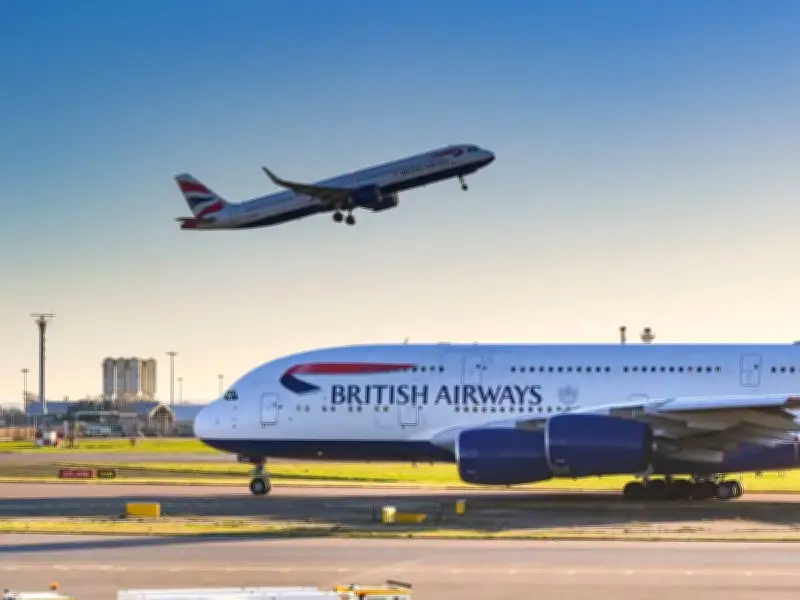
British Airways has resumed flights between London Heathrow and Dubai today, ending an eight-month suspension triggered by the US-Iran war. The single daily service for the winter season marks the return of a key route for the airline.
Route restart and schedule
The suspension began after US and Israeli strikes on Iran led to the closure of Gulf airspace on February 28, which shut down much of the Middle East airspace and caused thousands of flight cancellations. The Foreign, Commonwealth and Development Office (FCDO) issued do-not-travel advisories at the time.
British Airways is operating the route with its Boeing 787-10 Dreamliner. One-way economy fares for November start from £329 to £340. The airline plans to increase the service to two flights a day by summer 2027.
Other regional routes affected
While the Dubai route has reopened, British Airways has adjusted timelines for other destinations in the region. Flights to Amman, Jordan are scheduled to resume tomorrow, 4 November 2026, operating four times a week. Flights to Riyadh, Saudi Arabia will resume on 11 January 2027, with service reduced from two flights a day to one.
Since regional airspace conditions can change, travellers are advised to check their booking status on the British Airways official website before going to the airport.
Safety and FCDO guidance
Every year, more than a million British tourists travel to the UAE for holidays in Dubai and Abu Dhabi. In 2025, Dubai alone welcomed 1.3 million visitors from the UK.
Despite the unresolved US-Iran conflict, there is currently no general 'do not travel' warning for countries like Dubai, Oman and Jordan, but the FCDO says the situation in the Middle East is "unpredictable". The latest FCDO update warns of 'regional tensions' and reads: "The context in the Middle East remains deeply unpredictable, and the risk of sudden escalation is high. Since conflict began in early 2026, Iran has stated its intention to target locations associated with the US and Israel, including, but not limited to, organisations, businesses, facilities, and institutions. There have been strikes and retaliatory attacks by Iran and others across the region against civilian and US military infrastructure."
The FCDO also advises: "British nationals in, or planning to travel through, the Middle East should be prepared for possible flight cancellations, airspace closures, and travel disruption." They add: "If advised to take shelter, stay indoors or find the nearest safe building or designated shelter. An interior stairwell or a room with as few external walls or windows as possible may provide additional protection. The greatest risk is from falling debris caused by intercepts, and you are safest inside a secure structure. Do not approach or touch any drone or missile fragments or unusual objects."
The FCDO now considers many Middle East destinations, including Dubai, safe for travel, following a four-month-long "do not travel" advisory that was lifted on June 18 after an agreement to end regional hostilities. The 16 countries included in the UK Foreign Office's coordinated regional security update are Turkey, United Arab Emirates (UAE), Bahrain, Egypt, Iran, Iraq, Israel, Jordan, Kuwait, Lebanon, Oman, Pakistan, Palestine, Qatar, Saudi Arabia and Syria.
Before you travel
The FCDO recommends reading its advice on being affected by a crisis abroad, monitoring local and international media for the latest information, and checking with relevant airlines for the latest updates before travelling. If you have booked a package holiday to Dubai, check with your travel company to ensure that your flight is running as scheduled.