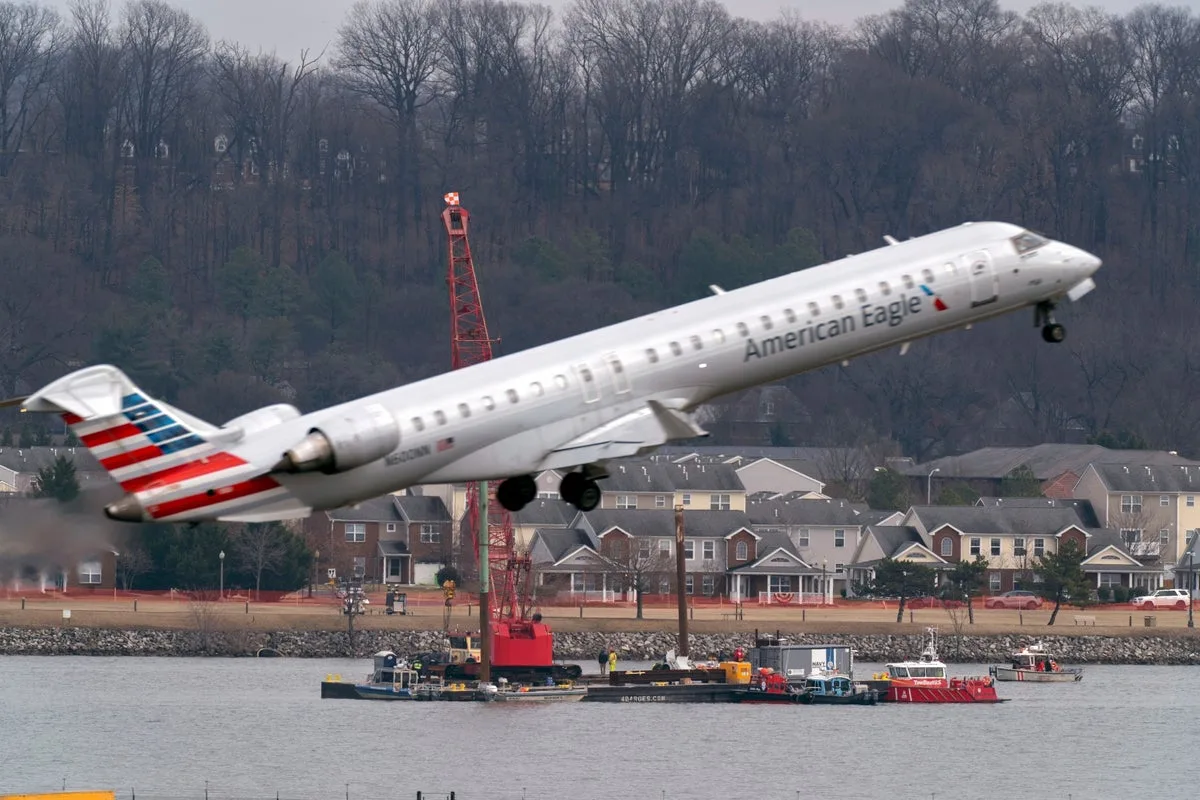
House to Vote on Aviation Safety Bill After Deadly Washington Midair Collision
A pivotal aviation safety bill, crafted in response to the catastrophic midair collision of an American Airlines jet and an Army Black Hawk helicopter near Washington, D.C., is scheduled for a vote in the House of Representatives on Tuesday evening. The legislation, known as the Alert Act, seeks to implement crucial lessons from the January 2025 tragedy that claimed 67 lives, but it faces scrutiny from key senators and victims' families who contend the measures need to be more robust.
Legislative Push and Industry Support
The Alert Act has garnered backing from major industry groups and recently received endorsement from the National Transportation Safety Board (NTSB) after amendments were made. The revised bill now addresses the NTSB's long-standing recommendation, initially proposed in 2008, to require all aircraft operating near busy airports to be equipped with Automatic Dependent Surveillance-Broadcast In (ADS-B In) systems. These advanced locator technologies enable pilots to receive precise, real-time data on the positions of surrounding aircraft, significantly enhancing situational awareness.
NTSB Chairwoman Jennifer Homendy has asserted that had both the jet and helicopter been fitted with operational ADS-B In systems, the fatal collision over the icy Potomac River could have been averted. The bill, sponsored by Republican Sam Graves and Democrat Rick Larens, unanimously advanced through two key House committees last month and is being brought to a full vote under rules that prohibit further amendments.
Concerns from Families and Senators
Despite these advancements, the families of the 67 victims have expressed concerns that the legislation lacks stringent timelines to ensure the mandated reforms are fully implemented. They emphasize the need for guarantees that the safety enhancements will be completed without delay. Additionally, senators Ted Cruz and Maria Cantwell have publicly stated that the Alert Act still requires improvements to be effective.
This legislative effort follows the failure of a separate Senate-crafted bill, the ROTOR Act, which fell one vote short in the House. To proceed to the Senate, the Alert Act must secure a two-thirds majority in the House, highlighting the high stakes of the upcoming vote.
Systemic Failures and Investigative Findings
The NTSB's investigation into the crash revealed systemic weaknesses and years of ignored warnings regarding helicopter traffic dangers. The collision, which occurred when the jet was en route from Wichita, Kansas, marked the deadliest plane crash on U.S. soil since 2001 and tragically included 28 members of the figure skating community among the victims.
Key factors identified by the board included a poorly designed helicopter route in the approach path of Reagan National Airport's secondary runway, which failed to ensure adequate separation between helicopters and landing planes. This route had not been regularly reviewed, and air traffic controllers were found to rely excessively on pilots' visual detection to avoid collisions.
Technological Mandates and Military Policies
The Alert Act mandates that aircraft be equipped with ADS-B In systems, which proponents argue would have provided earlier warnings to the American Airlines pilots of the impending collision. While most planes already have complementary ADS-B Out systems that broadcast their locations, the inclusion of ADS-B In is critical for receiving data.
Notably, the Army's policy at the time of the crash required helicopters to fly with ADS-B systems turned off to conceal their locations, even though the involved Black Hawk was on a training mission rather than a sensitive operation. This policy underscored the complex interplay between military protocols and civilian aviation safety, which the bill aims to address by requiring coordination between the Federal Aviation Administration, the Transportation Department, and the military.
Revised Bill Addresses Earlier Criticisms
Earlier this year, Chairwoman Homendy criticized the initial version of the Alert Act as a "watered down" measure insufficient to prevent future tragedies. However, the NTSB has since acknowledged that the revised version now adequately addresses the shortcomings identified in their investigation. The bill requires actionable steps from relevant agencies to implement the necessary safety reforms, reflecting a concerted effort to learn from past oversights.
As the House prepares for this critical vote, the aviation community and the public await a decision that could reshape safety protocols and honor the memory of those lost in one of the nation's most devastating aviation disasters.






