

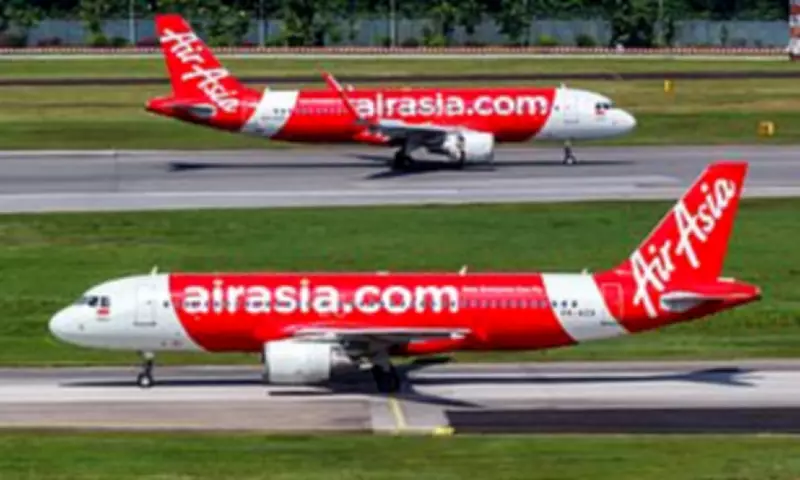
AirAsia X Announces Major Fare Increases and Flight Reductions
Southeast Asia's premier budget airline, AirAsia X, has confirmed substantial ticket price increases and significant flight reductions in response to the escalating impact of war in the Middle East. The carrier's strategic adjustments come as global aviation faces unprecedented challenges from surging fuel costs and geopolitical instability.
Unavoidable Price Hikes and Network Optimisation
According to founder Tony Fernandes, the rising prices are 'unavoidable' given current market conditions. Bloomberg reports that fares have been increased by as much as 40% for the Malaysian airline, with approximately 10% of overall flights being cut. The airline is specifically cancelling routes where fuel costs cannot be adequately covered.
Bo Lingam, Group CEO of AirAsia X, explained: 'Amid ongoing geopolitical uncertainty and supply chain disruptions, global jet fuel prices have surged to more than double 2025 levels. In response, we have implemented carefully calibrated fare adjustments, including a one-off fuel surcharge across the network.'

The airline is reallocating capacity toward alternative routes including Almaty (Kazakhstan), Tashkent (Uzbekistan) and Istanbul (Türkiye) to capture displaced demand. Lingam added: 'We are optimising our network, reallocating capacity to stronger-performing routes and leveraging our Fly-Thru connectivity via Kuala Lumpur and Bangkok to capture demand efficiently.'
Bahrain Hub Plans Remain on Track
Despite these challenges, AirAsia X has reaffirmed its commitment to developing Bahrain as a key strategic hub connecting travellers between Asia, the Middle East and Europe. The service is scheduled to commence on 26 June 2026, with the hope that regional conditions will normalise by that time.
The airline reports continuing solid travel demand across Asian destinations, demonstrating what Lingam describes as 'the resilience of our network and the growing appetite for regional travel.' AirAsia X is actively negotiating with key partners and stakeholders to contain operational costs while progressively reactivating its full fleet.
Global Aviation Industry Under Pressure
The Middle East conflict has sent shockwaves throughout the aviation industry, with Dubai-based billionaire Gediminas Ziemelis warning that airlines could begin going bankrupt within weeks. Ziemelis, founder of Avia Solutions Group, compared the current crisis to the COVID-19 pandemic, citing grounded planes, collapsing demand and no clear recovery timeline.
Rigas Doganis, former head of Olympic Airways in Greece, described the situation as an 'existential challenge' for air carriers, noting: 'They will need to cut fares to stimulate weakening demand while higher fuel costs will be pushing them to increase fares. A perfect storm.'
International Airline Responses
The global aviation sector is implementing various measures to address the crisis:
- JetBlue has increased checked baggage fees by $4-9, citing 'rising operating costs'
- Scandinavian Airlines System (SAS) cancelled 1,000 April flights due to high fuel prices
- Air France-KLM plans to increase long-haul ticket prices by 50 euros per round trip
- Qantas Airways has raised international fares while adding flights to Rome, Paris and Singapore
- Thai Airways implemented 10-15% fare increases to address rising fuel costs
- United Airlines is cutting unprofitable flights while raising fares without materially hurting bookings
In contrast, Etihad Airways is slashing prices by 50% for UK routes to destinations including Tokyo, Singapore and Sydney, sparking a price war with competitors like British Airways.
Cost Containment and Future Outlook
AirAsia X is implementing multiple strategies to navigate the challenging environment. Lingam noted: 'We are also actively negotiating with our key partners and stakeholders to contain costs across our operations. As we progressively reactivate our full fleet, our unit cost will improve, and the strengthening Asean currencies also act as a natural buffer against USD-denominated expenses.'

The airline continues to monitor the situation closely while maintaining its expansion plans, demonstrating the complex balancing act facing aviation leaders as they respond to unprecedented market pressures driven by geopolitical conflict and economic uncertainty.





