

Air Travel Anxiety Extends Far Beyond a Simple Fear of Flying
Air travel has become increasingly stressful in recent months, with disruptions piling up to create a perfect storm of anxiety for passengers. It's not just the fear of flying that's causing distress; long security lines, weather events, and operational issues are adding significant layers of stress to the journey.
A Growing List of Stressors in the Skies
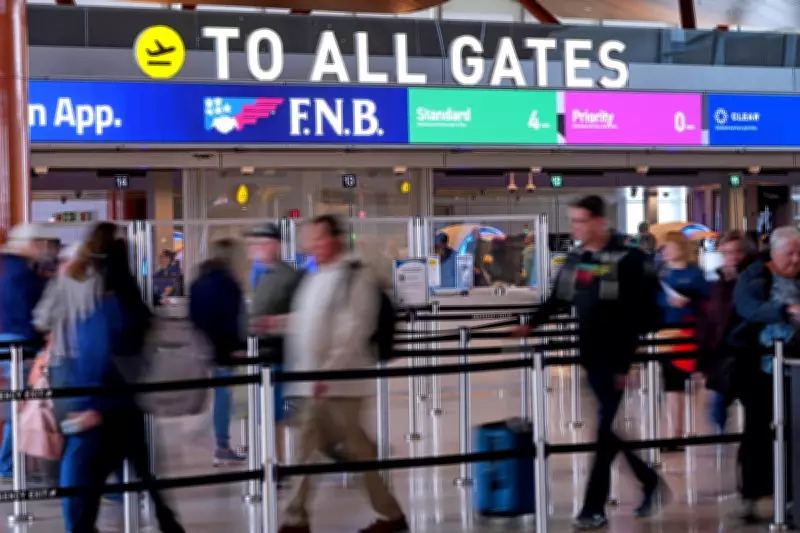
The reasons for air travel anxiety have expanded, mirroring the lengthy queues seen at many U.S. airports. Back-to-back winter storms, geopolitical tensions like the Iran war, government shutdowns, and tragic incidents such as a fatal runway collision have all disrupted airline operations recently. Combine these with everyday hassles—seat selection fees, baggage charges, overbooked flights, and takeoff delays—and even seasoned travelers are reconsidering trips that involve commercial airplanes.
On a recent Monday, crowded airport checkpoints, stemming from funding disputes on Capitol Hill, were a primary concern. President Donald Trump's decision to deploy Immigration and Customs Enforcement officers to assist with airport security added to the tension. John Hoffman, who missed his flight from Louis Armstrong International Airport in New Orleans due to a four-hour security wait, noted improved lines with federal help but questioned the cost-effectiveness. "The lines are shorter today," Hoffman said. "But in my mind, we can fund TSA a lot less expensively than we can send ICE here, put them up in hotels and all the things that go along with that."

Personal Stories Highlight Widespread Frustration
At Reagan Washington National Airport, college student JD Foster experienced repeated delays on a flight to Boston, causing him to miss an important appointment and lose a $500 deposit. Despite a short security wait, the airline's lack of transparency exacerbated the situation. "They just kept saying 'it'll be a little bit longer' every 15 minutes until they admitted it was a part malfunctioning and they switched planes," Foster explained via email. "I would have had enough time to get an earlier flight if they would have been honest about the delay."
Industry Optimism Amid Passenger Concerns
Despite these challenges, Chris Sununu, former governor of New Hampshire and president and CEO of Airlines for America, urges travelers to remain optimistic for summer vacations. "The issues we're dealing with today are truly temporary," Sununu stated in a phone interview. "People should know that solutions are being presented, and I think we think there are some solid long-term fixes and even some short-term fixes here, so people should feel confident buying in."
Expert Advice for Managing Travel Anxiety
Dr. Michael Ziffra, a psychiatrist and associate professor at Northwestern University's Feinberg School of Medicine, acknowledges that air travel is inherently anxiety-provoking, with recent stressors compounding the issue. He recommends several strategies to mitigate discomfort. First, adopt a sense of adventure or acceptance. "You're gonna get delays, you're gonna get complications, you might get long lines," he said. "So just try to somehow be at peace with the fact that air travel can be inherently unpredictable."
Preparation, such as confirming flight details and wait times, can help, but over-preparing for every scenario is counterproductive. Instead, travelers should equip themselves with enjoyable snacks, movies, and music, while avoiding alcohol, medication, or online rants that could worsen their mood. "The best thing people can do is really avoid anything that might be exacerbating the negative feelings," Dr. Ziffra advised. "People should take care of themselves and do their best to enjoy whatever travel they're doing."
Staying Grounded Through Mindfulness and Kindness
Dr. Zaid Fadul, a U.S. Air Force flight surgeon and physician, emphasizes mental grounding before physical takeoff. "I always tell people, all's fair in love and travel. Delays are normal, it's a part of life, and you have to find ways to really reground yourself," said Fadul, CEO of Bespoke Concierge MD. He suggests focusing on controllable elements like breathing, recommending deep breathing exercises or simply feeling the sensation of feet pressing on the floor.

Fadul shared a personal example: while dealing with long lines at the airport with his son, he expressed gratitude to a TSA agent, which lifted both their spirits. "She lit up," he recalled. "Just seeing her response made me feel a little better, and it made it less about me." He encourages others to find small acts of kindness to make travel "a little less annoying," noting that such gestures can have a significant positive impact.
As air travel continues to face disruptions, understanding and addressing the broader sources of anxiety—beyond just the fear of flying—is crucial for a smoother journey.





