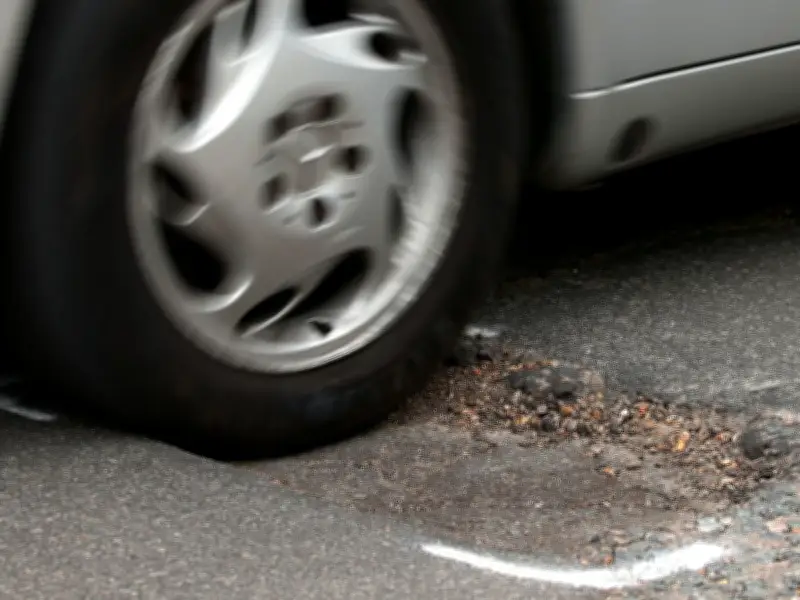
Three in every five A roads in Knowsley are in a mid-life, deteriorating condition, the highest proportion of any borough in the Liverpool City Region. This fact has been described as "really concerning" by a local councillor.
Comparison with Other Boroughs
The 60% proportion compares starkly with other areas: 14% in Halton, 46% in Liverpool, 20% in Sefton, 53% in St Helens, and 53% in Wirral. Knowsley also has the lowest percentage of A roads in good condition, at 37%, compared to 85% in Halton, 44% in Liverpool, 77% in Sefton, 41% in St Helens, and 42% in Wirral.
However, Knowsley fares better in terms of roads in "poor" condition requiring urgent attention. Only 4% of the borough's A roads are in this state, compared to 1% in Halton, 10% in Liverpool, 3% in Sefton, 6% in St Helens, and 5% in Wirral.
Cost of Repairs
It is estimated that bringing all roads in Knowsley up to good condition would cost £115 million, out of a national bill of £19 billion. An annual budget of £6 million would be needed simply to maintain the current condition of the roads, which is almost double what the council currently has at its disposal.
Highways officer Richard Thorpe told a Place, Environment and Climate Scrutiny Committee meeting on Tuesday that the council's revenue budget for day-to-day road maintenance like repairing potholes is £3.1 million in 2026/27. Capital funding of £2.3 million also comes from the Department for Transport for major works, with some extra funding from developer contributions associated with new housing estates.
Prioritisation and Management
Due to funding constraints, prioritisation is required, Mr Thorpe said. A roads and those serving shops, schools, hospitals, and town centres are put to the top of the list, especially if there have been a higher number of enquiries about them.
Independent councillor for Cherryfield ward, David Hitchmough, asked why Knowsley was the worst performing borough in the city region for declining roads. Director of development and infrastructure, Tony Clark, responded: "When you compare Knowsley nationally, we have fewer roads in poor condition, so we're actually better placed nationally on all counts." He added: "Our target is to keep roads in good condition because once they move into being in very poor condition they become very expensive."
Mr Thorpe said that there is a "high number" of roads in a deteriorating condition, "and the key there is to try and keep them in that mid life [condition], because once they flip over into the red [poor condition] they become really expensive really quickly." He added: "So we are battling to keep them in that amber [category] so they're cheaper to repair."
Councillor Reactions
Prescot North Lib Dem councillor Mark Burke said: "There are some really concerning things [in the council officers' report]. We're managing the decline of our network now. How has it come to this? We're looking for £100m just to get us on the straight and narrow. How has it come to that that it's been so under-budgeted? We can't allow this to go on." He called for officers to "fight tooth and nail" for a bigger budget for highway repairs and maintenance. "This is an eye-opener," he said, adding that councillors should also be highlighting the "problem."
B and Other Roads
Some 56% of Knowsley's B roads are in the amber category, while 6% are in poor condition (red), and 38% are in good condition. This puts the borough in a similar position to Liverpool, and slightly better than St Helens (where 11% of B roads are in poor condition) and Wirral. However, in Sefton, 76% of B roads are in good condition with only 3% poor, while in Halton the proportions are 81% and 2% respectively.
The proportion of "perfect" roads free from defects in Knowsley declined from 43% in 2017/18 to 23% in 2024/25, while the percentage of "serviceable" roads with some defects increased from 35% to 51%. However, the proportion of "functionally impaired" and "structurally impaired" roads stayed around the same at 11-13% and 6-7% respectively.
Maintenance and Inspections
Knowsley Council is responsible for 600km of highway, including sections of major roads like the M62, and nearly 1,000km of footways. Mr Thorpe said that the borough's motorways get inspected for potholes and other problems once a week, while other strategic and distributor routes are reviewed monthly, and smaller local roads are visited annually.
Extremely hazardous defects in major roads that pose an emergency risk should have highways teams sent out within two hours, while less significant issues are given longer timeframes. Most – around 90% – of potholes and other repairs are seen as low-risk and are given a 28-day window to be fixed.
Mr Thorpe said that the number of potholes being repaired by the council has approximately doubled over the past decade. He also said that the council carries out preventative maintenance on roads in good condition to avoid the need for more significant repairs later. Overall, the council resurfaced 4,582 metres of road in 2025/26, and carried out surface treatment to stop water getting into the tarmac on 17,653 metres.