
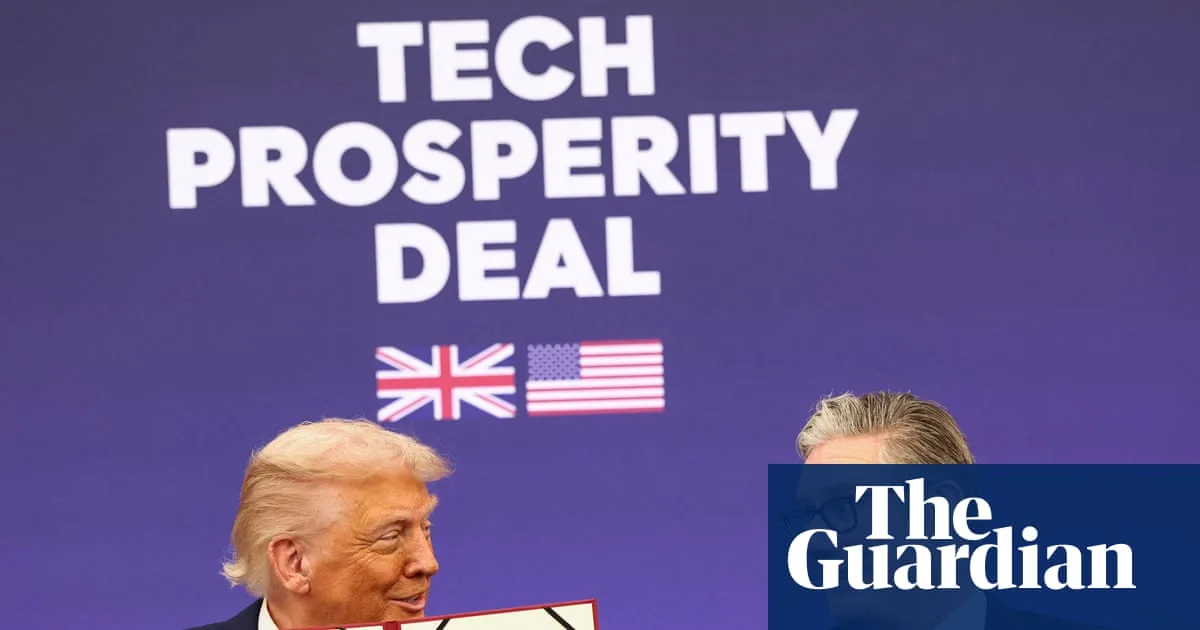
The United States has paused its promised multi-billion-pound investment in British technology, casting doubt on the £31bn 'tech prosperity deal' announced during Donald Trump's state visit. Washington cited a lack of progress from the UK in lowering trade barriers, including the digital services tax and food safety rules.
The deal, hailed as a 'generational stepchange' by Prime Minister Keir Starmer, included commitments from US tech giants such as Microsoft (£22bn) and Google (£5bn) to invest in the UK. It also envisioned an artificial intelligence 'growth zone' in north-east England, expected to bring up to £30bn and create 5,000 jobs. However, the agreement's text specified it would only become operative alongside substantive progress on trade issues.
British officials have sought to downplay the development, describing it as 'hardball negotiations' by the Americans. One government source noted that the US commerce secretary, Howard Lutnick, is a tough negotiator, but insisted the UK would stand its ground. Another source said the pause was 'part of the shape of the negotiations'.
The decision is a blow to the UK government, which had touted the deal as a reward for extensive engagement with the US to avoid punitive tariffs. Starmer hosted Trump for a second state visit, an unprecedented honour, and has resisted US pressure to scrap the digital services tax, a 2% levy on tech companies' revenues that raises about £800m a year.
Beyond the digital tax, the US has also raised objections to the UK's online safety rules and food safety regime. The UK has stood by its commitment not to water down farming standards, which could otherwise open the door to chlorine-washed chicken or hormone-treated beef—a prospect long controversial with farmers and consumer groups.
At a press conference in September, Starmer said the deal had 'the power to change lives' and 'renewed the special relationship for a new era'. Trump added that it would help both nations 'dominate' in artificial intelligence. The pause comes as Business and Trade Secretary Peter Kyle was in the US last week for negotiations with US counterparts.




