US-Indonesia Trade Pact Reshapes Economic Ties with Focus on Resources
A significant new trade agreement between the United States and Indonesia has fundamentally recast their economic relationship, binding Jakarta's substantial resource wealth and energy future more closely to Washington's strategic objectives. The pact, announced in March 2026, secures American access to critical minerals while boosting exports of US fossil fuels, marking a pivotal shift in regional trade dynamics.
Key Provisions of the Bilateral Agreement
Indonesia has committed to several major concessions under the deal. The Southeast Asian nation will widen access for US investors across its critical minerals sector, from exploration and mining to refining and export operations. In some instances, American companies will receive treatment "no less favorable" than domestic Indonesian firms.
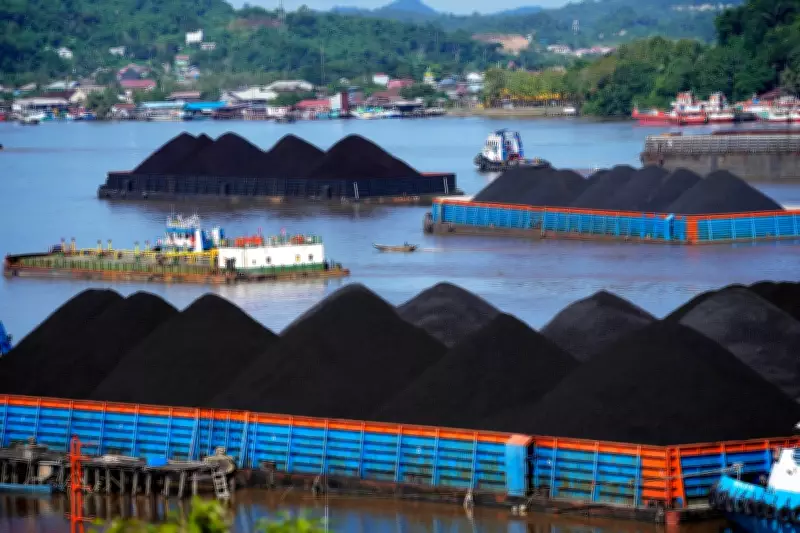
Additionally, Indonesia agreed to boost purchases of US crude oil and liquefied petroleum gas, support development of an American coal export corridor from the US West Coast, and cooperate with the US and Japan on deploying small modular nuclear reactors, beginning with a potential project in West Kalimantan.

In return, the United States reduced a threatened 32% tariff on Indonesian goods to 19% and granted broader access to the American market. This includes a zero-tariff entry policy for major Indonesian exports such as palm oil, coffee, cocoa, spices, and rubber.
Strategic Competition in Critical Minerals
The agreement represents a strategic move by Washington to secure critical mineral supply chains and reduce dependence on China. Indonesia, as the world's largest nickel producer, possesses vast mineral reserves essential for electric vehicles and clean energy systems.
"Indonesia is absolutely central to this competition because it combines resource endowment with political ambition," said Kevin Zongzhe Li of the Asia Society Policy Institute's Center for China Analysis. He noted the agreement "opens the door for US firms to have a real shot" at modestly leveling a sector where Chinese industries established first-mover advantage.
Currently, China dominates Indonesia's critical mineral processing sector, with Chinese firms operating or financing multiple nickel smelters and industrial parks. The new trade deal includes provisions to relax restrictions on exports of critical minerals to the US, promising "greater certainty" for companies involved in extraction and processing.
Energy Commitments and Policy Shifts
Indonesia has agreed to purchase $15 billion worth of American energy commodities over an unspecified period, primarily fossil fuels including liquefied petroleum gas, crude oil, and gasoline. The country will also cut red tape to facilitate easier purchases of US energy products by Indonesian companies.
The deal reflects changed US energy priorities under the Trump administration, moving away from cooperation on reducing Indonesia's climate change-causing emissions. This represents a significant shift from previous commitments, including Indonesia's participation in the Just Energy Transition Partnership—a multi-billion dollar agreement where the US and other wealthy nations pledged support for reducing coal use and expanding clean energy.
Despite the US withdrawal from that partnership, Indonesian officials maintain the $21.4 billion program will continue. As of January, approximately 15% of the funds, or $3.4 billion, had been received according to Airlangga Hartarto, Indonesia's minister for economic affairs.
Domestic and Regional Implications
Haryo Limanseto of Indonesia's Coordinating Ministry for Economic Affairs stated the deal's energy provisions "balance foreign trade and meet domestic energy needs." However, analysts note Indonesia faces complex challenges navigating between competing US and Chinese interests.
"The leadership of Indonesia is trying to tread a fine line between the West and China," said Putra Adhiguna of the Jakarta-based Energy Shift Institute, adding that Chinese influence remains "inescapable" since China is Indonesia's largest trading partner.
Other export-reliant Southeast Asian economies negotiating with the United States, including Vietnam, are closely monitoring the Indonesia-US deal for clues about tariff levels and concessions Washington may demand across the region.

Implementation Challenges and Uncertainties
The agreement's future faces several obstacles. The US Supreme Court's recent ruling against President Trump's sweeping global tariffs, coming just after the agreement was reached, casts doubt on the durability of his trade strategy. The deal also requires ratification by Indonesia's parliament before taking effect.
"Parliamentary approval could be an uphill battle and added uncertainty from the US side may complicate things further," said Meha Sitepu of the Washington-based strategic advisory firm The Asia Group.
Some provisions are drawing domestic criticism in Indonesia, including those perceived as diluting halal certification requirements in the predominantly Muslim nation of nearly 288 million people.
Environmental Concerns and Energy Transition
Analysts warn the deal may slow Indonesia's transition to renewable energy. Adhiguna noted the agreement's biggest impact may be political, with Jakarta emulating the US emphasis on fossil fuel use.
"There is the risk that the political leadership of Indonesia is going to fall back into that hole," Adhiguna said, potentially meaning slower progress in areas like solar energy development.
Over the past five years, tropical Indonesia has installed less than 1 gigawatt of solar energy—compared with roughly 2 GW in Vietnam and nearly 60 GW in India. According to the International Energy Agency, fossil fuels made up nearly 78% of Indonesia's energy mix in 2023.
Dinita Setyawati of the energy think tank Ember suggested Indonesia should prioritize building 100 GW of solar and storage capacity and expand interconnection grids to enable renewable energy sharing.
The trade agreement represents a complex balancing act for Indonesia as it seeks to leverage its resource wealth while navigating great power competition and domestic development priorities.