Trump Outraged as Supreme Court Overturns 'Beautiful' Tariff Plan
Former President Donald Trump reacted with fury last night after US judges struck down his 'beautiful' tariff strategy, warning that those celebrating the decision 'won't be dancing for long'. In a landmark ruling with significant implications for global commerce, the Supreme Court declared that Trump had overstepped his executive authority by imposing his 'Liberation Day' tariffs last year without obtaining Congressional approval.
'A Disgrace to Our Country'
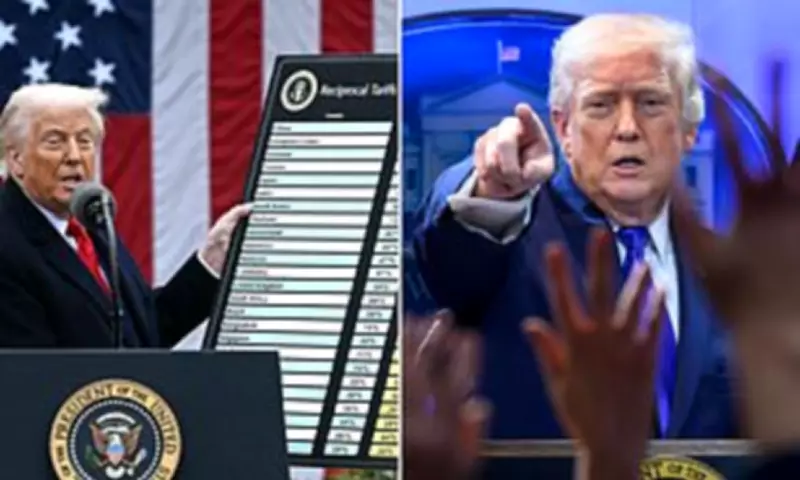
Speaking at an emergency press conference held at the White House, Trump expressed profound disappointment, stating he was 'ashamed' of the judicial outcome. He accused America's highest court of being 'swayed by foreign interests' and labelled the justices who rejected his plan as 'a disgrace to our country'. Despite this setback, Trump emphatically vowed to pursue alternative pathways to maintain and even strengthen tariffs, asserting that 'even stronger methods are available to me'.
Immediate Global Tariff Hike Announced
In a direct response to the court's decision, Trump announced the immediate imposition of a '10 per cent global tariff over and above existing tariffs'. He indicated that his administration is actively examining additional protectionist measures to safeguard US industries. Trump remarked that 'foreign countries that have been ripping us off for years are ecstatic' about the ruling, but issued a stark warning: 'They are dancing in the streets – but they won't be dancing for long.'

Financial and Legal Repercussions Loom
Economic analysts suggest that the United States may now be obligated to refund more than £130 billion to companies that paid the tariffs following the initial 'Liberation Day' implementation in April last year. Trump, however, signalled a readiness to contest any compensation claims in the courts for years to come. The Supreme Court's ruling specifically impacts the so-called 'reciprocal' tariffs applied to individual nations, including the 10 per cent duty on British imports. It does not affect targeted tariffs on sectors such as steel and automobiles, which cannot be expanded under the current legal framework.
International Reactions and Market Turmoil
Downing Street was urgently assessing the potential consequences for trade and diplomatic relations. A UK Government spokesman commented: 'The UK enjoys the lowest reciprocal tariffs globally, and under any scenario we expect our privileged trading position with the US to continue. We will work with the US administration to understand how the ruling will affect tariffs for the UK and the rest of the world.' Meanwhile, Kemi Badenoch, the Tory leader and former trade secretary, welcomed the court's decision, stating that tariffs are 'bad for both sides' and emphasising that 'the UK is a trading country. So overall, this is good news for us. Let's hope it holds.'
Legal Basis and Future Outlook
Trump's original tariffs, introduced last year, sent shockwaves through global markets and stunned world leaders as he claimed the US economy had been 'looted, pillaged and raped' for decades. The Supreme Court, despite its conservative majority, ruled by a six-to-three margin that the International Emergency Economic Powers Act utilised to enact the broad measures 'does not authorise the President to impose tariffs'. Analysts Carsten Brzeski and Julian Geib from ING cautioned that US tariffs are 'here to stay' but will require 'new legal foundations and a messy transition period'. They added a sobering note for European observers: 'Europe should not be mistaken, this ruling will not bring relief.'