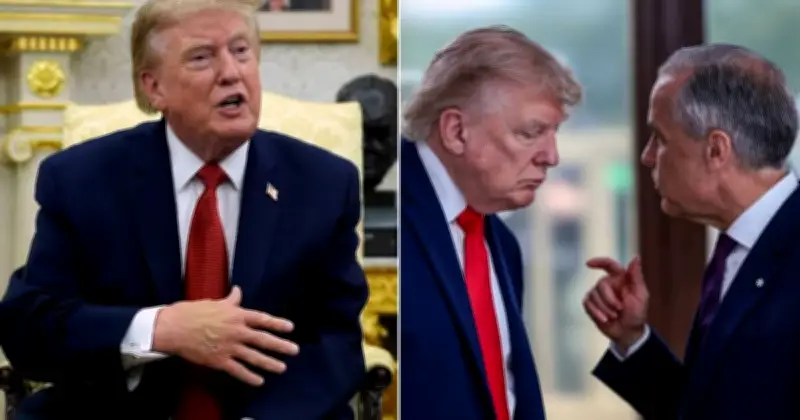
President Donald Trump has announced a three-day pause on 50% tariffs on billions of dollars of Canadian goods, following what he described as intense negotiations with Prime Minister Mark Carney. The reprieve prevents the levies from taking effect while USMCA trade talks continue.
Last-Minute Deal Announced
In a post on Truth Social, Trump wrote: "I have paused the 50% Tariffs against Canada, that were scheduled to kick in tomorrow morning for a three day period, based on the fact that Canada and the U.S.A., subject to the finalization of documents, have a DEAL! The great Keystone XL Pipeline, long ago killed by Sleepy Joe Biden, may be awoken from the grave! Thank you for your attention to this matter. President DONALD J. TRUMP."
The announcement came as the deadline loomed on Tuesday night. According to the Financial Times, the trade tensions between the two major trading partners escalated after Trump last month threatened 50% tariffs on a range of Canadian goods, including cement and hockey sticks.
Negotiations and Concessions
The tariff threat sparked weeks of negotiations, throughout which Canada put forward concessions in a bid to prevent fresh levies from taking effect. Canada also pressed for the US to remove existing charges on industries including cars, steel, and lumber.
Derek Nighbor, chief executive of the Forest Products Association of Canada, warned that tariffs on wood furniture and other products would cause further damage to workers and communities already struggling under tough US measures on lumber. He observed the levies also "add costs for U.S. builders and homebuyers at a time when both countries need more housing."
US Demands and Industry Concerns
The Trump administration demanded that Canada resume stocking American wine and spirits, which had been removed from shelves in retaliation for Trump's earlier tariffs. The White House further contended that Canada discriminates against U.S. businesses, highlighting the dairy sector and government procurement as two specific areas of concern.
Last week, U.S. trade representative Jamieson Greer insisted the US actions are "not a trade war" and "we have domestic supply chains we're trying to protect and support."
Brian Kingston, president of the Canadian Vehicle Manufacturers' Association, said: "US tariffs raise the cost of domestic manufacturing, increase prices, reduce exports and make the industry less competitive."
Reaction and Public Opinion
Prime Minister Mark Carney remained tight-lipped about the discussions when questioned by journalists, stating that given the "very delicate and intense" negotiations, it is "not the time to negotiate in public," the BBC reported.
A poll from Abacus Data revealed that 74% of surveyed Canadians believe the trade dispute has "had an impact on their household," while 36% "want to see Canada respond with new counter-tariffs, even if it risks more domestic economic pain." Just 18% supported making concessions, such as lifting provincial restrictions on American alcohol, in exchange for removing or reducing U.S. tariffs.