Trump Calls on NATO Allies to Confront Iran's Strait of Hormuz Blockade
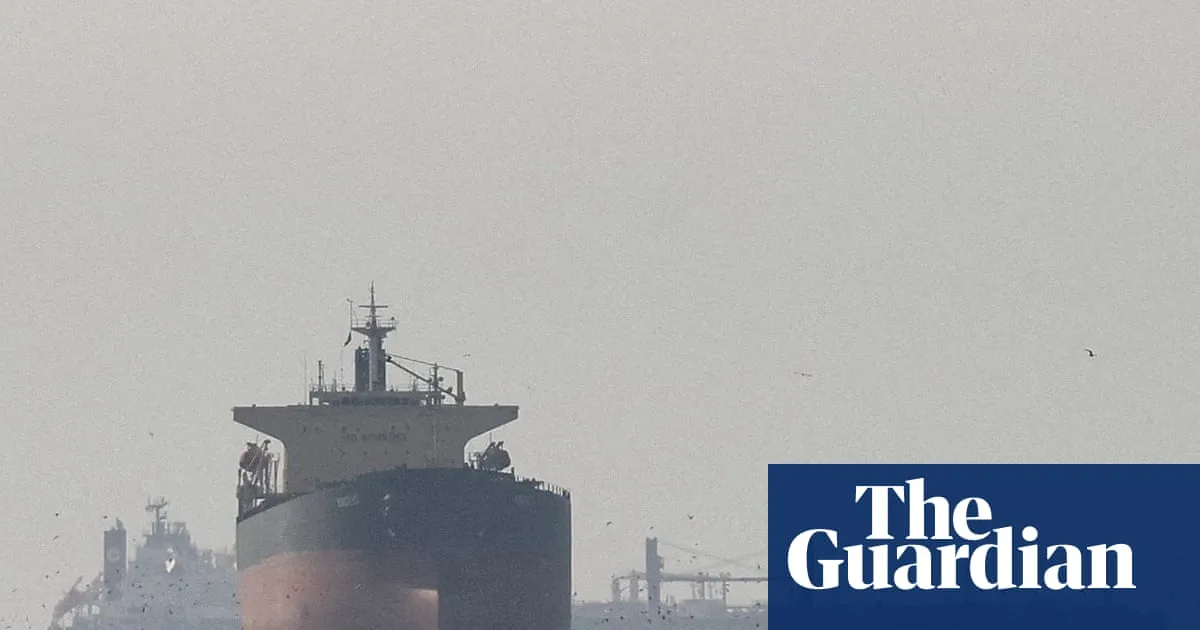
Former US President Donald Trump has intensified demands for NATO allies to contribute forces to help reopen the Strait of Hormuz, as Iran's effective blockade of this crucial maritime passage enters its third week amid ongoing US-Israeli military operations in Iran. The blockade has precipitated a dramatic surge in global oil prices, with crude exceeding $100 per barrel, and triggered severe concerns over potential supply shortages.
Global Oil Markets in Turmoil as Shipping Halts
The Islamic Revolutionary Guard Corps navy declared "complete control" of the Strait on 4 March, following US-Israeli strikes that eliminated Iran's supreme leader, Ayatollah Ali Khamenei, on 28 February. Iran has threatened to set fire to any vessels attempting passage. Consequently, maritime traffic through the strait has nearly ground to a halt, creating a significant trade bottleneck. According to a Goldman Sachs analysis reported by the Wall Street Journal, oil tanker crossings have plummeted to just 20% of pre-war levels, with daily oil transport reduced to approximately 1.6 million barrels from a pre-conflict average of 20 million barrels.
International Energy Agency emergency reserves are being tapped, with over 400 million barrels set for release to counteract the price surge. Nick Butler, former head of strategy at BP, warned that UK ministers should prepare for a "significant shortfall of supply over the next two months," potentially necessitating "a form of rationing." He emphasised that oil and gas supplies are "absolutely crucial to the running of the economy" and cannot be rapidly replaced.
Strategic Importance of the Strait of Hormuz
The Strait of Hormuz is one of the world's most vital maritime chokepoints, located between the Persian Gulf and the Gulf of Oman. At its narrowest point, it spans just 21 miles and falls under the territorial waters of Iran and Oman, though it is internationally recognised as a key waterway. Approximately 20 million barrels of oil pass through daily, accounting for one-fifth of global oil consumption, alongside up to one-third of the world's liquefied natural gas supply. This translates to over 500 million barrels of oil and 6 million tonnes of gas monthly, primarily exported to Asian markets such as China, India, and Japan.
Around 3,000 shipping vessels, including oil tankers and cargo ships, traverse the strait each month, totalling more than 30,000 annually. While alternative pipelines exist in Saudi Arabia and the UAE, the US Energy Information Administration notes that most regional oil exports have no viable alternative routes, underscoring the strait's critical role in global energy security.
Escalating Maritime Attacks and Economic Fallout
Since 28 February, the UK Maritime Trade Operations Centre has received 16 reports of attacks on vessels in the Arabian Gulf, Strait of Hormuz, and Gulf of Oman. Incidents include a US oil tanker being set ablaze and the death of an Indian crew member on 1 March, with additional injuries reported. The conflict has spilled into international waters, with the US military torpedoing an Iranian warship off the coast of Sri Lanka on 4 March, resulting in at least 87 fatalities.
The economic repercussions are profound. Amin Nasser, CEO of Saudi Aramco, cautioned that continued disruption "will have a serious impact on the global economy." Hakan Kaya of Neuberger Berman stated, "The scale of what is at stake cannot be overstated." China and Japan, both heavily reliant on Hormuz shipments, have called for immediate de-escalation. This crisis echoes previous threats to the route, such as during the Israel-Iran war in June 2025, which also spiked energy prices.
In remarks to the Financial Times, Trump asserted, "It's only appropriate that people who are the beneficiaries of the strait will help to make sure that nothing bad happens there. If there's no response or if it's a negative response, I think it will be very bad for the future of NATO." His comments highlight the geopolitical stakes as the international community grapples with a blockade that jeopardises global energy stability and trade flows.




