Trump Announces New 10% Global Tariff After Supreme Court Strikes Down Reciprocal Levies
US President Donald Trump has declared a sweeping 10% global tariff, effective immediately, following a landmark Supreme Court decision that overturned his previous reciprocal tariffs policy. The court's ruling, delivered on Friday by a 6-3 majority, found that a 1977 law did not grant Mr Trump the authority to impose tariffs without congressional approval, dealing a significant blow to his economic agenda.
Supreme Court Overturns Reciprocal Tariffs
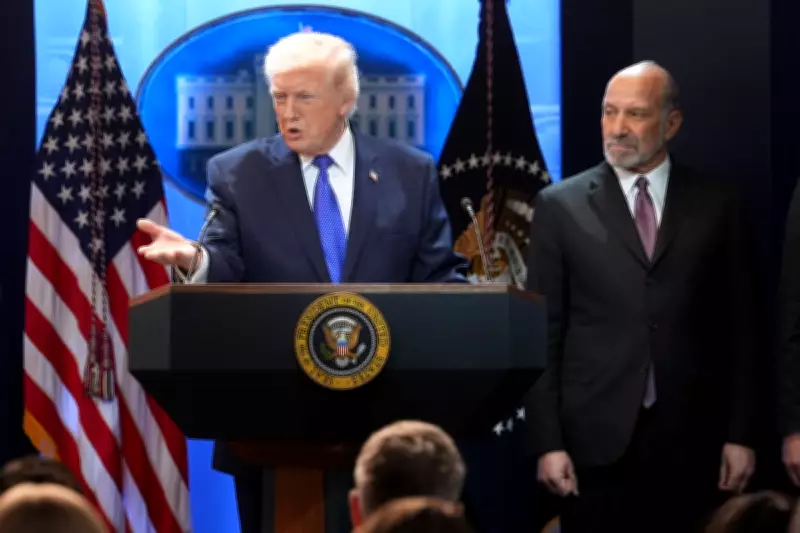
Mr Trump's "reciprocal tariffs," which were imposed on most of the world last April under emergency powers, were invalidated by the Supreme Court. Speaking at the White House, the president asserted that the decision actually affirmed his ability to levy higher tariffs under different statutes. He stated, "In order to protect our country, a president can actually charge more tariffs than I was charging in the past... period of a year."
He elaborated that under various tariff authorities, other statutes could be utilized, which have been confirmed and are fully permitted. Mr Trump emphasized that all national security tariffs under Section 232 and existing Section 301 tariffs remain in place and in full force.

Immediate Implementation of Global Tariff
The president announced he would sign an order to impose a 10% global tariff under Section 122, in addition to normal tariffs already being charged. He also revealed plans to initiate several Section 301 and other investigations to safeguard the US from unfair trading practices by other nations and companies.
Mr Trump indicated that the 10% global tariff would be enforced for approximately five months. During this period, necessary investigations will be conducted to establish fair tariffs on other countries. He confidently stated, "We're immediately instituting the 10% provision, which we're allowed to do. And in the end, I think we're taking more money than we've taken in before."
Impact on UK Trade Deals
The Supreme Court's decision raises uncertainties regarding the status of existing trade agreements, particularly those involving the United Kingdom. The UK had previously secured the lowest tariff rate of 10%, with further exemptions negotiated by Sir Keir Starmer and Mr Trump for Britain's steel industry and car manufacturers.
Officials believe the ruling will not affect most of the UK's trade with America, including preferential deals on steel, cars, and pharmaceuticals. However, Mr Trump noted that some trade deals negotiated after the imposition of reciprocal tariffs will no longer be valid. He clarified, "Some of them stand. Many of them stand. Some of them won't, and they'll be replaced with the other tariffs."
Government and Industry Responses
A UK Government spokesman responded to the ruling, stating, "This is a matter for the US to determine but we will continue to support UK businesses as further details are announced. The UK enjoys the lowest reciprocal tariffs globally, and under any scenario we expect our privileged trading position with the US to continue." The spokesman added that the government would work with the US administration to understand the ruling's implications for tariffs affecting the UK and the rest of the world.
William Bain, head of trade policy at the British Chambers of Commerce (BCC), commented that the decision does little to clarify the situation for businesses regarding US tariffs. He emphasized, "For the UK, the priority remains bringing tariffs down wherever possible. It's important the UK Government continues to negotiate on issues like steel and aluminium tariffs and reduces the scope of other possible duties."
Campaign group Best for Britain highlighted the instability of dealing with Trump's USA, advocating for deeper trade relations with EU neighbours. Andy Prendergast, national secretary at GMB, welcomed the removal of the tariffs, calling the ruling an overdue rebuke to the president. Richard Rumbelow, director of international business at Make UK, noted that the ruling offers good news and clarity for UK manufacturers, pending further details from the US administration.

Financial and Legal Repercussions
The US has collected over $133 billion (£98.4 billion) since Mr Trump imposed the tariffs, but now faces the prospect of refunding that money to importers. The Supreme Court's decision underscores the legal limits of presidential power in trade policy, setting a precedent for future administrations.
As the situation evolves, businesses on both sides of the Atlantic await clear guidance on implementation and the resolution of remaining tariffs, particularly those on UK steel and aluminium under Section 232. The global economic landscape remains in flux, with the new 10% tariff poised to influence international trade dynamics in the coming months.