In a landmark decision, the US Supreme Court has ruled that former President Donald Trump exceeded his executive authority by imposing steep tariffs on global imports, marking a significant setback for his aggressive economic agenda. The ruling, delivered on Friday, determined that a 1977 law intended for national emergencies did not provide legal justification for most of the tariffs implemented by the Trump administration.
Court's Ruling and Its Implications
By a 6-3 majority, the court found that Trump overstepped his power, challenging one of his boldest assertions of authority since returning to the White House. This decision topples a key pillar of his economic strategy, which had aimed to fill federal coffers, revitalize industrial regions, and create a "fairer" global economy for the US. However, economists have consistently warned that such tariffs risk exacerbating inflation and raising prices for American consumers.
Legal Arguments and Congressional Authority
Under the US Constitution, Congress holds sole authority to levy taxes, including tariffs. Trump argued that the International Emergency Economic Powers Act (IEEPA) granted him the right to impose tariffs during national emergencies. During oral arguments, US Solicitor General D John Sauer contended that the tariffs were regulatory, not revenue-raising, despite Trump's claims they would generate trillions for the government.

Supreme Court justices expressed skepticism, with liberal Justice Sonia Sotomayor stating, "I just don't understand this argument. You want to say tariffs are not taxes, but that's exactly what they are." Even conservative Chief Justice John Roberts noted, "The vehicle is the imposition of taxes on Americans, and that has always been a core power of Congress," highlighting doubts across the ideological spectrum.
Protests and Public Reaction
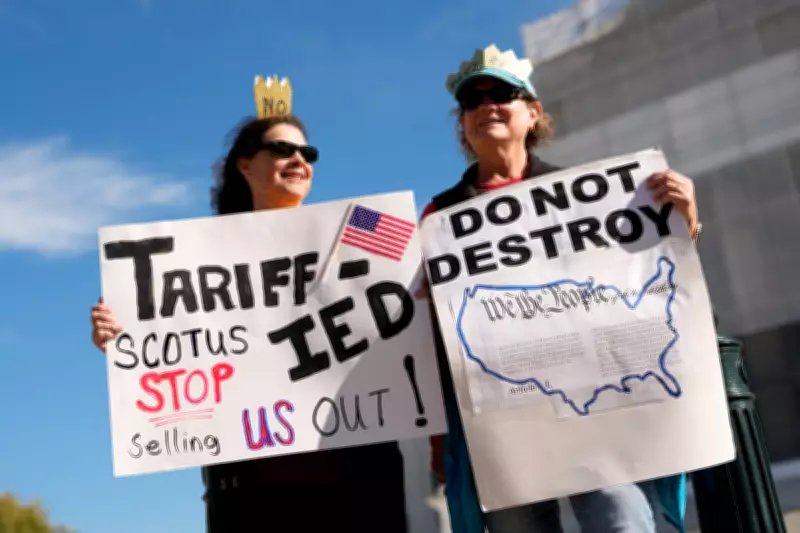
On 5 November 2025, protesters gathered outside the US Supreme Court in Washington DC to demonstrate against the tariffs, reflecting widespread public concern over their economic impact. The ruling has sparked debates on executive power and trade policy, with Trump previously suggesting the court's decision would be pivotal for the nation's prosperity.
This ruling reinforces the limits of presidential authority and underscores the importance of congressional oversight in economic matters. As details continue to emerge, the decision is expected to influence future trade policies and executive actions in the US.