
Industry experts fear a return to the 1990s when Scottish shipyards were forced into competition with English yards, leading to job losses, as the UK Government's defence investment plan (DIP) announced today delays commitments on new destroyer orders.
Current Workload and Future Uncertainty
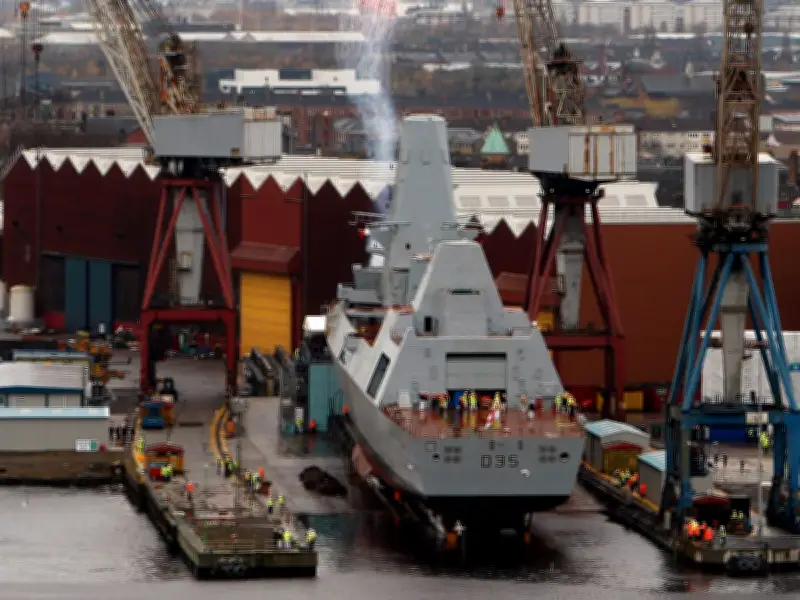
BAE Systems' shipyards at Govan and Scotstoun on the Clyde are currently working at capacity building the Type 26 frigate programme, which will continue until at least the mid-2030s. Meanwhile, Babcock's Rosyth Dockyard on the east coast is constructing the smaller Type 31 frigates, with three of five ordered at the fitting-out stage. Babcock is expected to run out of work in Rosyth before BAE in Glasgow, raising questions about where the next orders will go.
Delayed Decisions on Type 83 Destroyers
Contrary to widespread expectations, the DIP does not commit to building a new generation of Type 83 destroyers. Instead, six common combat vessels (CCVs) will be ordered, but detailed designs are some time away, and no timeline or location for construction has been specified. This uncertainty echoes the 2016 National Shipbuilding Strategy, which called for a continuous pipeline of work to avoid the feast-or-famine model historically seen in Scottish shipbuilding.
Risk of Repeat of 1990s Competition
Some industry experts warn of a return to the 1980s and 1990s, when the UK's shipbuilding industry was over capacity. Yards in Glasgow competed with those in north-east England for scarce naval contracts, with job losses as the inevitable outcome. However, a repeat is not guaranteed, as a new prime minister is due next month, a general election is expected in 2029, and further defence reviews could shift priorities.
Resilience of Glasgow's Shipbuilding
Glasgow's shipbuilding industry has been written off numerous times before, but its ability to bounce back cannot be underestimated. The Type 45 destroyers, such as HMS Dragon built at Govan in the 2000s, demonstrate the Clyde's capacity for complex warship construction. The industry now waits for clarity on the CCVs to ensure a steady pipeline of work and protect skilled jobs.




