
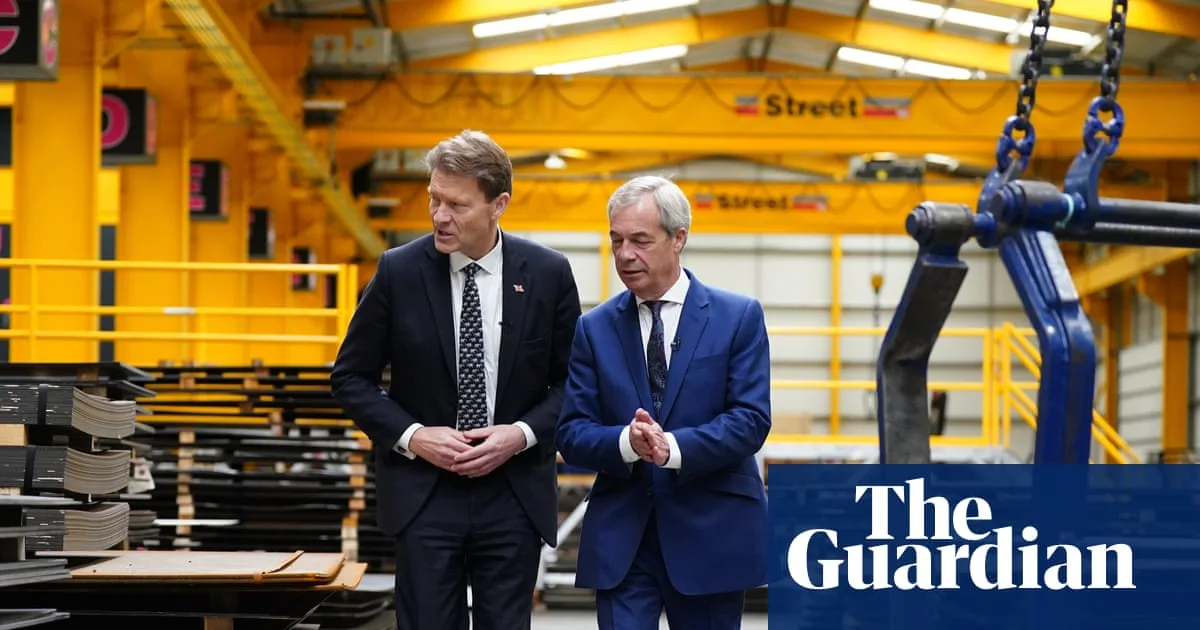
Reform UK has asked steel bosses to draw up an “alternative steel strategy” to rival the government’s recent plans, as Nigel Farage’s party seeks to win over former Labour strongholds ahead of local elections. Richard Tice, the party’s deputy leader, met a group of industry leaders shortly before Labour announced new steel tariffs in March and commissioned them to draft a competing plan that includes scrapping net zero policies.
The party is capitalising on anger over high business energy bills, exacerbated by the Iran war, which are hurting steel companies and the wider manufacturing sector. One boss involved in drafting the plan said Tice made them feel Reform “cares about the industry” more than Labour. Another industry source, however, doubted whether Reform has “any good policy ideas”, and criticised its anti-net zero stance as “does nothing for us”.
Reform’s charm offensive comes weeks before local elections on 7 May, with the party eyeing gains in areas hit by decades of manufacturing job losses. Wales is a particular focus, where Reform is polling almost level with Plaid Cymru in the race for the Senedd, according to YouGov. Reform’s Welsh leader, Dan Thomas, is due to visit the Tata Steel site at Port Talbot on Friday, where the company announced about 2,500 job cuts in 2024 after switching from coal-fired blast furnaces to electric ones.
Nigel Farage also visited the Port Talbot plant last year and called for reintroducing blast furnaces to help “reindustrialise”, but later admitted it “would be very expensive”. The policy is not in Reform’s Welsh election manifesto. Tice said the party’s alternative strategy would focus on retaining virgin steel-making capacity through ending net zero, targeted public support, and using procurement or trade policy to stop undercutting of British steel.
Labour’s steel strategy, published in March, introduced new import tariffs to protect domestic production from cheap imports, particularly from China. The government has also raised subsidies to shield steelmakers from network charges and promised a new exemption scheme from 2027. A government spokesperson said clean power was “the route to energy sovereignty and lower bills”. Gareth Stace, director general of UK Steel, noted it was expected for Reform to be “looking closely at the policies” for such a vital industry.




