

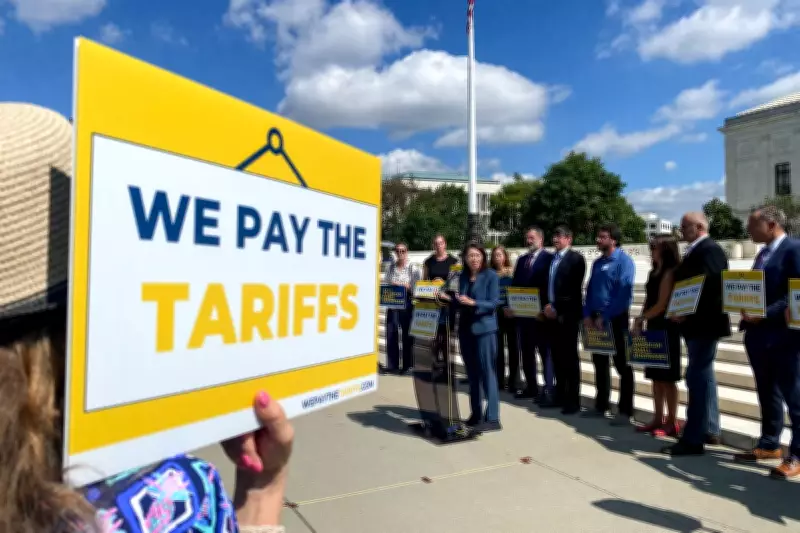
A significant majority of Americans hold the view that President Donald Trump's tariffs have directly contributed to increased costs for their purchases, according to a newly released Harris Poll survey. The findings, published by The Guardian on Tuesday, indicate that 70 percent of the 2,138 adults surveyed believe the tariffs have made them pay more, challenging White House assertions that foreign nations bear the financial burden.
Partisan Perspectives on Tariff Impacts
The sentiment cuts across political lines, though with notable partisan differences. Among Democrats, 77 percent reported that the tariffs have made consumer costs somewhat higher or much higher, while 64 percent of Republicans shared this view. This data underscores a widespread consumer concern that transcends typical political divides, highlighting the tangible economic effects felt by households nationwide.
Economic Studies Confirm Consumer Burden
Supporting the poll results, a study from the nonpartisan Tax Foundation reveals that retail prices for imported goods have risen by 7 percent compared to pre-tariff trends. In practical terms, this means consumers are now paying approximately $107 for items that cost $100 before the implementation of Trump's tariffs. This increase comes at a time when American wallets are already strained by higher-than-desired inflation and a recent spike in gas prices, which surged 50 cents per gallon following U.S. and Israeli military actions against Iran.

Further analysis from the Kiel Institute for the World Economy, published in January, found that foreign countries pay only about 4 percent of the tariffs, with U.S. consumers and importers shouldering the remaining 96 percent. Julian Hinz, the institute's research director, stated unequivocally, "The claim that foreign countries pay these tariffs is a myth. The data show the opposite: Americans are footing the bill."
Potential Future Costs and Political Ramifications
Despite a Supreme Court ruling earlier this year that struck down many of Trump's levies, the president continues to explore alternative avenues for imposing tariffs. A study released on Friday by congressional Democrats warns that if Trump succeeds in his latest proposal to raise global tariffs to 15 percent, it could cost Americans an average of $2,512 in added expenses this year, a nearly $800 increase from 2025.
Consumer Pessimism and Electoral Implications
The financial strain from tariffs compounds existing consumer pessimism. A December survey from the Federal Reserve Bank of New York found that 39 percent of consumers felt they were somewhat worse off or much worse off financially at the end of last year compared to the previous year. This overall negativity, including tariff-related costs, could significantly influence the upcoming mid-term elections in November, where all 435 House seats and 35 Senate seats are up for grabs.
According to The Cook Political Report, a nonpartisan election analysis group, Republicans are projected to win 218 House seats, resulting in a razor-thin, one-seat majority over Democrats. The consumer impact of tariffs may sway voters in key districts, potentially altering the balance of power in Congress as Americans express their economic frustrations at the ballot box.






