

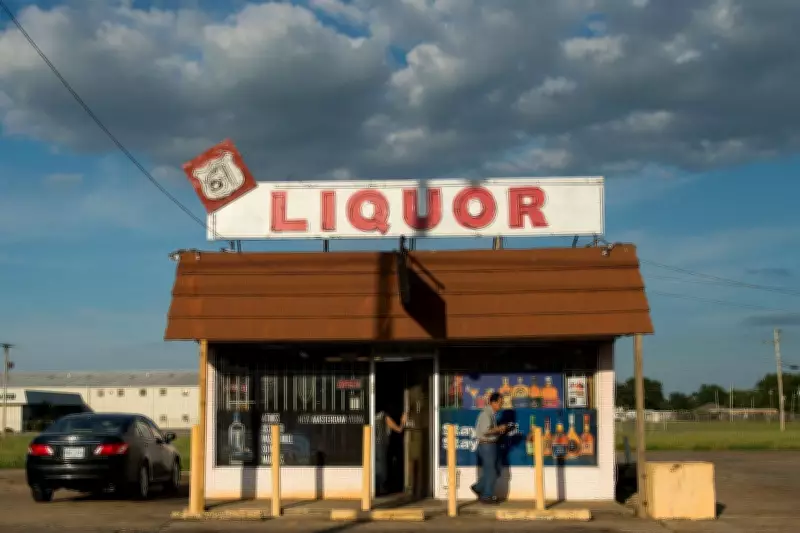
Mississippi's Liquor Supply Crisis Deepens as Warehouse Software Fails
Mississippi is facing a severe and ongoing liquor shortage that has left retailers, restaurants, and bars struggling to survive. Official data reveals a staggering backlog of 172,176 unshipped cases at the state's Alcoholic Beverage Control warehouse in Gluckstadt, located approximately 17 miles north of Jackson. While this number has decreased from a peak of 220,027 cases in early March, the crisis, now in its fourth month, continues to wreak havoc on businesses across the state.
Businesses Hanging 'By the Skin of Our Teeth'
Local establishments are bearing the brunt of this supply chain disaster. Shaun Blakeney, manager of Arrow Wine and Spirits in Clinton, starkly described the situation, stating, "We're hanging on by the skin of our teeth." The impact has been devastating: restaurants were unable to secure wine for Valentine's Day, bars along the Gulf Coast have completely run out of alcohol, and nearly half a dozen liquor stores have been forced to close permanently due to the drought.
Mississippi operates as a control state, meaning the government holds a monopoly as the sole authorized wholesaler for liquor. The Gluckstadt warehouse serves as the single point of distribution for all licensed retailers statewide. Normally, orders from this facility are fulfilled within one to three days. However, since the beginning of 2026, orders have been consistently unfilled, partially filled, or delayed for weeks, leaving shelves increasingly bare.

Software Glitch and Legal Fallout
The root of the problem traces back to a software implementation by Ruan Transport Corporation, an Iowa-based company contracted by the Mississippi Department of Revenue in 2023 to manage the warehouse operations. In January 2026, during a partial shutdown for annual inventory, Ruan introduced new warehouse management software. According to legal complaints, this new system "was not compatible with the existing conveyor belt system used to load delivery trucks at the warehouse."
As a direct result, three of the four conveyor belt lines were taken out of service. Instead of having a functional backup plan, Ruan reverted to a manual "pick and pallet" system, dramatically slowing throughput and creating a massive backlog. The consequences have been chaotic, with orders often bearing little resemblance to requests—such as prepackaged Jell-O shots arriving instead of small-batch Norwegian gin—leading The Washington Post to describe the situation as a "state of emergency."
Lawsuits and Legislative Responses
At least four lawsuits have been filed against Ruan Transport, with attorney Tim Porter, representing retailers including Calistoga Wines & Spirits, emphasizing that the cases are "about accountability." Porter stated, "Ruan Transport – a billion-dollar corporation out of Iowa – was hired to run Mississippi's only liquor warehouse. They rolled out an untested system, it failed, and every liquor store, bar, restaurant and casino in the state has been paying the price ever since."
While Calistoga recently voluntarily dropped its case, suggesting a possible settlement, the legal battles highlight the widespread frustration. On the legislative front, a proposal to allow retailers to purchase liquor from out-of-state sources died in committee. Instead, lawmakers are now planning to construct a new ABC warehouse, scheduled to open in 2027, as a long-term solution.
Ongoing Challenges and Future Outlook
The Mississippi Department of Revenue has acknowledged that systems are improving, but Calistoga's complaint indicates the backlog may not be fully resolved until May. This prolonged disruption underscores the vulnerabilities in Mississippi's controlled liquor distribution model and the critical need for reliable logistics management. As businesses continue to suffer, the crisis serves as a stark reminder of how technological failures can cascade into real-world economic emergencies, leaving an entire state's hospitality industry in peril.






